

Blood Pressure Variability: How to Measure and Interpret

Why blood pressure variability matters beyond the average

Blood pressure (BP) is often discussed as a single number—such as a clinic systolic BP or a typical home reading. But real blood pressure is not static. It rises and falls across the day due to normal physiology, physical activity, stress, sleep, hydration, medication timing, and even measurement technique. The pattern of these fluctuations is called blood pressure variability.
Research has linked greater BP variability to higher cardiovascular risk, including stroke and heart disease, even when average BP is controlled. Variability may reflect underlying vascular stiffness, autonomic dysfunction, impaired baroreflex buffering, medication effects that do not provide smooth coverage, kidney and endocrine influences, and adherence patterns. For clinicians and patients, understanding how to measure and interpret BP variability can help clarify what “good control” means and whether the day-to-day pattern suggests additional risk or a need to adjust measurement strategy.
This guide explains practical ways to measure BP variability, the main metrics used in research and clinical settings, and how to interpret findings in a way that supports informed health decisions.
What “blood pressure variability” actually means
Blood pressure variability refers to changes in BP values over time. Depending on context, it can describe fluctuations:
- Within a single day (short-term variability), such as differences between morning, afternoon, evening, and night.
- Across days (visit-to-visit variability), such as differences between home measurement days or clinic visits.
- Across longer periods (seasonal or treatment-course variability), though this is less commonly measured in routine practice.
Variability is not the same as “poor average control.” A person can have an acceptable mean BP but still show large swings. Conversely, a person can have high average BP with relatively small fluctuations. Both patterns can matter, and the clinical interpretation depends on the measurement method and the variability metric used.
Key measurement approaches: clinic, home, and ambulatory monitoring

How you measure BP strongly influences variability results. Different methods capture different time scales and have different sources of error.
1) Office or clinic blood pressure
Clinic BP typically provides limited snapshots. Variability can be estimated using repeated measurements across visits (for example, every few weeks or months), but short-term variability within a day is usually not captured. Clinic readings are also more susceptible to “white-coat” effects—temporary increases driven by the setting—so clinic variability may partly reflect anxiety or procedural factors.
If clinic variability is being interpreted, clinicians often consider whether the patient has a known white-coat response and whether home or ambulatory data are available to confirm the pattern.
2) Home blood pressure monitoring
Home monitoring is practical for capturing day-to-day changes. A common approach is to take multiple readings at set times (e.g., morning and evening) on several consecutive days. Home BP can reduce white-coat effects and provide a more stable picture of real-life fluctuations.
Home measurement also allows patients to check for irregular patterns caused by missed doses, inconsistent routine, caffeine use, or measurement technique. However, variability estimates depend heavily on adherence to the protocol (timing, rest period, cuff size, and number of readings).
3) Ambulatory blood pressure monitoring (ABPM)
ABPM is considered the most informative method for short-term variability because it records BP repeatedly over 24 hours (and sometimes longer). It captures daytime and nighttime patterns, including the expected “dipping” during sleep. It also helps separate normal circadian variation from excessive instability.
ABPM variability metrics are often used in research and are increasingly used clinically when risk stratification is needed or when home/clinic readings do not explain symptoms or outcomes.
How to measure blood pressure variability at home
To measure BP variability at home in a way that is interpretable, the goal is to reduce avoidable noise. Variability should reflect physiology, not inconsistent technique.
Step-by-step home protocol for variability assessment
- Choose a validated upper-arm cuff (wrist cuffs are more technique-sensitive). Ensure proper cuff size for your arm.
- Measure at consistent times (commonly morning and evening). Morning readings are often taken before breakfast and before taking BP medication, if that is part of your clinician’s plan.
- Rest before readings: sit quietly for about 5 minutes, feet flat, back supported, arm supported at heart level.
- Take two readings about 1 minute apart and record both. Many protocols use the average of the two for analysis.
- Repeat over several days: many clinicians and studies use 3–7 days to estimate variability reliably.
- Record context: note medication timing, missed doses, unusual activity, alcohol, high caffeine intake, or poor sleep. These can explain large fluctuations.
Some home devices can display averaged values and store readings. If your device provides data export to a phone app or computer, it can be useful for tracking patterns. For variability analysis, what matters most is the raw sequence of readings and the consistency of measurement timing.
Using “morning and evening” readings to estimate variability
For practical interpretation, many clinicians compute variability using the set of daily averages (e.g., average morning BP and average evening BP). This reduces the impact of single outlier readings. Variability can then be computed across days for each time window.
Important: if you only measure on one day, variability cannot be estimated meaningfully. At least several days are needed to separate random measurement variation from true day-to-day fluctuation.
How ambulatory monitoring quantifies variability
ABPM provides a dense time series, making it possible to calculate multiple variability metrics. In clinical practice, ABPM reports may include indices such as standard deviation, coefficient of variation, and “average real variability.” Some systems also summarize variability separately for daytime and nighttime.
ABPM can also reveal whether elevated variability is driven mainly by sleep-time BP instability, which may indicate different underlying mechanisms than daytime variability.
The main metrics: standard deviation, average real variability, and more

When people say “variability,” they may be referring to different mathematical definitions. The most common metrics include the following.
Standard deviation (SD) of BP readings
The standard deviation measures how widely readings scatter around the mean. Higher SD indicates greater spread. SD is intuitive, but it can be influenced by the mean level and the number of readings.
For example, if two people have the same mean BP but one has more frequent dips and spikes, their SD will differ, capturing the difference in fluctuation.
Coefficient of variation (CV)
The coefficient of variation expresses variability relative to the mean (CV = SD divided by the mean, often as a percentage). CV helps compare variability across individuals when their average BP differs.
CV can be useful in research and sometimes in clinical reporting, but interpretation requires understanding the measurement context and how the device or software calculates it.
Average real variability (ARV)
Average real variability is designed to capture the average absolute difference between consecutive readings. Unlike SD, ARV focuses on real changes from point to point rather than overall scatter around the mean. ARV is often considered a robust metric for time-series BP data.
In practical terms, ARV can be more reflective of “how jumpy” the BP is across successive measurements, which may be clinically relevant.
Variability independent of the mean (VIM)
Variability independent of the mean is a statistical approach that attempts to separate variability from the effect of average BP. Because higher average BP can mathematically contribute to variability metrics, VIM may help interpret variability more fairly across different mean levels.
Not all clinical reports provide VIM, but it appears in scientific literature and may inform risk models.
Interpreting blood pressure variability: what “high” or “low” suggests
Interpretation depends on (1) measurement method (home vs ABPM vs clinic), (2) which metric is used, (3) the time scale (within-day vs day-to-day), and (4) the clinical context (age, comorbidities, medications, and symptoms).
Because there are multiple metrics and no single universal cutoff across all populations and devices, the most accurate approach is to interpret variability alongside average BP and overall risk factors.
High variability with controlled average BP
When average BP is acceptable but variability is high, it can indicate unstable BP regulation. Potential contributors include:
- Medication timing issues (e.g., once-daily dosing wearing off before the next dose)
- Inconsistent adherence or irregular dosing schedules
- Autonomic dysfunction or impaired baroreflex sensitivity
- High salt intake or fluctuating fluid status
- Sleep disruption or suspected sleep apnea
- Measurement inconsistencies (cuff position, talking during measurement, improper rest)
Clinically, high variability may prompt clinicians to verify measurement technique, consider ABPM for circadian pattern evaluation, and review medication coverage and adherence.
High variability driven by nighttime or “non-dipping” patterns
ABPM can show whether BP fails to drop during sleep or shows excessive nighttime swings. Nighttime instability is often considered especially important because it may reflect vascular dysfunction, sleep-related breathing disorders, or other physiologic disturbances. Interpreting this requires ABPM-specific metrics and careful review of the report.
Low variability: reassuring, but not always “no risk”
Low variability suggests stable BP regulation and may be associated with lower risk. However, low variability does not automatically mean low cardiovascular risk if the average BP is still elevated or if there are other risk factors such as diabetes, kidney disease, or established cardiovascular disease.
In other words, variability is a layer of information, not a replacement for average BP assessment and overall clinical evaluation.
Common reasons variability looks worse than it truly is
Before concluding that BP variability reflects physiology, it is essential to rule out measurement artifacts and protocol problems. Many “high variability” cases are improved by better technique and consistent conditions.
Technique and timing issues
- Skipping the rest period before measurement
- Talking or moving during readings
- Incorrect cuff size (too small cuffs can inflate readings)
- Arm not supported at heart level
- Inconsistent meal, caffeine, nicotine, or exercise timing
- Different devices or cuff positions across days
Medication and lifestyle patterns
Variability can also be real and clinically meaningful. For example, BP may rise substantially before the next medication dose if the drug’s effect wanes. Large swings after missed doses can also increase variability. Lifestyle factors—especially caffeine, alcohol, and poor sleep—can create short-term instability.
Keeping a brief log can help determine whether high variability clusters around specific triggers.
White-coat effect and stress during clinic measurement
If variability is based primarily on clinic readings, white-coat effect can inflate variability. Home monitoring or ABPM can help confirm whether the fluctuations persist outside the clinic setting.
How clinicians use variability in risk assessment
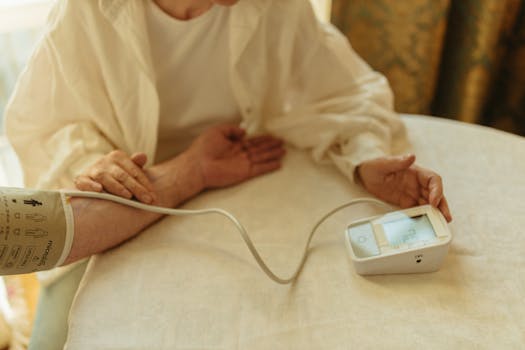
In research and increasingly in clinical practice, BP variability is used as an additional marker of cardiovascular risk. It may help refine risk estimates, particularly when average BP is near thresholds or when there is discordance between office readings and home readings.
However, clinicians generally interpret variability as part of a broader picture:
- Average systolic and diastolic BP
- Presence of target organ damage (e.g., left ventricular hypertrophy, kidney disease)
- Diabetes and chronic kidney disease status
- Smoking, lipid levels, and overall cardiovascular history
- Sleep quality and suspected sleep apnea
- Medication regimen and dosing schedule
Variability is most actionable when measurement is reliable and when the time pattern suggests a modifiable cause (such as medication timing or sleep-related factors).
Practical guidance: turning variability data into useful next steps
If you are measuring BP variability at home, the goal is not to chase “perfect numbers,” but to understand whether your BP pattern is stable and whether it aligns with your medication schedule and daily routine.
1) Verify the measurement protocol first
Before interpreting high variability, check the basics: validated cuff, correct size, correct arm position, quiet rest, and consistent timing. If you have been measuring inconsistently, repeat the protocol for several days.
2) Look at both average and spread
Use the same dataset to evaluate:
- Average BP (overall control)
- Spread or fluctuation (variability metric or visual pattern)
If average BP is high, variability may be a secondary effect. If average BP is controlled but variability is high, the pattern may suggest instability that deserves clinician review.
3) Identify clustering around medication timing
For people on once-daily medication, check whether readings spike near the end of the dosing interval. If so, clinicians may consider timing changes, dosing adjustments, or regimen review. Do not change prescriptions without medical guidance.
4) Consider ABPM when the pattern is unclear
If home readings show high variability, if clinic readings conflict with home readings, or if nighttime BP concerns exist, ABPM can clarify whether variability is driven by daytime activity, nighttime instability, or circadian dipping abnormalities.
5) Use device data responsibly
Many validated home monitors store readings and compute averages. Some also estimate variability measures. Still, the most important factor is consistent measurement protocol. If your device provides only summarized averages, you may need to rely on your clinician’s interpretation or export the raw readings if available.
In clinical settings, ABPM reports and validated home monitoring platforms are typically preferred for formal variability metrics.
Prevention and reduction: lowering variability by improving control of drivers
Because BP variability reflects multiple physiologic and behavioral influences, reducing it is often less about a single intervention and more about improving the stability of contributing factors.
Medication coverage and adherence consistency
Stable dosing schedules and appropriate medication coverage across the day can reduce large fluctuations. If variability appears to worsen near medication “wear-off,” clinicians can evaluate whether dosing times, drug selection, or regimen structure should be reviewed.
Sleep and breathing quality
Sleep apnea and poor sleep can contribute to nighttime BP instability. If there are symptoms such as loud snoring, witnessed apneas, or persistent daytime sleepiness, discussing sleep evaluation with a clinician may be relevant.
Reduce measurement-induced noise
Consistent technique matters. Even small differences—like measuring right after walking into the room—can increase variability. Using a consistent protocol helps you distinguish true physiologic variability from avoidable measurement artifacts.
Lifestyle consistency
- Limit caffeine variability: avoid large changes in caffeine intake day to day.
- Maintain hydration within normal guidance for your health conditions.
- Reduce alcohol swings that can affect vascular tone and sleep.
- Keep physical activity patterns stable when possible, especially around measurement times.
- Manage stress: stress can shift autonomic tone and raise BP transiently.
These measures can support overall BP control and reduce unnecessary swings.
Summary: how to measure blood pressure variability how to measure interpret
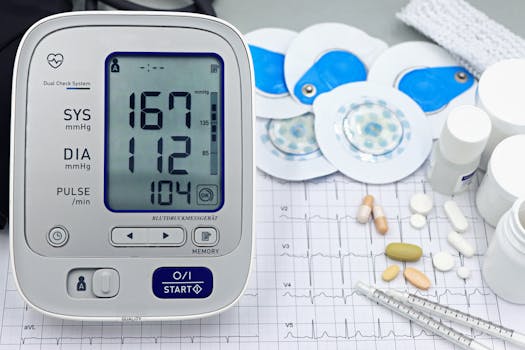
Blood pressure variability describes fluctuations in BP over time and can carry clinical meaning beyond average BP. The best measurement approach depends on the variability time scale you want to understand: home monitoring is useful for day-to-day variability, while ambulatory monitoring is most informative for within-day patterns and nighttime instability.
Variability metrics such as standard deviation, coefficient of variation, and average real variability quantify the spread or point-to-point changes in BP readings. Interpretation requires knowing which metric was used, how readings were collected, and whether average BP is controlled.
If variability appears high, first confirm that measurement technique and timing are consistent. Then consider physiologic contributors such as medication coverage, adherence, sleep quality, and lifestyle factors. When patterns are unclear or nighttime instability is suspected, ABPM can clarify the underlying circadian pattern and guide more precise clinical evaluation.
FAQ
How many days of home readings are needed to assess blood pressure variability?
For a practical estimate, many protocols use at least 3 days and often up to 7 days of morning and evening measurements. More days can improve reliability, especially if readings are influenced by unusual events or inconsistent routine.
Is blood pressure variability the same as “white-coat hypertension”?
No. White-coat hypertension refers to higher BP in medical settings compared with outside measurements. Blood pressure variability can occur in any setting and may be increased by stress, but variability is a broader concept that describes fluctuations over time.
Can I interpret blood pressure variability from a single day of measurements?
Not reliably. A single day provides too few data points to distinguish true day-to-day variability from random measurement noise. Variability metrics generally require multiple days or repeated readings across the day.
Which metric is best: SD, ARV, or coefficient of variation?
There is no single universally “best” metric across all contexts. SD is common and intuitive, ARV focuses on consecutive changes, and coefficient of variation normalizes variability to the mean. The best choice depends on the dataset, time scale, and how your clinician or report defines the metric.
When should I ask my clinician about blood pressure variability?
It can be worth discussing if you notice large swings despite acceptable average BP, if clinic and home readings conflict, if you suspect nighttime BP issues, or if you experience symptoms that could suggest BP instability. ABPM may be considered when additional clarification is needed.
05.04.2026. 20:41