

Joint Stiffness, Crepitus, and Collagen Support: Troubleshooting Guide

What you might be feeling: stiffness and crepitus patterns you can track
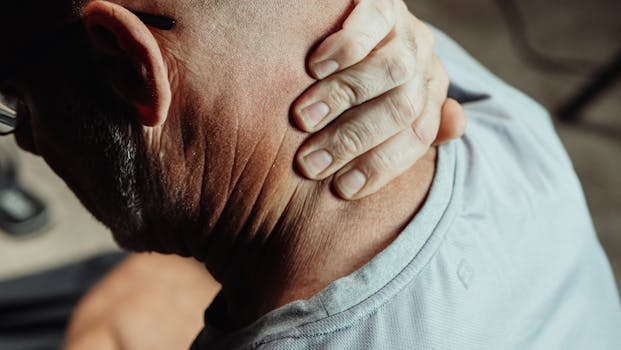
Joint stiffness with crepitus (a crackling, grinding, or popping sound) is common, but the pattern matters. Your goal is to determine whether this is mostly mechanical (movement-related), inflammatory (flare-related), or tissue-degradation related (persistent stiffness that worsens over time).
Start by noting what you experience during specific moments of the day:
- Morning stiffness: how long it lasts after you wake up (for example, 5–10 minutes vs. 45–60 minutes).
- Start-up stiffness: stiffness during the first 5–15 minutes of walking or climbing stairs.
- Crepitus timing: does it happen primarily at the beginning of movement, during deep bending, or after prolonged activity?
- Pain behavior: pain with load (stairs, squats), pain at rest, or pain that’s sharp and localized.
- Swelling or heat: visible swelling, warmth, or a feeling of “pressure” around the joint.
- Function changes: reduced range of motion, trouble fully extending, or a sense that the joint “catches.”
Real-world scenario: You notice crepitus in your knees when you stand up after sitting for 30–45 minutes. After 10 minutes of moving, the stiffness eases, but the crackling persists. There’s no swelling, and pain stays mild (0–3/10). This pattern often points to mechanical stress and joint surface friction rather than an acute inflammatory flare.
When you track these details for 7–14 days, you’ll have a clearer troubleshooting path—especially if you plan to use collagen support as part of a broader tissue-integrity approach.
Most likely causes behind joint stiffness and crepitus
Crepitus can come from several sources. Some are benign and mostly related to movement and lubrication, while others signal tissue irritation or cartilage changes.
1) Mechanical friction and reduced lubrication
Joints rely on synovial fluid and smooth cartilage surfaces. When movement patterns change (new training load, prolonged sitting, altered gait), friction increases. You may feel stiffness at the start of movement, with crepitus that becomes less noticeable after you warm up.
2) Overuse, strength imbalance, or technique breakdown
Common triggers include sudden increases in walking distance, hills, running volume, or heavier lifting. If your supporting muscles (hip abductors, quadriceps, glutes, rotator cuff, scapular stabilizers) can’t control joint mechanics, the joint surface can experience uneven loading—often producing crackling and stiffness.
3) Cartilage and connective tissue degeneration
With age and repetitive stress, cartilage integrity can decline. Collagen is a major structural component of connective tissues; collagen support may help some people by supporting the building blocks of tissue matrix. However, collagen support is not a direct “repair” for a damaged surface overnight. Think of it as part of a longer-term tissue environment strategy.
4) Inflammatory irritation or flare-ups
If you also have warmth, swelling, or stiffness that lasts longer than about 30–45 minutes in the morning, inflammation is more likely. In this case, exercise modifications and anti-inflammatory strategies (including medical evaluation if persistent) often matter more than supplements alone.
5) Loose bodies, meniscal/ligament issues, or structural abnormalities
Mechanical symptoms like catching, locking, or sharp pain can point to a structural issue. Crepitus may be secondary. If you experience repeated “catching” or a joint that won’t move smoothly, your troubleshooting should escalate toward professional assessment.
Step-by-step troubleshooting and repair process
Use this sequence to avoid guesswork. The idea is to reduce irritability, restore mechanics, then support tissue integrity over time.
Step 1: Confirm red flags and set a safe baseline
Before you adjust anything, check for signs that warrant medical evaluation:
- Significant swelling that doesn’t settle within 48–72 hours.
- Fever, unexplained weight loss, or severe night pain.
- Inability to bear weight, major instability, or true locking.
- Rapid worsening over days instead of weeks.
If none of these apply, proceed with a 10–14 day troubleshooting window. Your baseline is your average pain/stiffness level and your range of motion during normal activities.
Step 2: Identify what provokes and what calms the joint
For 3–5 days, do a simple “trigger log.” Note:
- Which movements cause crepitus most (deep flexion, overhead reaching, squatting, stairs).
- Whether heat helps or cold helps (try 10–15 minutes of either; stop if it worsens pain).
- Whether stiffness improves after warming up (for example, after 10 minutes).
Your target is not to eliminate movement. It’s to reduce the specific load that irritates the joint while you rebuild control.
Step 3: Try a short “calm it down” phase (48–72 hours)
If your joint feels more irritable than usual, reduce aggravating load for 2–3 days. Practical changes include:
- Shorten walks or reduce distance by 30–50%.
- Avoid deep knee bends, deep squats, or full range overhead holds temporarily.
- Swap high-impact (running/jumping) for low-impact (brisk walking on flat ground, cycling with moderate resistance).
During this phase, keep gentle motion. If you can, do 5–10 minutes of pain-free range work once or twice per day.
Step 4: Restore range of motion with controlled movement
Crepitus is not always harmful, but stiff joints often benefit from consistent, controlled mobility. Choose movements that keep pain at or below about 2–3/10 and do not increase swelling.
- Knee/hip: heel slides, supported knee bends, hip hinges with a comfortable depth.
- Shoulder: pendulum swings, wall slides within a pain-free arc.
- Ankle: ankle rocks over a bench or wall, focusing on smooth motion.
Do 2–3 sets of 8–12 reps, once daily for 7–10 days. If symptoms worsen the next day, reduce range or volume by 25–40%.
Step 5: Build joint support through targeted strength (the most common “repair”)
Most long-term improvement in stiffness and crepitus comes from better load distribution. Use strength work to improve stability around the joint.
Start with low to moderate effort—think “controlled fatigue” rather than strain. A practical progression is 3 days per week for 2–4 weeks.
- For knees: glute bridges, side-lying hip abductions, step-ups to a low step (start height you can control).
- For hips: clamshells, hip hikes (small range), single-leg balance with support.
- For shoulders: rows (band or cable), external rotations at the side, scapular retractions.
- For hands/wrists: gentle tendon glides and grip strengthening with light resistance.
Use a simple rule: if pain increases during the session and stays elevated the next day, reduce load or range. If pain stays stable or decreases, you can progress by 5–10% per week.
Step 6: Address mobility + tissue quality with heat, soft tissue, and recovery
Stiffness often reflects more than the joint itself. Tight muscles and reduced tissue glide can increase joint stress. Try:
- Heat: 10–15 minutes before mobility or strength work if you’re stiff.
- Gentle soft tissue: light pressure with a foam roller or massage ball for 30–60 seconds per area, 1–2 rounds.
- Recovery: sleep and hydration. If you’re consistently under-sleeping (for example, fewer than 6 hours), stiffness often increases.
Keep it gentle. Aggressive pressure can irritate the joint and backfire.
Solutions from simplest fixes to more advanced fixes
Work through these in order. Don’t jump to advanced steps if the simpler changes are already improving your symptoms.
Simple fix 1: Warm-up to reduce start-up stiffness
If your crepitus is worst during the first 5–15 minutes of movement, warm-up is one of the highest-return steps. Try 8–12 minutes of easy movement before activity:
- Brisk walking on flat ground
- Low-resistance cycling
- Gentle joint circles and mobility in a pain-free range
This can reduce friction and improve how your joint handles load.
Simple fix 2: Modify the movement that causes the most crepitus
Crepitus that peaks in deep flexion often improves when you reduce depth temporarily. For example:
- If stairs hurt, take them slower and use hand support for 1–2 weeks.
- If squats trigger grinding, switch to sit-to-stand from a higher chair while you rebuild strength.
- If overhead reaching triggers shoulder crackling, shorten the arc and focus on scapular control.
You’re not avoiding the joint—you’re changing the dose.
Simple fix 3: Adjust training load with a 7–14 day rule
When you increase activity too fast, joint stiffness often follows. Use a conservative progression:
- Keep total weekly load within about 5–10% change.
- If symptoms rise, reduce the next week’s volume by 20–30% and rebuild.
Track your response. If your stiffness settles within 24–48 hours after a workout, you’re likely in the right range.
Intermediate fix 4: Use collagen support as part of a tissue-integrity plan
Collagen support is most useful when your troubleshooting points toward chronic tissue stress or connective tissue integrity issues—not acute injury with swelling. Collagen is a structural protein that contributes to the extracellular matrix. It may help some people reduce stiffness over time, especially when paired with consistent strength training and adequate overall nutrition.
How to troubleshoot collagen support use:
- Give it time: evaluate changes after 8–12 weeks, not after a few days.
- Be consistent: take it daily as directed on the label.
- Pair it with training: if you take collagen but stop strengthening, you lose much of the mechanical “repair” effect.
- Watch symptom direction: mild improvement in morning stiffness or start-up pain is a useful sign. Worsening suggests your training or load strategy still needs adjustment.
Practical example: You’ve had knee crepitus for months. After reducing deep knee loading and starting glute bridges and hip abductions 3x/week, you notice stiffness decreases slightly by week 6. Adding collagen support and keeping the exercise plan steady leads to clearer improvement by week 10. That timeline supports a tissue environment effect rather than immediate lubrication changes.
Note: collagen support is not a substitute for medical care if your joint is inflamed, unstable, or structurally compromised.
Intermediate fix 5: Improve alignment and biomechanics with targeted form cues
Joint crepitus often reflects altered mechanics. Use simple cues:
- Knee tracking: during step-ups or squats, aim for the knee to track over the second toe (avoid collapse inward).
- Hip hinge: keep a neutral spine and load through hips rather than rounding.
- Shoulder blade control: avoid shrugging; focus on smooth scapular movement.
If you can, film your movement for 30 seconds and compare your form to a neutral pattern. Small changes can reduce joint surface stress quickly.
Advanced fix 6: Consider adjunct therapies if stiffness persists despite good mechanics
If you’ve followed load modification, mobility, and strength for 4–8 weeks and your stiffness remains significant—or crepitus is accompanied by pain that increases—you may need additional support. Options vary by joint and cause, and a professional can help choose the right one:
- Physical therapy assessment: to identify specific strength or mobility deficits.
- Manual therapy or guided mobility: to address tissue restrictions that you can’t fix with self-work.
- Imaging or diagnostic evaluation: if you suspect cartilage injury, meniscal pathology, or inflammatory disease.
Advanced troubleshooting is about finding the limiting factor, not just adding more exercises.
When replacement or professional help becomes necessary
Most cases improve with smart troubleshooting, but there are times when escalation is appropriate.
Seek professional help sooner if you notice these patterns
- Swelling and warmth that recur or persist beyond a week.
- Morning stiffness lasting more than 45–60 minutes consistently.
- Mechanical symptoms like locking, repeated catching, or major instability.
- Progressive loss of range of motion over months.
- Pain that increases despite load reduction over 2–4 weeks.
A clinician can determine whether your crepitus is linked to cartilage wear, tendon issues, inflammatory arthritis, or a structural problem that requires targeted management.
When “replacement” enters the conversation
Joint replacement is typically considered only after substantial, persistent functional limitation and confirmed degenerative or structural damage that hasn’t responded to conservative care. In practical terms, replacement discussions become relevant when:
- You have significant pain that limits daily activities despite consistent rehab and non-surgical strategies.
- There is marked functional decline (for example, difficulty walking meaningful distances or severe stair limitation) over time.
- Imaging and clinical assessment support advanced joint degeneration.
Even then, the decision is individualized. The key troubleshooting step is making sure you’ve addressed mechanics and tissue support consistently for long enough (often 8–12 weeks for noticeable changes from a structured plan).
How to decide whether your plan is working
Use simple checkpoints rather than vague hope. Over 3–4 weeks you should see at least one of the following:
- Reduced start-up stiffness duration (for example, from 20 minutes to 10–15 minutes).
- Less pain during the provoking activity or fewer “bad days.”
- Improved range of motion (even a small gain matters).
- Better control during strength exercises (more reps with the same effort, without next-day flare).
If none of these occur, revisit your troubleshooting sequence: your load may still be too high, your exercise selection may not target the real limiter, or there may be an underlying issue that needs clinical evaluation.
joint stiffness crepitus collagen support troubleshooting
If you’re troubleshooting joint stiffness and crepitus while considering collagen support, your most reliable approach is to combine three elements: reduce irritability first, rebuild mechanics through targeted strength, and then support tissue integrity over time. Start with a 10–14 day observation and calm-down phase, then run a 4–8 week strength-and-mobility plan. If you choose collagen support, evaluate it over 8–12 weeks while you keep training consistent. Escalate to professional help if you see swelling, prolonged morning stiffness, locking, or progressive range loss.
03.12.2025. 07:25