

Tissue Integrity Recovery Routine for Connective Tissue

Goal: restore connective tissue function with a tissue integrity recovery routine
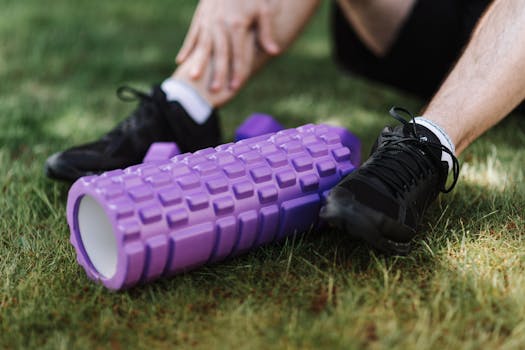
Your connective tissue—fascia, tendons, ligaments, and the supportive layers around muscles—doesn’t “heal” like a cut on the skin. It adapts. That means your recovery routine should do two things at the same time: reduce irritation and then rebuild tissue capacity through progressive, controlled input.
In this guide, you’ll follow a structured tissue integrity recovery routine connective tissue approach designed to support tissue integrity recovery: improved hydration and gliding, better circulation, reduced stiffness, and gradual strengthening of the collagen framework. You’ll use simple tools, clear timing, and specific steps you can repeat for 2–4 weeks.
Use this as an informational how-to. If you have a recent injury, a diagnosis, or pain that’s sharp, spreading, or worsening, get professional guidance before progressing.
Preparation: set up your space, tools, and safety checks
Before you start, make sure your routine is safe and repeatable. Tissue recovery is won or lost in the first hour of setup.
- Time commitment: 20–35 minutes per session, 5–6 days per week. Total time for a full plan: about 2–2.5 hours weekly.
- Training environment: a calm room with a stable surface and enough space to move through ranges comfortably.
- Tools (choose what you have):
- Yoga mat or soft flooring
- Foam roller (medium density) or a fascia roller
- Two resistance bands (light and medium) and/or a set of light dumbbells
- A lacrosse ball or massage ball for targeted trigger points
- Optional: a compression sleeve or kinesiology tape for comfort (not mandatory)
- Optional: Epsom salt for a warm soak (or just warm water)
- Pain rule: During mobility and loading, aim for discomfort no higher than 3/10 and it should settle back toward baseline within 24 hours.
- Red flags to pause: swelling that increases, numbness/tingling, a joint that feels unstable, fever, or pain that spikes sharply with movement.
Real-world scenario you can relate to: Imagine you’re a runner who’s been dealing with persistent shin or Achilles tightness. You notice mornings are stiff, and after long sitting you feel “stuck.” Your goal isn’t to force a stretch or push through pain. Your goal is to restore tissue glide and capacity with gentle mobility, circulation work, and progressive loading. This routine is built for that pattern.
Step-by-step tissue integrity recovery routine for connective tissue
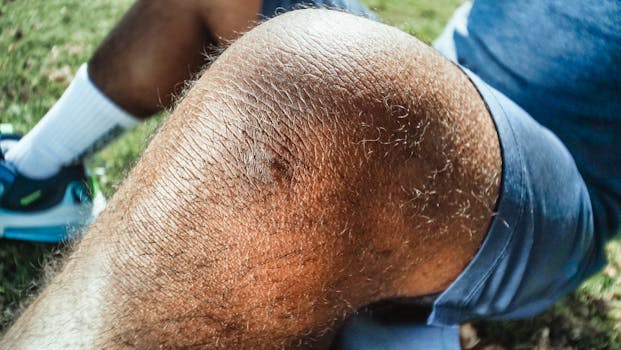
Follow these steps in order. Each step has a purpose: reduce mechanical irritation first, improve tissue nutrition and movement next, then rebuild strength and resilience last.
Frequency: Start with 5 days per week. If recovery is easy, you can move to 6 days. Keep at least 1 full rest day where you do only light walking.
1) Begin with a 5-minute circulation warm-up
You’re preparing connective tissue for movement by increasing local blood flow and synovial fluid movement. Keep it easy.
- Do 3–5 minutes of light cardio: brisk walking, cycling, or stair stepping.
- Then add 1 minute of gentle joint circles for the area you’re targeting (ankle circles, hip circles, shoulder rolls—whatever matches your issue).
Example: If your connective tissue issue is in the ankle/Achilles, do brisk walking for 3 minutes, then ankle circles for 60 seconds.
2) Perform 2 rounds of gentle mobility for tissue glide
Mobility here is about letting tissues move without yanking. Think “smooth and controlled,” not “deep and aggressive.”
- Do 6–8 reps of each movement.
- Hold each end range for 1–2 seconds only if it feels good.
- Rest 30–45 seconds between movements.
Choose 3 movements that match your body area:
- For lower body: hip flexor rock-back, ankle dorsiflexion rocks, glute bridge with controlled tempo.
- For upper body: thoracic rotations on hands-and-knees, shoulder wall slides, scapular retraction holds.
- For general connective tissue stiffness: cat-cow with slow breathing, seated spinal rotations.
3) Add targeted soft-tissue work (2–4 minutes total)
Soft-tissue work should feel like “calming,” not like a fight. You’re aiming to reduce local tone and improve glide, especially if you feel tight bands.
- Use a foam roller or massage ball for 30–45 seconds per area.
- Do 2 rounds maximum.
- If pain is sharp or leaves you sore for more than 24 hours, reduce pressure or time by 30–50%.
Practical example: For Achilles tightness, you might foam roll calves lightly for 60–90 seconds total, then use a ball on the outer calf for 30 seconds. Stop before it becomes intense.
4) Use “tempo loading” to rebuild tissue tolerance (8–12 minutes)
This is the core of the routine. Connective tissue thrives on controlled mechanical signals. Tempo loading helps you avoid sudden spikes while still giving your tissue a reason to adapt.
- Pick 2 exercises.
- Perform 2–3 sets each.
- Use a tempo of 3 seconds down, 1 second hold, 1 second up (3-1-1).
- Use a load that keeps reps at about 6–8 out of 10 effort.
Choose exercises based on location:
- Ankle/Achilles: supported calf raises (slow), heel-elevated eccentrics if tolerated.
- Patellar tendon/knee: mini-squat with controlled depth, step-downs from a low step.
- Shoulder/rotator cuff: band external rotations with slow tempo, scapular push-ups.
- Hip/hamstring: Romanian deadlift pattern with light dumbbells, glute bridge with tempo.
Progression rule: When you can complete all sets with clean tempo and pain stays ≤3/10, add a small amount of load next session (about 5–10%).
5) Add isometrics for 1–2 minutes to calm symptoms
Isometrics can reduce pain sensitivity and help tissue settle while you build strength. They’re especially useful if you feel “hot spots” that flare during movement.
- Choose 1 position that targets the painful/stiff area.
- Hold for 30–45 seconds.
- Do 2–3 rounds with 30–60 seconds rest.
- Effort should be 6/10—challenging but controlled.
Example: If knee tendon discomfort shows up during squats, do a wall sit at a shallow angle where you feel stable and pain stays under 3/10. Hold 30–45 seconds, then rest.
6) Finish with 3–5 minutes of “recovery breathing + gentle range”
This step helps your nervous system downshift and supports circulation. It also gives you a chance to re-check range of motion.
- Do 60–90 seconds of slow breathing: inhale 4 seconds, exhale 6 seconds.
- Then do 2–3 gentle range-of-motion sweeps for the target joint (5 reps each, no forcing).
- End with a relaxed walk for 1–2 minutes if you can.
7) Optional recovery support: hydration, heat, and supplement basics
These aren’t magic cures, but they can support the environment where connective tissue adapts.
- Hydration: aim for pale-yellow urine most of the day.
- Warmth: use a warm shower or soak for 10–15 minutes if you’re stiff. Avoid heat that increases swelling or pain.
- Protein: if you’re rebuilding tissue capacity, include protein at meals. A practical target for many active people is 1.2–1.6 g/kg/day.
- Collagen-supportive foods: include vitamin C sources (citrus, berries, peppers) because it supports collagen formation pathways.
If you want a soft product integration, consider a collagen peptide supplement or gelatin option alongside a protein-forward diet. Choose a reputable brand and keep expectations realistic—think “support,” not “repair overnight.”
Common mistakes that derail tissue integrity recovery
Most people don’t fail because they “don’t try hard enough.” They fail because they do the wrong kind of stress at the wrong time. Watch for these common issues.
- Skipping the warm-up: connective tissue is less forgiving when you jump straight into stretching or heavy work.
- Stretching aggressively: deep stretching can irritate tendons and fascia when tissue is already sensitive. Keep mobility smooth and controlled.
- Overloading too fast: increasing weight or range before pain settles is the fastest way to extend recovery.
- Ignoring 24-hour response: if you’re worse the next day, you overshot. Your routine should create a stable trend, not daily chaos.
- Using foam rolling like punishment: soreness that lasts longer than 24 hours can set you back. Use short, gentle sessions.
- Doing only one type of work: connective tissue responds to a blend of mobility, circulation, and progressive loading. Don’t rely on stretching alone.
- Training through sharp pain: sharp, stabbing, or unstable-feeling pain is a stop signal. Switch to isometrics or reduce range and load.
Additional practical tips and optimisation for your routine
Small adjustments can make your tissue integrity recovery routine connective tissue plan feel dramatically more effective. Use these to fine-tune your week.
Use a simple weekly progression (2–4 weeks)
Run the routine for 2 weeks before making major changes. Then progress based on how you respond.
- Week 1: keep load light and focus on pain staying ≤3/10. Complete all steps even if you reduce repetitions.
- Week 2: increase one variable: either add 5–10% load, or add 1 set to one exercise, or extend tempo slightly (slower down).
- Week 3–4 (if improving): add a second loading angle or introduce a slightly more challenging variation (for example, a higher calf raise range, or a deeper but controlled mini-squat range).
If symptoms flare during a progression, return to the prior week’s version for 3–5 days, then try again with smaller changes.
Match the routine to your daily pattern
Connective tissue often behaves differently depending on your day. If you sit a lot, include a “micro dose.”
Practical example: If you work at a desk and your hips or hamstrings feel tight by mid-afternoon, do a 3-minute version at lunch:
- 1 minute easy walking
- 6 ankle/hip rocks or gentle mobility reps
- 1 set of tempo loading (only 8 reps)
- Stop. Don’t try to “finish” the whole workout.
This helps tissues stay responsive instead of stiffening up for hours.
Choose the right exercise variations for connective tissue
If you’re unsure what to pick, use this decision approach:
- For tendon sensitivity: prefer supported movements and slow eccentrics/tempo loading over jerky reps.
- For fascia stiffness: prioritize joint mobility and gentle pressure work, then follow with controlled strengthening.
- For ligament stability concerns: keep range conservative and focus on controlled positions (often isometrics first).
You don’t need perfect exercise names—just consistent, controlled signals.
Track two numbers: pain and mobility change
To optimize, track what matters. Every session, note:
- Pain during the hardest part: record a number out of 10.
- Mobility outcome: choose one simple marker (how far your knee bends in a controlled mini-squat, how far your ankle dorsiflexes in a rock-back, or how your shoulder feels in a wall slide).
If pain stays stable and your mobility marker slowly improves over 2–3 weeks, you’re doing the routine correctly.
Support recovery with sleep and stress management
Connective tissue adaptation is slower than muscle soreness. Sleep and stress directly affect recovery quality.
- Aim for 7–9 hours of sleep.
- Use a simple wind-down: 10 minutes of dim lighting and slow breathing before bed.
- If stress is high, keep Week 2 progression conservative—don’t assume your body can handle extra load.
Soft product recommendations that can fit the routine
If you want to support the process without turning it into a shopping project, focus on tools that help you do the steps consistently.
- Compression sleeve or wrap: helpful for comfort and confidence during the day, especially if you’re on your feet. Use it to reduce discomfort, not to force activity through pain.
- Quality resistance bands: bands make tempo loading easy to scale. Choose ones that provide a clear range from light to medium.
- Collagen peptides: a reasonable “support” option if your diet is protein-forward and you’re consistent with training. Follow label directions and give it time (weeks, not days).
Prefer products that improve your adherence. The routine itself is the main driver.
How to know you’re ready to progress beyond recovery
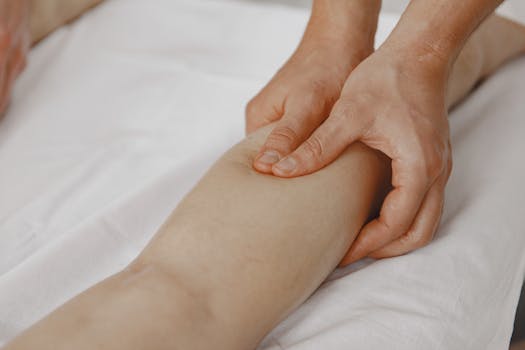
Progression isn’t just “I feel better.” It’s “the tissue can handle more.” Use these signs as your checklist.
- Your pain during loading stays at or below 3/10.
- You don’t have a noticeable flare that lasts into the next day.
- Your mobility marker improves or at least holds steady while you increase strength.
- You can complete tempo loading with good control and no compensations.
Once you hit those, you can gradually expand your training beyond recovery—more sets, more range, or adding sport-specific work. Keep connective tissue integrity as your foundation.
Sample 20–35 minute session you can repeat
If you want a concrete example to start immediately, use this template for one targeted area (like calves/Achilles, hamstrings, or rotator cuff).
- 5 minutes easy cardio + joint circles
- 2 rounds of 3 mobility moves (6–8 reps each)
- 2–4 minutes soft-tissue work total (30–45 seconds per spot)
- 8–12 minutes tempo loading: 2 exercises, 2–3 sets each, 3-1-1 tempo
- 1–2 minutes isometric hold: 2–3 rounds, 30–45 seconds
- 3–5 minutes breathing + gentle range sweeps
On days you feel slightly more stiff, keep the same structure but reduce loading by one set. On days you feel great, add only 5–10% load or one extra rep per set—never both at once.
When to adjust the routine or seek help
If your condition doesn’t improve after 2–4 weeks of consistent work, adjust your plan and consider professional evaluation. Connective tissue issues can overlap with nerve sensitivity, joint mechanics, or movement pattern problems. You don’t need to “push harder” blindly.
- If pain remains elevated and mobility doesn’t improve, scale back loading and emphasize isometrics and mobility for 5–7 days.
- If you develop new symptoms (numbness, tingling, instability), stop and get assessed.
- If you suspect a specific diagnosis (tendon tear, ligament injury), use the routine only as tolerated and follow medical guidance for progression.
Done correctly, your tissue integrity recovery routine connective tissue plan should feel like steady, repeatable progress—not random good days followed by setbacks.
16.02.2026. 12:48