

SpO2 ODI Mini Experiment: Sensor Artifact vs Real Effects

Why your SpO2 ODI mini experiment can mislead you
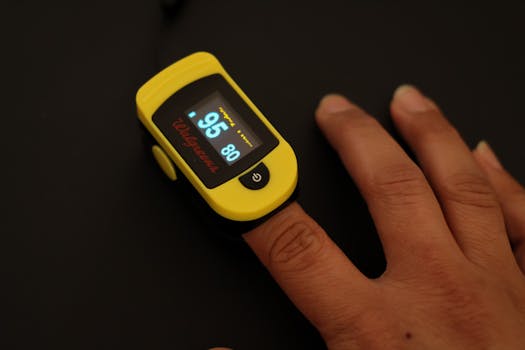
You can learn a lot from a simple SpO2/ODI mini experiment—especially if you’re curious about how oxygen dips relate to sleep, breathing, or comfort. But you also need to be careful: wearable sensors can produce false desaturations and ODI-like drop patterns that are not caused by your breathing.
In this guide, you’ll learn how to distinguish sensor artifact from real physiological events using practical checks you can do at home. The focus is specifically on the pattern you may see in an SpO2 trace and its derived metric: ODI (often “oxygen desaturation index,” typically counting drops of a certain size within a timeframe).
We’ll go beyond theory. You’ll get concrete steps, realistic scenarios, and a validation workflow you can apply to your own data. If you do this correctly, your mini experiment becomes much more trustworthy—and if you do it wrong, you’ll know why the numbers surprised you.
What ODI is actually measuring (and what it can accidentally count)
ODI is derived from an oxygen saturation (SpO2) signal. In many common definitions, ODI counts the number of times SpO2 drops by a threshold (commonly 3% or 4%) from a preceding baseline within a set window (often within 1 minute). The exact definition varies by device and analysis method, but the concept is the same: it’s a count of desaturation events, not a direct measurement of apnea events.
This matters because an ODI “event” doesn’t necessarily mean your lungs changed gas exchange. It means the signal appeared to drop by the threshold. If the sensor temporarily loses contact, moves, or is affected by skin perfusion changes, the device can interpret those signal disturbances as SpO2 drops.
So when you compare “artifact vs real,” you’re really asking: did the saturation truly change, or did the sensor output change?
How sensor artifacts create false SpO2 dips
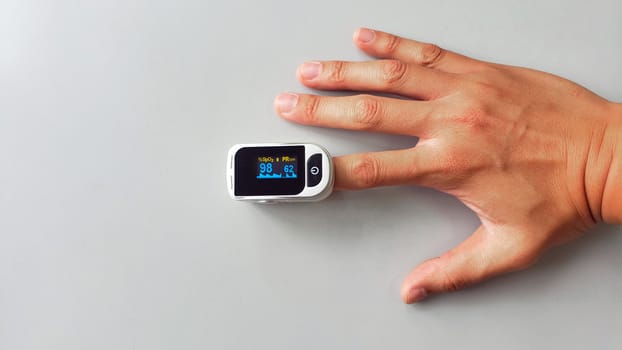
Artifacts are not rare. They’re often predictable once you know the failure modes. Here are the most common ways a pulse-ox sensor can generate ODI-like patterns without real hypoxemia.
Motion and loosening contact during sleep
Even small hand/wrist movements can change the optical path between the sensor’s light source and detector. The device may then estimate SpO2 from a weaker or noisier signal, producing brief dips. If your SpO2 trace shows sharp, narrow drops that last only a few seconds, that’s a classic artifact shape—especially when the timing coincides with tossing/turning.
Cold fingers and low peripheral perfusion
Cold skin reduces blood flow to the measurement site. Many mini experiments use finger clips or wrist devices. When perfusion drops, the photoplethysmography (PPG) signal becomes less reliable. Low perfusion can lead to unstable readings and occasional “dropouts” that the algorithm translates into desaturation events.
Practical clue: if your room is below about 20°C (68°F), or you start the session with noticeably cold hands, you’ll often see more variability early in the recording.
Ambient light and reflective surfaces
Strong ambient light (sunlight, bright lamps) can interfere with optical detection. Reflections from wet skin, lotion, or even certain watch positions can add noise. While most devices have filtering, the signal can still degrade enough to create spurious dips.
Tattooed skin, nail polish, or thick callus
Dark pigments can alter light absorption. Nail polish can affect finger-worn sensors. Thick skin or callused areas can change the optical scattering. These issues don’t always cause constant error; they may show up as intermittent instability—exactly the kind that inflates ODI counts.
Breathing-related real events vs signal instability timing
Real desaturation events often have a physiological signature: a gradual decline followed by a recovery, sometimes with a consistent relationship to breathing disruptions. Artifacts are often abrupt, irregular, and more tightly linked to movement or sensor contact changes.
That said, don’t rely on shape alone. The best approach is to validate with additional evidence, which we’ll cover next.
Real-world scenario: the “ODI spike” that was actually a sensor problem
Imagine you run a mini experiment for two nights using a wrist SpO2 sensor. On night two, you notice ODI jumps dramatically—say from 6 events/hour on night one to 22 events/hour on night two. You feel fine, and you don’t notice increased awakenings.
When you review the trace, the largest number of desaturation events cluster during the first 60 minutes. The dips are brief and look “spiky.” You also remember you adjusted the watch several times because it felt loose.
That pattern is common for artifact: early settling of fit, initial cold hands, or more movement at the start of sleep. If you repeat the same experiment with a snug fit, warm hands, and a consistent placement, you may see ODI drop back toward the first night’s level.
This is not guaranteed, but it’s a useful mental model: if ODI changes a lot while your symptoms don’t, and the timing matches fit/motion conditions, you should suspect artifact first.
Step-by-step: how to judge “artifact vs real” in your own data
You don’t need lab equipment. You need a structured validation workflow. Here’s a practical method you can apply to your SpO2 ODI mini experiment.
1) Confirm the device’s confidence indicators (signal quality)
Many pulse-ox apps show signal quality, perfusion index, or a “good/poor” indicator. If the device reports poor signal quality during the time of dips, treat the ODI events as suspicious. If there’s no quality metric, move to the next steps.
2) Check the timing: do dips align with movement?
Look at your own behavior. If you used a phone or watch that tracks movement, compare the densest ODI periods with times you rolled onto your side, got up, or adjusted the sensor. Even without logs, you can use the pattern: artifact-heavy sessions often show irregular spikes that cluster around obvious movement periods.
Practical example: you notice the highest number of ODI events occurs between 00:15 and 00:45, and you remember you were awake and shifting positions during that window. That’s a strong artifact clue.
3) Look for recovery behavior
Real desaturation often has a recovery phase that is physiologically plausible—SpO2 returns toward baseline after the event resolves. Artifacts may “snap back” abruptly, or the trace may look like it’s switching between two levels without a smooth transition.
Use this as a clue, not a verdict. Some real events can be abrupt too. But when recovery is inconsistent or the baseline itself drifts erratically, artifact moves up the suspect list.
4) Compare left vs right hand (if your setup allows)
If you can place the sensor on both hands across sessions (or within a session after a short, safe pause), you can learn a lot. If ODI events are systematically higher on one side, that may reflect sensor placement, circulation, or local skin factors.
For example, if you notice consistently lower signal quality on one wrist due to how you sleep on it, you’ve identified a likely artifact driver.
5) Run a controlled “no-movement” check
Before your main sleep session, do a 5–10 minute test while you’re awake and still. Keep your hand relaxed, warm, and not moving. Your goal is to see whether the device produces frequent small dips when conditions are stable.
If you see repeated threshold-like dips during stillness, you’re likely dealing with baseline sensor instability. That doesn’t mean your device is “bad,” but it means your ODI results during sleep may be contaminated.
6) Use a baseline stability rule
Pick a reasonable baseline period—such as 10 minutes after you’ve settled and the sensor has stabilized. Ask: during that window, how often do you see dips approaching the ODI threshold?
If your baseline window already has many threshold-crossing fluctuations, your ODI count may be dominated by noise rather than true desaturations.
7) Cross-check with symptoms and physiology
This is where your lived experience matters. If you’re seeing frequent ODI events but you don’t have any of the typical correlates—like unrefreshing sleep, morning headaches, frequent awakenings, or noticeable daytime sleepiness—you should still take the data seriously, but you should treat it as unconfirmed until validated.
Conversely, if you have symptoms and the dips appear consistent across nights with stable sensor conditions, the probability of real events increases.
What “real” desaturation patterns often look like
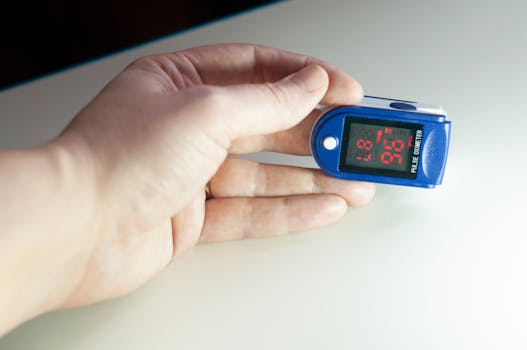
While every person’s physiology differs, real desaturation events have some common features. Use them to build confidence.
- Consistency across nights: If the same time periods repeatedly show ODI events under similar sensor conditions, that’s more supportive of real physiology.
- Physiologically plausible recovery: Drops often return toward baseline in a way that doesn’t look like random signal switching.
- Association with sleep state changes: Many people see more events during certain sleep phases or positions. If you can link dips to side-sleep vs back-sleep, that’s informative.
- Less dependence on movement: Real events can still happen during movement, but artifact often shows a stronger “if I move, the dips happen” relationship.
Practical prevention steps to reduce artifact before you trust ODI
If you want your SpO2 ODI mini experiment to reflect reality, you must control the conditions that affect sensor performance. These steps are simple, but they make a meaningful difference.
Warm the measurement site and start with stable contact
Before you start recording, warm your hands. If you’re using a finger clip, ensure the finger is not cold. For wrist wearables, ensure the watch sits snugly on the skin without being uncomfortably tight.
Then wait 2–5 minutes after you put it on. Many devices stabilize as the signal quality improves. Starting ODI analysis immediately can overcount early noise.
Choose a consistent placement and avoid sleeping “on the sensor”
Sleeping directly on the device compresses soft tissue and can distort the PPG signal. If your setup allows, place it where you’re less likely to press it against the mattress.
Consistency is key. If one night you wear it slightly higher and the next night slightly lower, the optical geometry changes.
Control ambient light and skin conditions
Dim the room. Avoid direct bright light. Clean the skin and avoid lotion or heavy residue near the sensor. If you use a finger clip, remove nail polish.
Reduce movement during the first hour
Most people move more at the beginning of sleep. If you can settle into a comfortable position before the bulk of your recording, you’ll reduce artifact contamination.
Even a small behavioral adjustment—like taking a moment to relax your hands—can reduce noise.
Repeat the experiment to confirm patterns
One night can be misleading. Repeat across 2–4 nights with the same setup and similar conditions. You’re looking for reproducibility: the same ODI pattern under similar sensor quality conditions.
When you should treat your ODI results as “unverified”
There are times when it’s reasonable to conclude that your SpO2 ODI mini experiment is heavily contaminated by artifact. If any of these are true, you should avoid over-interpreting the ODI count.
- The sensor frequently reports poor signal quality during the time of dips.
- Dips cluster tightly around movements, sensor adjustments, or times you were awake.
- Your baseline stability window already shows many threshold-like fluctuations.
- You see large ODI changes between nights without any corresponding changes in symptoms or sleep environment.
- The SpO2 trace looks “quantized” or jumps between discrete levels rather than tracking smoothly.
In those cases, you can still learn. You can learn that your sensor conditions weren’t stable enough to trust the derived ODI metric yet.
When to seek clinical confirmation (especially if symptoms match)

This guide is about validating your mini experiment, not diagnosing. If your data suggests frequent desaturations—particularly if you also have concerning symptoms—consider professional evaluation. Home sensors can miss details, and they can also generate false positives.
Seek medical advice promptly if you have red-flag symptoms such as severe shortness of breath, chest pain, fainting, or profound fatigue that is worsening. For sleep-related breathing concerns, clinicians may recommend a formal sleep study or supervised oximetry to confirm events.
Your mini experiment can still be useful here. Bring your notes: approximate ODI counts per hour, time windows of events, and your sensor conditions (fit, warmth, and whether you observed movement artifacts).
FAQ: SpO2 ODI mini experiment sensor artifact vs real
What ODI threshold should I use in my mini experiment?
It depends on your device’s definition. Many systems use a 3% or 4% drop threshold, often within a 1-minute window. Use the device’s own ODI definition if available. If you calculate your own metric, keep the definition consistent across nights so you can compare like with like.
Can artifacts create desaturations that look exactly like real events?
Yes. Motion, poor contact, and low perfusion can create abrupt dips that meet common ODI thresholds. That’s why you should validate using signal quality indicators, timing with movement, and consistency across nights—not just the presence of dips.
How many nights should I repeat before trusting the ODI pattern?
Two nights can be informative, but four nights is often better for distinguishing random noise from reproducible patterns. If your ODI varies widely from night to night, focus on improving sensor conditions and then repeat.
Do cold hands always cause false ODI events?
They often increase measurement noise. When perfusion is low, the sensor may struggle to track the pulse waveform, leading to unstable readings. Warming your hands and ensuring snug contact typically reduces this problem.
What is the simplest way to test whether your dips are artifact?
Do a 5–10 minute stillness check while awake. If you see frequent threshold-like dips during stillness, your system may be producing artifact under stable conditions. Then repeat your sleep session with improved fit, warmth, and reduced movement.
Should I ignore ODI entirely if I suspect artifacts?
No. Treat it as unverified. Use the data to identify which conditions trigger noise—like sensor looseness or cold perfusion. Then re-run the experiment with those factors controlled. If symptoms persist, consider clinical confirmation.
Summary: turning your SpO2 ODI mini experiment into something you can trust
Your SpO2 ODI mini experiment can be valuable, but only if you treat the sensor as a measurement system that can fail in predictable ways. Sensor artifacts often produce ODI-like events through motion, poor contact, low peripheral perfusion, ambient light, or local skin factors.
To separate artifact from real effects, you should validate with a structured workflow: check signal quality (if available), compare dip timing to movement, examine recovery patterns, run stillness controls, and repeat across multiple nights with consistent placement. Most importantly, interpret ODI in the context of your symptoms and your sensor conditions.
If you follow these steps and your ODI pattern becomes consistent and less dependent on movement or fit changes, your confidence should increase. If the opposite happens—especially with large night-to-night swings—assume artifact contamination and refine the experiment before drawing conclusions.
That’s how you make a mini experiment genuinely informative: not by trusting the number blindly, but by testing whether the signal you’re counting is truly your physiology.
28.12.2025. 09:05