

Allostasis vs Homeostasis: Wearables, HRV, and Resting Heart Rate

Why “balance” isn’t the whole story
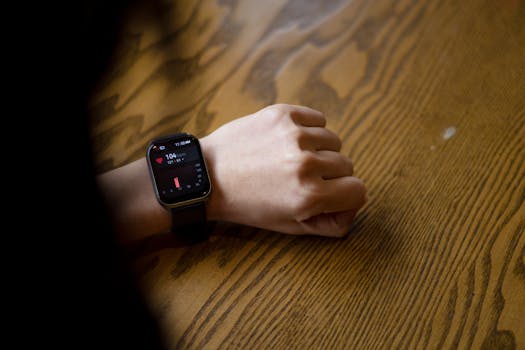
Wearables increasingly report metrics like resting heart rate (RHR) and heart rate variability (HRV). These numbers are often presented as simple indicators of health, stress, or recovery. But the physiology behind them is richer than a single “good vs bad” scale. Two concepts—homeostasis and allostasis—help explain why the same body can look different from day to day, even when it is functioning well.
Homeostasis describes relatively stable internal conditions maintained through feedback. Allostasis describes the process of achieving stability through change: the body adjusts its internal state in response to demands. When wearables track RHR and HRV, they are indirectly sampling the regulatory systems that support both homeostasis and allostasis.
This article explains the differences between allostasis and homeostasis, then connects those ideas to how modern wearables interpret HRV and resting heart rate. You’ll also learn how to use these signals more responsibly—especially when stress, sleep, training load, and illness are changing day to day.
Homeostasis: stability through feedback
Homeostasis is the classic biological framing of “staying the same.” It refers to mechanisms that keep internal variables within tolerable ranges—such as temperature, blood glucose, and blood pressure—despite external fluctuations. Feedback loops are central: when a variable drifts, sensors detect it and effectors counteract the change.
In practice, homeostasis is not rigid. It allows variation around a set point, but the variation is typically bounded and corrective responses are triggered when deviations exceed thresholds. For cardiovascular regulation, this includes maintaining adequate oxygen delivery and blood flow distribution under rest and mild activity.
Wearables can appear to align with homeostasis because RHR and HRV often settle into personal baselines. When everything is stable—consistent sleep, moderate activity, no infection—many people see less day-to-day fluctuation.
Allostasis: stability through changing set points
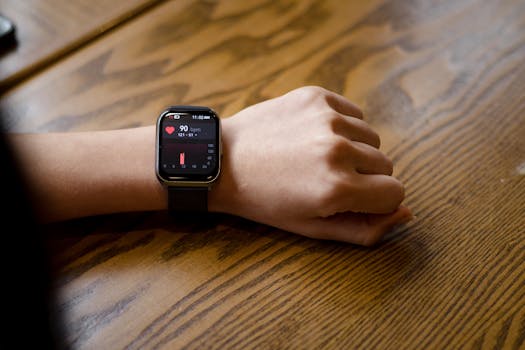
Allostasis shifts the emphasis from “keeping constant” to “adapting to demand.” The body anticipates needs and adjusts physiology—sometimes by changing the set points themselves—so that performance and survival are supported under varying conditions.
Allostasis involves multiple systems working together: the autonomic nervous system, endocrine signaling (including cortisol), immune pathways, and metabolic regulation. The goal is not to eliminate change; it is to coordinate change so that the organism remains functional.
A key idea is allostatic load: the cumulative cost of repeated or prolonged adaptation. When demands are frequent or recovery is incomplete, the regulatory system may remain biased toward a “ready” state. Under those conditions, the body can show altered cardiovascular and autonomic patterns even if it is not overtly “ill.”
This is where wearable metrics can be informative. HRV and RHR are influenced by autonomic balance and recovery status. They can therefore reflect how your body is allocating resources across the day and across days—an allostatic story—rather than merely tracking a single homeostatic steady state.
How HRV and resting heart rate relate to regulation
Before interpreting any wearable trend, it helps to understand what HRV and RHR are capturing.
Resting heart rate as a window into baseline demand
RHR is the heart rate during a low-activity state, typically measured in the morning or during sleep. It is influenced by many factors: autonomic tone, circulating hormones, hydration status, body temperature, fitness adaptations, and recovery from exertion or illness.
In allostasis terms, RHR can shift when the body is “paying” for adaptation—such as after heavy training, during stress, or when the immune system is active. A higher RHR may indicate increased baseline sympathetic influence or reduced parasympathetic buffering. However, the same direction of change can have different causes depending on context.
HRV as variability in autonomic control
HRV refers to variation in time intervals between consecutive heartbeats (often measured from RR intervals). Many wearable systems report HRV using time-domain or frequency-domain methods; common outputs include RMSSD (a time-domain measure often associated with parasympathetic activity) or other validated proxies.
In general, higher HRV at rest is often interpreted as greater flexibility of autonomic regulation and more effective parasympathetic modulation. Lower HRV can indicate reduced variability, which may occur with acute stressors, poor sleep, dehydration, or early illness. But HRV is not a direct measure of “stress” alone; it reflects the net effect of multiple interacting influences.
Because HRV is sensitive to context, it is best used as a trend relative to your own baseline rather than as a universal threshold.
Why the same HRV pattern can mean different things
From a systems biology perspective, the cardiovascular system is an output of several upstream systems. HRV can change due to:
- Sleep architecture (duration, fragmentation, and stage distribution)
- Training load and neuromuscular fatigue
- Psychological stress (cognitive load, emotional stress)
- Illness or inflammation (even before symptoms are obvious)
- Hydration and thermoregulation
- Caffeine, alcohol, and medications
- Menstrual cycle phase and sex-specific hormonal influences
Allostasis helps unify these causes: the body changes internal state to meet demands, and HRV/RHR are downstream signals of that regulatory adjustment.
What wearables actually measure (and what they infer)
Most consumer wearables estimate heart rhythm using optical sensors (photoplethysmography, or PPG). Some use ECG for more direct beat-to-beat timing, but many still rely on PPG-derived intervals. Either way, the wearable must detect pulse timing reliably and then compute HRV and RHR from that signal.
Important measurement caveats include motion artifacts, poor sensor contact, skin tone and hair interference, and differences in algorithms across brands. This means absolute values are not always interchangeable between devices, and even within a device, measurement quality can vary.
Many systems therefore emphasize the pattern and the relative change rather than the number itself. Some platforms also provide recovery or readiness scores. Those scores are typically algorithmic combinations of HRV, RHR, sleep, and activity context—useful, but still dependent on assumptions and calibration.
When using wearables such as Apple Watch, Garmin devices, Oura Ring, Fitbit, Whoop, or similar systems, the general principle is the same: treat HRV and RHR as physiological signals that are best interpreted in relation to your own history and current life context.
Allostasis vs homeostasis in wearable trends
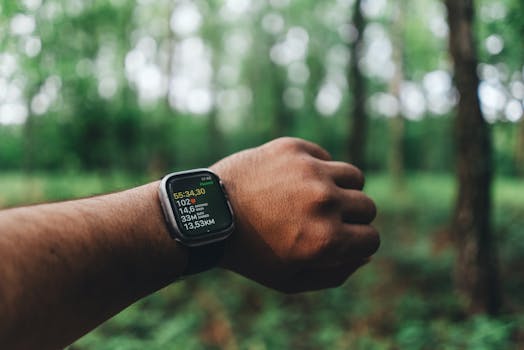
Homeostasis would predict that internal variables return toward baseline once the perturbation is removed. Allostasis predicts that the body may temporarily shift its operating point to handle the perturbation, and that repeated demands can alter the baseline itself.
In wearable terms, you might observe:
- Homeostatic pattern: After a single stressful day, HRV returns to baseline and RHR normalizes within a predictable recovery window.
- Allostatic pattern: After repeated stressors (poor sleep for several nights, consecutive hard training days, ongoing life stress), HRV may remain suppressed and RHR may remain elevated longer than expected—suggesting a higher allostatic load.
Crucially, neither pattern is “good” or “bad” by itself. A temporary shift is normal; the concern is persistent dysregulation without recovery.
Practical guidance: interpreting HRV and RHR without overreacting
Wearables can support decision-making, but they should not replace medical evaluation when symptoms are present. For everyday use, the most reliable approach is to interpret HRV and RHR as part of a broader recovery picture.
Use baselines and time windows
Instead of focusing on one morning reading, compare current values to your personal baseline over the past few weeks. Many people have stable ranges, and the most useful information is whether you are outside your typical variability.
- Look at a rolling average (e.g., 7–14 days) for RHR.
- For HRV, track whether the current value is trending down or up relative to your usual range.
This approach aligns with systems thinking: biological regulation is dynamic, and single samples are noisy.
Pair the metrics with context
If HRV drops and RHR rises, ask what changed:
- Did sleep quality decline?
- Was there a long workout, heavy lifting, or travel?
- Any signs of infection (sore throat, congestion, unusual fatigue)?
- Did you increase caffeine or reduce hydration?
- Are you in a high-stress period?
Allostasis emphasizes that the body’s adjustments are demand-driven. Context reduces misinterpretation.
Watch for patterns that suggest incomplete recovery
While individuals differ, several recurring patterns often indicate the need for attention:
- HRV repeatedly suppressed across multiple days without a clear reason
- RHR elevated and not returning toward baseline after typical recovery time
- Sleep disturbance (more awakenings, reduced restorative sleep) co-occurring with HRV changes
- Training or activity escalations followed by sustained autonomic strain signals
If these persist, it may reflect elevated allostatic load—meaning your system is still adapting. In those cases, adjusting workload, improving sleep, and addressing stressors may help restore a more homeostatic-like return toward baseline.
Do not interpret HRV as a diagnosis
HRV changes can accompany many conditions, including benign stress responses and medical issues. If you have symptoms such as chest pain, fainting, severe shortness of breath, or persistent palpitations, wearable metrics should not be used to “wait it out.” Seek appropriate clinical evaluation.
How to use wearables to support recovery and resilience
Wearables are most useful when they help you notice trends and guide recovery behaviors. The goal is not to chase perfect numbers; it is to support the regulatory systems that enable allostasis without excessive allostatic load.
Sleep as a lever for autonomic flexibility
Because HRV is sensitive to sleep quality, improving sleep consistency often produces clearer HRV and RHR patterns. Practical steps include consistent wake time, limiting late caffeine, and reducing evening light exposure. If sleep is disrupted, HRV may reflect that disruption even if training is unchanged.
Training load and the “recovery window”
Hard sessions can temporarily shift RHR and HRV. A common mistake is to treat the wearable as a pass/fail test rather than a time-delayed indicator of physiological cost. Consider whether the changes resolve within your typical recovery window.
If you repeatedly see prolonged suppression of HRV or sustained RHR elevation after similar training, it may indicate that your current training density or intensity exceeds your recovery capacity.
Stress management as physiology, not just mindset
Allostasis includes anticipatory regulation. Ongoing psychological stress can influence autonomic balance and endocrine activity, which can show up in HRV and RHR patterns. Techniques that reduce sympathetic drive—such as breath-focused relaxation, structured downtime, or cognitive offloading—can support the return toward baseline.
Common pitfalls and how to avoid them
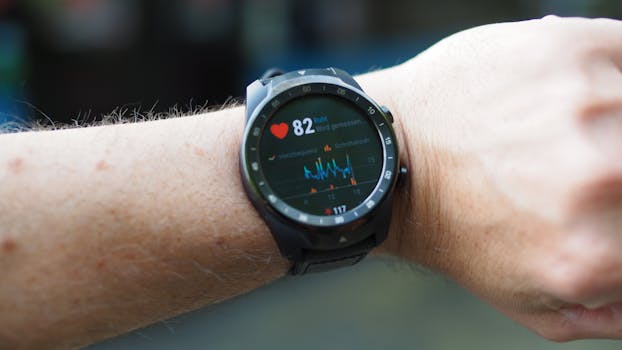
Several factors can distort wearable HRV and RHR interpretation:
- Device-to-device differences: HRV algorithms vary. Avoid switching devices and expecting identical baselines.
- Inconsistent measurement conditions: readings taken at different times or with different sensor fit can add noise.
- Ignoring major confounders: alcohol, dehydration, illness, and medication changes can dominate the signal.
- Overreacting to a single day: daily variability is normal. Look for trends.
- Confusing correlation with causation: HRV changes may be an effect of stress rather than the cause.
These pitfalls matter because allostasis is inherently dynamic. A system that is adapting is expected to change; the question is whether adaptation is followed by recovery.
Summary: what allostasis vs homeostasis means for wearable HRV and RHR
Homeostasis emphasizes maintaining internal stability through feedback. Allostasis emphasizes achieving stability through adaptive change, with the risk that repeated demands can increase allostatic load when recovery lags.
Wearables measuring HRV and resting heart rate provide indirect signals of these regulatory processes. RHR can shift when baseline demand and autonomic balance change; HRV can reflect autonomic flexibility and recovery state. Because both metrics are influenced by sleep, training, stress, hydration, and illness, the most reliable interpretation is to compare current values to your own baseline and consider the context of recent demands.
Used thoughtfully, HRV and resting heart rate can help you detect when your body is adapting beyond what your recovery systems can comfortably handle—supporting a practical, resilience-oriented approach grounded in systems biology.
Prevention and guidance for safer interpretation
To minimize misinterpretation and maximize usefulness:
- Track trends over weeks, not single readings.
- Keep measurement conditions consistent (timing, sensor fit, routine).
- Log major confounders: sleep changes, illness symptoms, training changes, caffeine/alcohol, and travel.
- Use HRV and RHR together with subjective recovery cues (fatigue, soreness, motivation, sleep quality).
- If you have concerning symptoms or persistent irregularities, seek clinical guidance rather than relying on wearable metrics.
This approach respects both physiology and measurement limits, aligning wearable interpretation with the allostasis vs homeostasis framework that best explains why your body sometimes needs to change in order to stay well.
30.04.2026. 07:52