

VO2max vs Lactate Threshold: Key Differences for Longevity

Why VO2max and lactate threshold matter for longevity

Cardiorespiratory fitness is one of the most consistent predictors of long-term health outcomes. In longevity science, researchers often focus on two related but distinct markers of aerobic performance: VO2max and the lactate threshold. They both reflect how efficiently your body produces energy during sustained effort, but they do so through different physiological mechanisms.
VO2max represents the maximum capacity of your cardiovascular system and muscles to take up, transport, and use oxygen. Lactate threshold describes the intensity at which lactate starts to rise more rapidly in the blood—an indicator of how well you can sustain higher workloads before fatigue accelerates. Together, they help explain not only performance, but also exercise tolerance, metabolic health, and resilience under stress.
This guide breaks down VO2max vs lactate threshold in a science-explainer style: what they measure, why they change with training, how testing differs, and how to use the information to design endurance-focused training that supports long-term health.
What VO2max actually measures
VO2max is the highest rate at which the body can consume oxygen during intense exercise. It is typically expressed in milliliters of oxygen per kilogram of body weight per minute (mL/kg/min). Conceptually, VO2max is limited by several linked processes:
- Oxygen delivery: how effectively the heart pumps blood and how well blood carries oxygen.
- Oxygen extraction: how effectively muscles pull oxygen from blood.
- Muscle oxidative capacity: how well mitochondria and related systems use oxygen to generate ATP.
During a graded exercise test (often on a treadmill or bike), oxygen uptake rises with intensity until a plateau or near-plateau is reached. That peak value is VO2max. Importantly, VO2max reflects both central (heart and circulation) and peripheral (muscle) adaptations.
Physiological meaning for health
High VO2max is strongly associated with lower risk of cardiovascular disease and all-cause mortality in large observational studies. While VO2max is often discussed as a performance metric, it also functions as a summary indicator of how robust your oxygen transport and utilization systems are. Those systems influence blood pressure regulation, insulin sensitivity, inflammation signaling, and the ability to sustain activity during daily life.
What lactate threshold actually measures

Lactate threshold is not a single universal number; it is a concept describing a transition in metabolic balance. Lactate is produced when cells generate energy via glycolysis, especially when intensity increases. Even trained athletes produce lactate at rest and during easy work—lactate is not simply a “waste product.” The key issue is how quickly lactate can be cleared and reused relative to how quickly it is produced.
As exercise intensity rises, lactate concentration in the blood increases. At lower intensities, clearance and utilization keep pace. At higher intensities, production outstrips clearance, and blood lactate begins to rise more steeply. The intensity at which that shift occurs is the lactate threshold.
Common ways lactate threshold is defined
Clinically and in performance testing, lactate threshold can be estimated using different approaches, such as:
- Fixed lactate concentration methods (e.g., a chosen blood lactate value).
- Individualized breakpoints from lactate curves.
- Ventilatory thresholds derived from breathing patterns (sometimes used as a proxy).
Because thresholds can be defined in multiple ways, test results may not match perfectly across labs or protocols. Still, the underlying idea remains: threshold intensity reflects sustainable aerobic metabolism before fatigue accelerates.
Physiological meaning for health
Lactate threshold is closely tied to endurance capability and metabolic flexibility. A higher threshold generally means you can maintain a faster pace (or higher power output) without rapid lactate accumulation. From a longevity perspective, this relates to functional capacity, tolerance for sustained activity, and the efficiency of energy systems during daily exertion.
VO2max vs lactate threshold: the key differences
VO2max and lactate threshold are related, but they answer different questions.
VO2max answers: “How much oxygen can you use at peak?”
VO2max focuses on maximal oxygen uptake under intense conditions. It is strongly influenced by cardiovascular function and muscle oxidative capacity. When VO2max improves, it often reflects broader improvements in aerobic system capacity.
Lactate threshold answers: “How hard can you work before lactate rises rapidly?”
Lactate threshold reflects the balance between lactate production and clearance, plus the ability to keep using oxygen-supported metabolism at higher intensities. It is influenced by mitochondrial density, lactate transport, muscle buffering capacity, and the efficiency of aerobic pathways.
Both matter, but they respond differently to training
Training can improve both markers, but the time course and stimulus differ. High-intensity work tends to raise lactate threshold and can also increase VO2max, while longer endurance sessions can improve the muscles’ ability to utilize oxygen efficiently. In practice, many training programs blend modalities to support both central capacity (VO2max) and sustainable intensity (threshold).
How each metric is tested and why results vary
Testing protocols determine what you learn. VO2max and lactate threshold are often measured during lab-based graded exercise tests, but the details—step size, duration, sampling frequency, and endpoints—change outcomes.
VO2max testing basics
To measure VO2max, testers typically use a graded exercise test with breath-by-breath gas analysis. Intensity increases in stages until you reach maximal effort. The test may include criteria such as a plateau in oxygen uptake, high respiratory exchange ratio, and achieving a predicted maximal heart rate range. In some settings, VO2max is estimated rather than directly measured, using submaximal data and assumptions.
Because VO2max is a maximal test, it can be influenced by motivation, familiarity with the equipment, and day-to-day readiness. Still, when performed consistently, it provides a useful benchmark for aerobic capacity.
Lactate threshold testing basics
Lactate threshold testing usually involves frequent blood sampling during incremental exercise. Blood lactate is measured at each stage, and a breakpoint is determined based on the lactate curve. Some labs also combine lactate sampling with ventilatory measurements to identify ventilatory thresholds.
Threshold results can vary depending on whether lactate is sampled from a finger versus an earlobe, the timing of sampling after stage changes, and the mathematical method used to define the breakpoint. That’s why it’s best to interpret threshold trends within the same testing framework.
Training to improve VO2max and lactate threshold
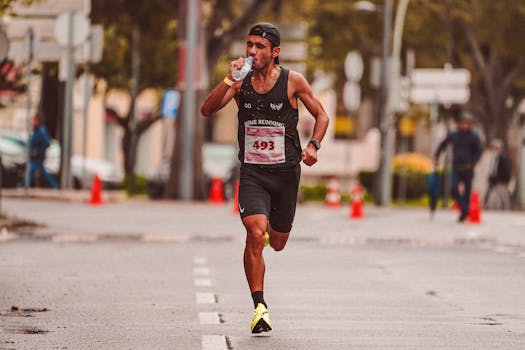
Training is the practical bridge between metrics and health outcomes. While there is no single “best” plan for everyone, the physiology suggests a common theme: you need both aerobic base work and targeted intensity to push adaptation.
Aerobic base supports both metrics
Low-to-moderate intensity training improves mitochondrial function, capillary density, fat oxidation, and neuromuscular efficiency. These adaptations support lactate clearance and make it easier to sustain higher intensities later. Even though these sessions may not maximize VO2max directly, they create the foundation that allows harder efforts to be effective.
Intervals and tempo work tend to raise threshold
Lactate threshold often responds well to training that spends time near or slightly above threshold intensity. Examples include:
- Tempo efforts where you can sustain a challenging but controlled pace/power for a prolonged period.
- Threshold intervals with work bouts long enough to meaningfully tax aerobic metabolism.
- Repetition intervals that accumulate time at higher intensity while maintaining overall quality.
These sessions repeatedly challenge the systems responsible for lactate production and clearance, encouraging adaptations that let you maintain intensity longer.
VO2max improvements often require near-maximal or high-intensity exposure
VO2max tends to improve with training that significantly stresses oxygen delivery and utilization. This commonly includes high-intensity interval training (HIIT) with bouts intense enough to substantially raise oxygen uptake. Over time, HIIT can improve stroke volume, oxygen extraction, and the muscle’s ability to support high oxidative rates.
However, the “intensity” that drives VO2max gains can be individual. Some people reach high oxygen uptake at different relative intensities due to differences in economy, biomechanics, and training history.
How to use VO2max vs lactate threshold in real-world planning
Most people don’t have access to repeated lab testing. Still, you can use the concepts behind VO2max and lactate threshold to guide training progression.
Use threshold concepts for pacing and intensity control
Because lactate threshold relates to sustainable effort, it can be translated into practical intensity zones. Even without blood lactate testing, you can approximate threshold using ventilatory cues, heart rate trends, or perceived exertion:
- Breathing control: at threshold, breathing becomes markedly harder, but you can still maintain the effort without instantly “blowing up.”
- Perceived exertion: threshold work often feels like a strong, steady challenge that you could sustain for a limited time (often 20–60 minutes depending on training level).
- Heart rate guidance: heart rate can be a useful proxy, but it may drift with heat, dehydration, or fatigue.
The key is consistency: use a method you can repeat and track over time, and adjust gradually.
Use VO2max as a long-term capacity target, not a daily goal
VO2max is most relevant as a marker of maximal aerobic potential. In training, you don’t need to chase “maximal” efforts every day. Instead, include periodic high-intensity sessions that raise oxygen demand, then recover well. Think of VO2max as what your training system is building toward, while threshold work helps you express that capacity at sustainable intensities.
Wearable tech: helpful, but interpret carefully
Many endurance athletes use heart-rate monitors, cycling power meters, and running watches to track training load. Some platforms estimate VO2max from submaximal or maximal efforts, and others estimate threshold from heart rate and pace/power relationships. These estimates can be useful for trend tracking, but they are not identical to lab measures.
If you’re using devices such as Garmin, Polar, Suunto, or Apple Watch (with compatible fitness apps), treat “VO2max” and “threshold” outputs as approximations. The most actionable information is usually whether your trends are improving under your training plan.
Longevity science: why improving these markers can matter
Longevity science emphasizes that functional capacity declines with age, and cardiorespiratory fitness often declines faster without consistent training. Interventions that improve aerobic fitness are associated with meaningful reductions in disease risk and improved healthspan.
VO2max is frequently highlighted because it captures maximal aerobic capacity and correlates strongly with survival. Lactate threshold is also relevant because it reflects the ability to sustain activity at higher intensities—an important determinant of real-world function, not just lab performance.
From a prevention standpoint, the most important outcome is not a particular number. It’s the consistent ability to do more work with less physiological strain as you age.
Common misconceptions and practical cautions

Understanding the difference between VO2max vs lactate threshold also prevents training mistakes that can slow progress or increase injury risk.
“More lactate is always bad”
Lactate is a normal metabolic signal and fuel. The problem is not lactate itself—it’s the rate at which lactate accumulates relative to clearance and utilization. Training aims to shift that balance so higher intensities remain sustainable.
“VO2max is the only metric that matters”
VO2max is powerful, but endurance performance and daily functional capacity often depend more on threshold-related sustainability. Someone with a high VO2max but low threshold may struggle to maintain moderate-to-hard efforts for long periods.
Testing is not risk-free
Maximal exercise tests can be demanding. If you have cardiovascular disease, uncontrolled hypertension, or concerning symptoms with exertion (chest pain, fainting, unusual shortness of breath), you should seek medical clearance before maximal testing or high-intensity training. Even for generally healthy people, ramping intensity and prioritizing recovery matters.
Prevention guidance: a training approach that supports both
For longevity, the most robust strategy is usually a blend of aerobic consistency and periodic intensity. You can think of it as building a system that supports both maximal capacity and sustainable effort.
A practical weekly structure (conceptual)
- Most sessions easy to moderate: build aerobic base and recovery capacity.
- One to two sessions that target threshold: tempo or interval work that keeps you near the sustainable-hard range.
- Occasional high-intensity sessions: intervals that meaningfully challenge oxygen uptake capacity, especially after a base period.
- Recovery days are part of the plan: sleep, nutrition, and reduced intensity prevent overuse and support adaptation.
Exact frequency and duration depend on age, training history, and how quickly you recover. The goal is progression without accumulating chronic fatigue.
Track trends rather than obsess over single numbers
Because VO2max and lactate threshold can be measured differently across settings, the most useful approach is to monitor trends over time—whether that’s through repeated lab tests, structured field tests, or consistent wearable-derived estimates. If you improve your ability to sustain harder efforts while keeping recovery manageable, you are likely improving threshold and, over time, aerobic capacity.
Summary: choosing the right lens for VO2max vs lactate threshold
VO2max and lactate threshold describe different parts of aerobic fitness. VO2max reflects the maximum oxygen-processing capacity of your heart, lungs, and muscles—an indicator of maximal aerobic potential. Lactate threshold reflects the intensity you can sustain before lactate accumulates rapidly—an indicator of endurance sustainability and metabolic efficiency.
In longevity science, both matter because they relate to functional capacity and health outcomes. Training that supports aerobic base plus targeted intensity can improve threshold and, with appropriate high-intensity exposure, can also raise VO2max. When used thoughtfully, the concepts behind VO2max vs lactate threshold help you design training that is not only effective, but also aligned with long-term prevention and healthy aging.
25.11.2025. 04:52