

Do Wearable Sleep Stages (REM/Deep/Light) Feel Accurate?

What wearables mean by REM, deep, and light sleep
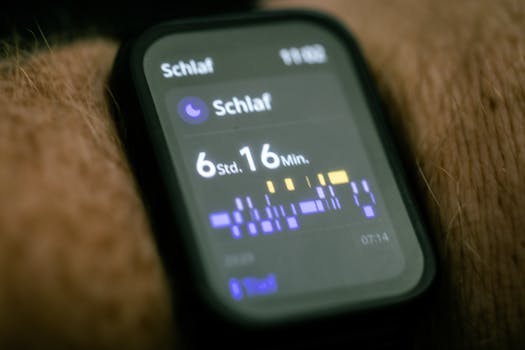
Wearable sleep tracking has become common enough that many people now expect a nightly breakdown of sleep stages—often labeled as REM, deep, and light. The key question behind that expectation is also the most misunderstood: do wearable sleep stages REM deep light accurate? The most scientifically honest answer is that wearables can be useful for trends, but their stage-by-stage precision is limited compared with clinical testing.
In sleep medicine, sleep staging is typically done with polysomnography (PSG). PSG uses multiple sensors—electroencephalography (EEG) for brain activity, eye movements (EOG), and muscle activity (EMG)—to score each 30-second epoch into stages. Wearables, by contrast, usually rely on wrist-based signals such as accelerometry (movement), heart rate, heart rate variability, and sometimes skin temperature or blood oxygen. Those signals correlate with sleep and sleep depth, but they do not directly measure the brain patterns that define REM and non-REM stages.
So when a wearable reports “REM” or “deep sleep,” it is typically estimating stages using an algorithm trained on datasets where PSG labels are known. This estimation can be directionally helpful, but it should be interpreted as model output, not a direct measurement of brain state.
How PSG defines sleep stages (and why wearables can’t replicate it)
Understanding accuracy starts with the staging rules. PSG staging is based on characteristic EEG patterns:
- REM sleep shows a distinct EEG pattern plus rapid eye movements and muscle atonia.
- Non-REM sleep includes N1 (light), N2 (lighter but with specific EEG markers), and N3 (deep sleep), where slow-wave activity is prominent.
- Sleep staging is scored in short time windows, and the boundaries between stages can be subtle and variable across individuals.
Wearables generally do not record EEG, EOG, or EMG. That means they infer stages from physiological proxies. For example, heart rate and autonomic changes can shift across sleep stages, and movement patterns often differ between REM and non-REM. But the mapping from proxy signals to true brain stages is imperfect. Two people can have similar heart-rate patterns while experiencing different EEG-defined stages.
That limitation is why the most defensible statement is: wearables may provide reasonable estimates of overall sleep timing (when you’re asleep and awake), but stage accuracy varies and is usually better for broad categories than for precise stage percentages.
What sensors wearables use to estimate REM, deep, and light
Most consumer wearables use a combination of the following:
Accelerometer-based movement patterns
Actigraphy-style movement data helps distinguish wakefulness from sleep. It can also reflect stage tendencies: REM sleep is often associated with reduced gross movement due to muscle atonia, while deep sleep can show relatively still periods. However, movement also occurs in REM for some people, and certain conditions (for example, restless legs or pain) can increase motion regardless of stage.
Heart rate and heart rate variability
Heart rate typically changes across sleep stages, and heart rate variability can reflect shifts in autonomic nervous system activity. Many algorithms use these signals as indirect markers. Yet heart rate is influenced by factors unrelated to sleep stage, such as caffeine timing, alcohol, stress, medications, menstrual cycle changes, and even ambient temperature.
Skin temperature and peripheral physiology
Some devices track skin temperature. Peripheral temperature tends to change across the night and may correlate loosely with sleep depth and circadian rhythm. Still, temperature is not a direct marker of REM vs deep sleep.
Blood oxygen and respiration signals (in select devices)
Devices that include SpO2 sensors or estimate breathing patterns can sometimes detect breathing irregularities. Sleep-disordered breathing can fragment sleep and alter stage distribution. While this can improve detection of sleep disruption, it still doesn’t provide EEG-defined staging.
So, do wearable sleep stages REM/Deep/Light feel accurate?
“Accurate” can mean several different things. It helps to separate three concepts: agreement with PSG, consistency night-to-night within the same person, and clinical usefulness for diagnosing problems.
Agreement with PSG: usually limited for exact stage percentages
Studies comparing wearables to PSG often find that wearables can identify sleep and wake reliably, but stage-by-stage agreement (for example, exact minutes of REM or deep sleep) is typically modest. Algorithms may overestimate or underestimate certain stages depending on the individual and the device model.
In practical terms, you might see a wearable report that you got 90 minutes of “deep sleep” one night and 40 minutes the next. Even if the direction is plausible, the exact numbers can be off. The mismatch happens because proxies are imperfect and because staging boundaries can be difficult even for PSG scorers.
Consistency within a person: often more useful than absolute accuracy
Where wearables tend to shine is in trend tracking. If your deep sleep consistently decreases during a period of stress, travel, or poor sleep hygiene, the wearable may capture that pattern even if the absolute values are not perfectly matched to PSG.
This is especially relevant for behavioral insights: if a change in bedtime routine reliably improves your wearable-reported sleep quality, it may reflect a real improvement—even if the REM label is not exact.
Clinical usefulness: stage estimates rarely replace medical evaluation
If you’re concerned about insomnia, sleep apnea, narcolepsy, or other disorders, wearable stage data is not a substitute for clinical assessment. Sleep disorders can distort stage architecture in ways wearables are not designed to diagnose. For example, sleep apnea can reduce restorative sleep and fragment REM and non-REM sleep, but a wearable may not reliably quantify the stage-specific impact.
Why REM, deep, and light estimates can be misleading
Several factors commonly affect wearable stage output:
- Algorithm training bias: Models are trained on specific populations. If your physiology differs (age, skin tone, movement patterns, fitness level), the stage mapping may be less accurate.
- Quiet wakefulness: Lying still while awake can be misclassified as sleep, often inflating “light sleep” and sometimes affecting REM/deep estimates.
- Restless sleep or movement: People with restless legs, pain, or frequent position changes may have distorted signals that the algorithm interprets as different stages.
- Alcohol and sedatives: These can change sleep architecture. Wearables may label the resulting pattern incorrectly because the proxies do not uniquely identify what EEG is doing.
- Skin contact and device fit: A loose strap or poor sensor contact can degrade heart-rate and HRV signals, reducing stage reliability.
- Temperature and peripheral circulation: Cold hands or poor peripheral perfusion can reduce signal quality for some sensors.
Even when a wearable is performing well, the stage labels should be treated as approximations of sleep physiology rather than exact measurements of REM and deep sleep.
How to interpret your wearable sleep-stage chart responsibly
To make wearable stage data more meaningful, focus on patterns and context rather than single-night perfection.
Look at trends over 2–4 weeks
Instead of asking whether one night’s REM minutes are “right,” ask whether your sleep-stage distribution changes consistently when you modify routine variables. For example, if you consistently see less deep sleep during late nights, that pattern can guide behavior.
Use stage data alongside sleep timing and awakenings
Stage estimates are more credible when they align with other indicators such as:
- Fewer long awakenings
- More stable sleep onset
- Reduced fragmentation across the night
If your wearable reports “more deep sleep” but your total awakenings are higher and you feel unrefreshed, treat the stage estimate cautiously.
Compare nights with similar conditions
When evaluating changes, compare nights with roughly similar:
- Bedtime and wake time
- Caffeine and alcohol timing
- Exercise intensity
- Stress level
- Room temperature and noise
This reduces confounding and makes the algorithm’s output easier to interpret.
Don’t overreact to small swings
Sleep stages naturally vary. Even PSG shows night-to-night variability. For wearables, variability can be amplified by signal noise and algorithm differences. A change of 20–30 minutes in a single stage can be meaningful for some people, but it can also reflect measurement error.
Practical steps to improve wearable stage reliability
Because wearables infer stages from sensor signals, small improvements in sensor quality can improve the consistency of the output.
Wear the device correctly
Ensure the sensor sits snugly on the wrist (or the device’s recommended location). If you notice frequent heart-rate dropouts, stage estimates may be less reliable.
Calibrate expectations for your body
Some people naturally have different sleep architecture—especially across age and with certain health conditions. If you know you have restless sleep, irregular breathing, or medication effects, interpret stage labels more conservatively.
Improve signal stability with routine
Keep bedtime and wake time consistent when possible. Stable routines reduce circadian disruption, which can make wearable estimates more coherent night-to-night.
Use “sleep hygiene” changes as experiments
When you test changes, do it systematically. For example, adjust one variable (like reducing caffeine after late afternoon) and observe whether your overall sleep timing improves and whether stage trends move in a direction that matches how you feel.
What to do if wearable data suggests a problem
Wearable sleep-stage output is not diagnostic, but it can be a prompt to investigate. Consider paying attention to patterns that persist:
- Repeatedly very short deep sleep with ongoing fatigue
- Frequent, long awakenings
- Consistent signs of sleep fragmentation
- Strong daytime sleepiness or snoring patterns
If you have symptoms like loud snoring, choking/gasping during sleep, or excessive daytime sleepiness, the right next step is a clinical evaluation for sleep disorders. In such cases, PSG or home sleep apnea testing may be appropriate, depending on the scenario.
Wearables can help you collect context (sleep timing, variability, and perceived patterns), which can be useful for clinicians—without requiring you to treat stage labels as definitive.
How “deep sleep” and “REM” should map to how you feel
People often expect a direct one-to-one relationship between stage minutes and next-day energy. In reality, the relationship is complex.
Deep sleep is associated with slow-wave activity and physical restoration, but you can still feel tired even with “more deep sleep” if you had fragmented sleep, stress, or sleep apnea. Conversely, you might feel okay with fewer deep-sleep minutes if your sleep is consolidated and your overall sleep quality is good.
REM sleep is tied to memory processes and emotional regulation. But REM duration and intensity vary naturally. A wearable’s REM estimate may not capture REM quality or microstructure, so the “REM minutes” number alone can’t explain your mood or cognition.
The most reliable interpretation is holistic: look for whether your sleep is less fragmented, whether sleep onset improves, and whether you feel better—then treat stage labels as supporting evidence.
Relevant devices and what to look for in their stage methodology
Many popular wearables (for example, models from Apple Watch, Fitbit, Garmin, Samsung Galaxy Watch, Oura, and others) offer sleep stage estimates. The specific sensors and algorithms differ, but the general principle is the same: stage labels are derived from physiological proxies and machine-learning models.
If you want to judge how seriously to take a particular wearable’s staging, look for:
- Published validation studies against PSG (ideally with details about accuracy metrics)
- Clear definitions of how stages are grouped (some map multiple PSG stages into “light”)
- Signal quality dependence (for example, whether heart-rate accuracy affects staging)
- Transparency about limitations (some devices acknowledge that stage estimates are probabilistic)
Even when validation exists, results can still vary by user and by conditions, so published accuracy should be treated as an average, not a guarantee.
Summary: the best way to use wearable sleep stages
Wearable estimates of REM, deep, and light sleep can be interesting and sometimes helpful, especially for spotting trends. However, the core reason they’re not perfectly “accurate” is fundamental: wearables typically do not measure the brain signals used to define sleep stages in PSG. Their stage labels are inferred from movement and cardiovascular proxies, which correlate with sleep physiology but cannot uniquely identify REM or deep sleep with PSG-level certainty.
For practical use, interpret sleep-stage charts as probabilistic estimates. Prioritize consistency over single-night precision, pair stage data with sleep timing and awakenings, and treat persistent symptoms as a reason to seek clinical evaluation rather than relying solely on stage numbers.
If the question “do wearable sleep stages REM deep light accurate” keeps nagging you, the most evidence-aligned answer is: they’re often directionally useful for trends, but exact stage minutes should be treated cautiously—especially when health symptoms are involved.
25.04.2026. 08:47