

Wearables Metrics for Fat Loss: What They Measure and How to Use Them

Why wearables metrics can help with fat loss (and where they mislead)
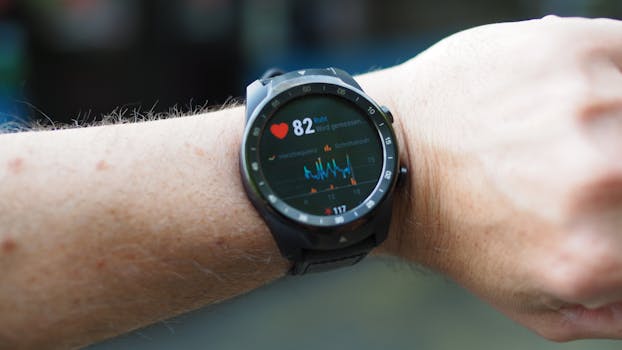
Wearables can be a useful “feedback layer” for fat loss because they track behaviors and physiology that influence energy balance: daily movement, exercise intensity, recovery, and sleep. But fat loss is ultimately driven by sustained changes in energy intake and energy expenditure, and wearables don’t directly measure body fat every day. That means the most valuable approach is not to chase a single number, but to understand what each metric represents, how accurate it tends to be, and how to use trends over time.
This science-explainer focuses on wearables metrics for fat loss—how they work, what they’re good at, and practical ways to translate them into decisions you can act on.
Core fat-loss physiology: what wearables can indirectly reflect
Fat loss occurs when the body is in a sustained energy deficit. Wearables primarily capture proxies for the components of that deficit:
- Energy expenditure: estimates based on movement (steps, activity), heart rate (during exercise), and sometimes skin temperature or other signals.
- Activity patterns: how often you move, how long you sit, and whether you consistently reach moderate intensity.
- Recovery and stress: sleep duration/quality, heart rate variability (HRV), resting heart rate, and sometimes respiratory rate.
Because these are indirect measures, you’ll get the best results by using wearables to manage inputs you control (movement, training load, sleep), then validating outcomes with body weight trends, waist changes, and—when available—body composition measurements.
Steps, active minutes, and movement volume: the most reliable starting point
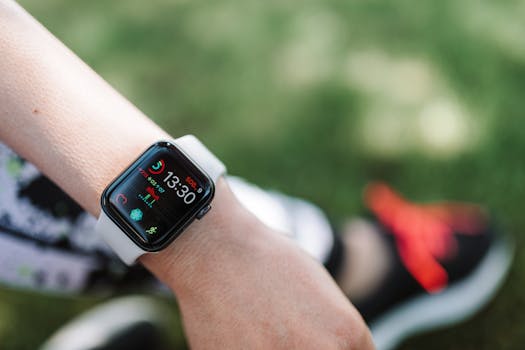
Steps: a practical proxy for daily energy expenditure
Step counts are among the most consistent wearable metrics. While the exact calorie estimate can vary widely, step totals strongly correlate with total daily movement. For fat loss, the key is consistency: a higher daily movement baseline often increases total weekly energy expenditure without requiring intense workouts.
How to use it: track your average steps per day over 2–4 weeks. If fat loss is not occurring, consider gradually increasing daily steps or reducing time spent sedentary. A common strategy is adding a modest increment (for example, 1,000–2,000 steps/day) and reassessing after a couple of weeks.
Active minutes and intensity categories
Many wearables classify activity into intensity zones (often using heart rate or motion patterns). “Active minutes” are helpful because fat loss tends to benefit from both total movement and some higher-intensity bouts, which can improve fitness and help maintain lean mass when combined with resistance training.
How to use it: look for trends in whether you reach a consistent weekly target of moderate-to-vigorous activity rather than chasing a single day. If you’re frequently “falling short,” it usually points to a routine problem (schedule, workload, or barriers to movement) rather than a training problem.
Heart rate metrics: what they can tell you during training
Resting heart rate (RHR): recovery and stress signals
Resting heart rate is influenced by hydration, sleep quality, illness, stress, and training load. During a fat-loss phase, RHR can rise if recovery is compromised (for example, insufficient sleep or excessive training). If RHR trends upward while performance drops and hunger increases, that’s a sign to adjust recovery behaviors.
How to use it: treat RHR as a “health and readiness” trend. Compare your current average to your personal baseline (not another person’s number). If RHR stays elevated for several days alongside poor sleep or increased perceived exertion, consider reducing training volume, increasing sleep opportunity, and keeping steps steady rather than pushing hard workouts.
Heart-rate zones and time-in-zone
Heart-rate zones estimate how much time you spend at different intensities. For fat loss, time in zone can help ensure you’re doing enough aerobic work to support energy expenditure and cardiovascular fitness.
Important limitation: heart rate can be elevated by heat, caffeine, dehydration, and stress—so zone time is not a pure measure of effort. Still, for most people, trends over weeks are useful.
How to use it: if your goal is fat loss, aim for a sustainable weekly pattern: some moderate intensity work most days (often aligning with brisk walking or cycling) plus occasional higher-intensity intervals if they fit your schedule and you recover well.
Calories burned: why wearable estimates are noisy
Calorie burn is an estimate, not a measurement
Wearables estimate calories using algorithms that combine heart rate, motion, and personal information. Errors are common because metabolism varies day to day, and the algorithms can misread non-exercise movement, posture changes, or heat stress.
For fat loss, the most practical interpretation is to use calorie-burn estimates to guide behavior changes, not to “balance” intake and expenditure precisely.
Better approach: use trends and validate with body outcomes
Instead of trying to match a daily calorie target from your watch, use wearable outputs to ensure you’re consistently increasing movement and training appropriately. Then validate with:
- Body weight trend (weekly average, not daily fluctuations)
- Waist circumference measured consistently
- Performance and recovery (energy levels, sleep, training quality)
If weight is not moving over several weeks, adjust inputs (usually intake first, then activity) rather than reacting to a single “calories burned” number.
Sleep duration, consistency, and sleep stages: recovery affects fat loss
Sleep quantity: shorter sleep can worsen appetite regulation
Sleep duration and consistency influence hunger hormones, cravings, and decision-making. Even if your calorie intake is unchanged, poor sleep can make it harder to maintain a deficit by increasing appetite and reducing self-control.
How to use it: prioritize a consistent sleep window. Use your wearable to track whether you’re sleeping fewer hours than your baseline during the fat-loss phase.
Sleep stages and “sleep score” limitations
Wearables often estimate sleep stages (light, deep, REM) using heart rate and movement patterns. These can be directionally helpful but are not as accurate as clinical polysomnography. A “low deep sleep” reading doesn’t automatically mean you’re getting inadequate recovery.
Better use: focus on consistency, total sleep time, awakenings, and how you feel. If your sleep quality is deteriorating while RHR rises and training feels harder, that’s a meaningful signal even if the stage breakdown is imperfect.
HRV and recovery readiness: useful context, not a single-number verdict
What HRV represents
Heart rate variability (HRV) reflects the variation in time between heartbeats and is influenced by autonomic nervous system balance. In many people, HRV decreases with illness, high stress, poor sleep, and heavy training load.
How to interpret HRV during fat loss
During a fat-loss phase, HRV can change due to calorie deficit, sleep, exercise load, and life stress. Because HRV is highly individual, the most useful interpretation is relative to your own baseline.
How to use it: combine HRV with other signals: resting heart rate, sleep duration, perceived soreness, and training performance. For example, if HRV drops for several days, sleep is shorter, and workouts feel unusually difficult, it may be time to reduce intensity or volume.
Common pitfalls
- Overreacting to daily fluctuations: HRV can swing due to caffeine, hydration, alcohol, and even travel.
- Ignoring context: if you’re sick, HRV will likely drop; that’s not a training problem.
- Chasing a “high HRV” target: fat loss doesn’t require maximizing HRV; it requires sustainable habits and recovery.
Body composition signals from wearables: what to trust and what to treat cautiously
Bioimpedance and “body fat %” estimates
Some wearables and scales estimate body fat percentage using bioimpedance (measuring electrical resistance through body tissues). These readings can be sensitive to hydration status, recent exercise, meal timing, and skin temperature.
How to use it: if you have a body composition estimate, treat it as a trend rather than a precise measurement. Take readings under consistent conditions (same time of day, similar hydration, and similar training schedule) and focus on multi-week changes.
Why weight alone can be misleading (but still useful)
Weight can fluctuate due to glycogen and water shifts, especially when you change training volume or carbohydrate intake. Wearables can help you interpret these fluctuations by tracking activity and sleep, which influence water balance and recovery.
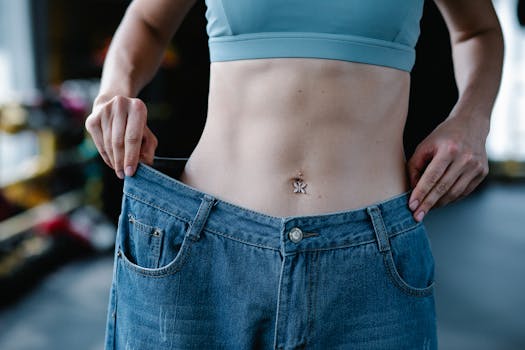
Practical guidance: use weekly averages of body weight and pair them with waist measurements. If you consistently reduce waist size while weight changes are unstable, that can still indicate fat loss.
Training load metrics: when your workouts support fat loss instead of sabotaging it
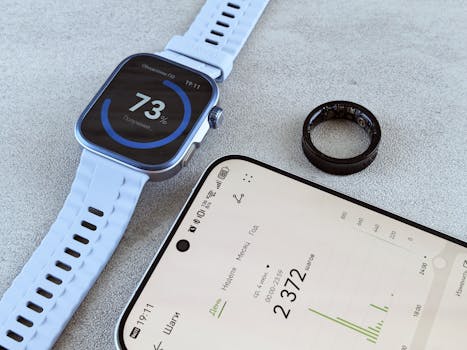
Workout duration vs. intensity
Wearables may log workout duration, heart-rate zones, and sometimes training load scores. While these are not direct measures of fat loss, they help you avoid the two common failure modes during a deficit:
- Too little activity: you lose momentum and daily movement drops.
- Too much stress: workouts become overly fatiguing, sleep worsens, and you compensate by eating more or moving less.
How to use training load signals
Look at training load alongside recovery markers (RHR, HRV, sleep). If load increases but recovery metrics worsen, reduce volume or intensity for a week. The goal is to maintain a training routine that preserves muscle and supports adherence to the fat-loss plan.
Sedentary alerts and movement reminders: turning “small” into meaningful
Many wearables track time spent inactive and prompt movement after long sitting periods. This matters because modern lifestyles often reduce daily energy expenditure through low movement volume, even when people “work out” a few times per week.
How to use it: treat movement reminders as an adherence tool. A short walk after meals can also help with post-meal glucose regulation and may support appetite control for some people. Even if the calorie impact seems small, the cumulative effect of frequent light movement can be significant.
Practical workflow: building a fat-loss dashboard from wearable metrics
You don’t need to track everything. A practical approach is to create a small set of metrics that cover movement, recovery, and outcomes.
Step 1: Track movement consistency
- Average daily steps
- Weekly time in moderate-to-vigorous activity (or active minutes)
- Sedentary time trend
Step 2: Track training recovery context
- Resting heart rate trend
- HRV trend (relative to your baseline)
- Sleep duration and consistency
Step 3: Validate with outcome metrics
- Weekly average body weight
- Waist circumference (optional but helpful)
- Training performance and perceived energy
Then iterate. If movement is stable and weight isn’t trending down over several weeks, the adjustment is likely intake-related or a hidden activity drop (for example, fewer steps on workdays). If movement increases but recovery worsens, reduce training stress and protect sleep to avoid appetite and adherence problems.
Common wearable metric mistakes during fat loss
Using daily calorie burn as a strict target
Because calorie estimates vary, using them as daily “truth” can lead to overcorrection—especially if you’re hungry or stressed. A better strategy is to use wearable metrics to improve behaviors while using body outcomes to confirm progress.
Assuming more intensity always helps
High-intensity training can increase energy expenditure, but it also increases fatigue. If it reduces sleep or increases resting heart rate, it may backfire by increasing hunger and decreasing non-exercise movement.
Ignoring measurement conditions for body fat estimates
Bioimpedance is sensitive. If you measure at different times, with different hydration, or right after hard training, the numbers can swing without reflecting true fat change.
Comparing yourself to other people’s metrics
HRV, resting heart rate, and even step counts are highly individual. Use your own baselines and trends.
How popular wearables metrics fit together: a coherent interpretation
The most useful interpretation is causal and behavioral. For example:
- If steps drop and sedentary time rises, you may lose the energy deficit even if workouts stay the same.
- If sleep becomes shorter and RHR rises, hunger and fatigue may increase, making adherence harder.
- If HRV drops and workouts feel harder, reducing training load can protect recovery and help you maintain activity volume.
In other words, wearables metrics for fat loss work best as an integrated system for maintaining consistency, not as independent “scoreboards.”
Relevant wearable categories and how their metrics typically behave
Different devices emphasize different signals. The key is to know what your device is measuring well and where it’s likely to be noisy.
Fitness trackers and smartwatches
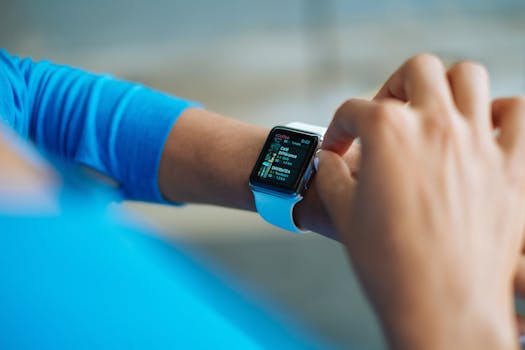
These often provide step counts, active minutes, heart rate, HRV (on many models), sleep tracking, and sometimes training load. Heart-rate zone time and calorie estimates can be helpful directionally, but they should be treated as estimates.
Smart scales and body composition devices
These are most useful for trends in weight and hydration-influenced body composition estimates. If you use a connected scale, measure consistently and interpret changes over weeks rather than days.
Optional sensors and chest straps
Some people use additional heart-rate sensors for more accurate heart-rate readings during workouts. That can improve the accuracy of heart-rate-based training metrics, though it still won’t make calorie burn a direct measurement of fat loss.
Regardless of device type, the most reliable fat-loss signals remain movement consistency and recovery stability, validated by body outcomes.
Summary: the metrics that matter most for fat loss
Wearables can support fat loss by helping you manage the behaviors that create and maintain an energy deficit while preserving recovery and muscle. Among wearable metrics, the most actionable tend to be:
- Steps and movement volume: strong proxy for daily energy expenditure and adherence.
- Active minutes / time in intensity: helps structure a sustainable training and aerobic baseline.
- Sleep duration and consistency: affects appetite regulation and recovery.
- Resting heart rate and HRV trends: provide context about stress, recovery, and training load.
- Body composition estimates: useful mainly as trend data when measured consistently.
To prevent misinterpretation, avoid treating calorie-burn numbers and single-day HRV or body fat readings as truth. Use trends, combine metrics into a coherent picture, and validate with weekly body weight averages and—when possible—waist measurements.
Prevention guidance: how to avoid “data chasing” while using wearables effectively
Fat loss is a long process, and wearables data can tempt you to react too quickly. To keep the system useful:
- Review weekly, not hourly: look at averages and trends.
- Decide in advance what you’ll adjust: for example, steps if movement drops, or training load if recovery worsens.
- Protect sleep and recovery: if recovery metrics deteriorate, reduce training stress rather than pushing harder.
- Track outcomes alongside metrics: body weight trend and waist measurements ground your decisions.
When you treat wearables as a tool for consistency and recovery—rather than a precise fat-loss measurement—they can meaningfully improve your ability to sustain a deficit and preserve lean mass.
10.03.2026. 23:32