

Indoor Air Quality CO2 Ventilation Sleep Metrics: What They Mean

Why CO2 ventilation metrics matter for sleep
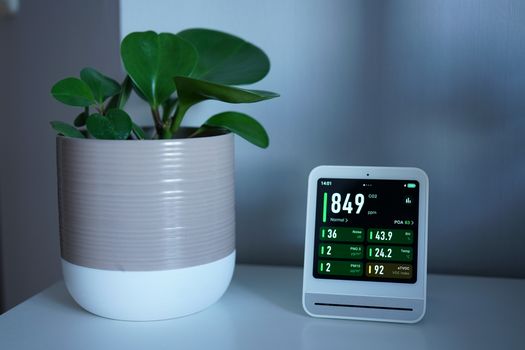
Sleep is highly sensitive to the air you breathe. Even when a room feels “comfortable,” indoor air can accumulate exhaled gases and airborne particles that reflect how well the space is ventilated. Among the most commonly used indicators is carbon dioxide (CO2). CO2 itself is not usually the direct cause of discomfort at typical indoor levels, but it serves as a practical tracer for how much of the air has been recently breathed by occupants and how effectively the room is being ventilated.
When people talk about indoor air quality CO2 ventilation sleep performance metrics, they’re usually referring to a set of measurable signals—CO2 concentration, time-weighted averages, ventilation-related patterns, and how these relate to sleep quality outcomes such as restfulness, awakenings, or daytime alertness. Understanding what those metrics mean helps you interpret readings correctly and make ventilation decisions that support better sleep.
This article explains what CO2-based ventilation metrics represent, which sleep-related performance measures are most relevant, and how to use the numbers in a practical way.
What CO2 actually measures indoors
CO2 levels indoors rise primarily because people exhale it. In a bedroom, a single sleeper can raise CO2 meaningfully, especially when windows are closed and air exchange is limited. If ventilation is strong, CO2 is diluted and levels stay lower.
CO2 readings therefore act as a proxy for two linked realities:
- Ventilation effectiveness (how quickly exhaled air is removed or diluted).
- Occupant-generated air mixing (how thoroughly the room’s air is being refreshed).
It’s important to separate CO2 from other indoor air quality concerns. CO2 does not directly measure allergens, volatile organic compounds (VOCs), or fine particles. However, ventilation patterns that reduce CO2 often also improve conditions related to those other contaminants, because they are influenced by the same air exchange processes.
Key indoor air quality CO2 ventilation metrics and how to interpret them
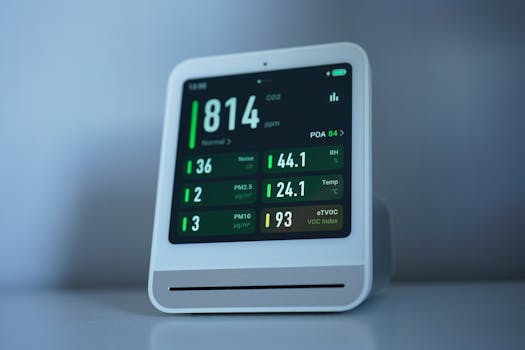
CO2-based guidance is often presented as thresholds or performance metrics. The most useful values are not just “a single number,” but how CO2 changes over time.
Peak CO2 versus time-weighted average CO2
Peak CO2 is the highest reading during sleep. It can occur when the room is most closed, when the sleeper is still settling in, or when airflow is temporarily restricted. Peak values can be informative, but they don’t always reflect the overall exposure.
Time-weighted average (TWA) CO2 represents the average level over a period. For sleep, this may be the average across the hours in bed. TWA is often more relevant to the body’s overall exposure than a brief spike.
Practical guidance: if your system shows both peak and average, prioritize what your CO2 does for most of the night rather than only the maximum.
CO2 rise rate (how quickly levels climb)
The CO2 rise rate indicates how quickly the room accumulates exhaled air. A faster rise rate suggests lower ventilation effectiveness or poorer air mixing. A slower rise rate suggests better dilution.
This metric is particularly helpful when you’re trying to understand why readings are inconsistent—such as nights when doors are shut more tightly, when a fan is off, or when airflow paths are blocked.
Duration above a threshold
Some monitoring tools and building guidelines use a concept like “time above X ppm.” For sleep, this can reflect how long the room remains in a less ventilated state. Duration above a threshold can be more meaningful than a single peak because it captures persistence.
For example, two nights with the same peak CO2 may feel different if one night stays elevated for hours while the other returns quickly.
Outdoor baseline and sensor context
Indoor CO2 interpretation depends on your outdoor baseline. If outdoor CO2 is higher than usual (traffic-heavy areas, certain weather patterns), indoor readings may also be higher even with good ventilation. Likewise, sensor accuracy varies across devices.
Practical approach: look at the difference between indoor CO2 and outdoor CO2 (or the lowest indoor reading you see before occupancy). This “delta” often gives a clearer picture of how much the room is accumulating exhaled air.
How CO2 ventilation metrics connect to sleep performance
Sleep performance metrics can include how quickly you fall asleep, how often you wake, total sleep time, sleep efficiency, and subjective measures like perceived restfulness. While CO2 itself is not typically treated as a direct “sleep drug,” poor ventilation can correlate with conditions that affect comfort and physiology—such as temperature stratification, humidity imbalance, and reduced removal of exhaled air.
When CO2 is used as part of a sleep performance framework, it is usually because ventilation affects multiple pathways that influence sleep quality:
- Thermal and airflow comfort: Poor ventilation often coincides with stale air and temperature gradients that can fragment sleep.
- Airway comfort: Higher levels of exhaled air can correlate with dryness or irritation, especially when ventilation is low and humidity is not managed.
- Occupant load and air exchange: CO2 reflects the balance between how much air is being introduced from outside and how much is being removed.
In practice, people often observe patterns such as waking more frequently on nights when CO2 climbs higher or stays elevated longer. That correlation does not prove CO2 is the sole cause, but it can still be a useful performance indicator for ventilation adequacy.
Common CO2 thresholds used for indoor air quality
There is no single universal threshold for every bedroom and every climate, but many indoor air quality frameworks use CO2 as a ventilation proxy. A common approach is to consider CO2 levels relative to outdoor air and to evaluate whether the room is being adequately ventilated during occupancy.
General interpretation often looks like this:
- Lower, near-outdoor levels suggest strong ventilation or effective air exchange.
- Moderate elevated levels suggest ventilation that may be acceptable but could be improved, especially overnight.
- Higher sustained levels indicate that exhaled air is accumulating for longer periods, which is a sign that ventilation may be insufficient for comfort and air freshness during sleep.
Because different standards and devices use different baselines, the most reliable method is to treat thresholds as starting points and evaluate your own patterns: how CO2 behaves at night, and how that aligns with sleep outcomes and comfort.
Practical ways to use CO2 readings in a bedroom
Measure where the air actually mixes
CO2 can vary within a room due to airflow patterns. If a sensor is placed near a supply vent, it may read lower than the air you breathe. If it’s near a stagnant corner, it may read higher. Place the sensor in a location that approximates the breathing zone—typically near where you sleep—while avoiding direct drafts from HVAC vents.
Practical tip: keep the sensor placement consistent when comparing nights.
Separate “ventilation events” from normal sleep
If you open a window before bed, turn on a fan briefly, or run a ventilation cycle, CO2 may drop quickly and then rise again. To interpret metrics, note the timing of these events and compare nights with similar routines.
If your device logs data, look at the CO2 curve: a quick drop followed by a steady rise may indicate that ventilation is intermittent rather than continuous.
Use trends over multiple nights
CO2 readings can be influenced by factors like window sealing, outdoor conditions, occupancy changes, and HVAC schedules. Instead of drawing conclusions from a single night, review several nights and focus on consistent patterns:
- Is the time spent above a moderate threshold increasing?
- Does the rise rate change when you adjust airflow?
- Does CO2 stay elevated longer on certain nights?
This trend-based approach reduces the risk of overreacting to one unusual reading.
Ventilation strategies that reduce CO2 during sleep
Because CO2 is a tracer for ventilation, the goal is to improve air exchange without creating uncomfortable drafts or excessive noise. Several strategies can help.
Increase outdoor air delivery during the sleep period
Mechanical ventilation systems (such as heat-recovery ventilators or balanced exhaust/intake systems) can be scheduled to run during sleeping hours. If your system has a night mode, verify that it maintains an adequate outdoor air flow rather than reducing ventilation too aggressively.
For many homes, the biggest improvement comes from ensuring the bedroom receives fresh air rather than relying on leakage alone.
Use controlled air mixing rather than “set and forget”
Even with ventilation, poor mixing can cause localized pockets of higher CO2. Gentle circulation—such as a low-speed indoor fan—can help distribute fresh air across the breathing zone. The key is to avoid direct airflow that disrupts comfort.
Practical tip: if you use a fan, evaluate CO2 rise rate and sleep comfort over the same window of time, not only the CO2 peak.
Address building envelope issues
Leaky windows and doors can sometimes lower CO2, but they can also create drafts and humidity swings that hurt comfort. Conversely, very tight envelopes improve energy efficiency but can reduce natural ventilation. The right balance typically involves intentional ventilation that maintains fresh air without creating discomfort.
If CO2 consistently rises quickly even with windows cracked, it may indicate that air exchange is not occurring effectively where it’s needed.
Interpreting sleep performance metrics alongside CO2
To connect CO2 ventilation metrics to sleep performance, it helps to use a simple, consistent evaluation method. Rather than trying to attribute every wake-up to CO2, look for patterns that repeat when ventilation changes.
What to track during the same nights
Choose a small set of metrics you can measure reliably:
- CO2 TWA or average across the time in bed.
- Time above a chosen CO2 level (based on your baseline and comfort).
- Subjective sleep quality (restfulness, stuffiness, headache).
- Objective sleep metrics from a wearable or sleep tracker (sleep efficiency, awakenings), if you already use one.
Consistency matters: keep bedtime, sensor placement, and ventilation settings as similar as possible.
Common patterns that suggest ventilation is a factor
While individual physiology varies, the following patterns often align with ventilation-related discomfort:
- CO2 climbs steadily throughout the night and you report more awakenings or “stale air” sensations.
- After improving ventilation (or changing HVAC/airflow schedules), CO2 rise rate slows and subjective comfort improves.
- Higher CO2 duration above a moderate threshold corresponds with reduced sleep efficiency across multiple nights.
If CO2 changes but sleep does not, other factors may dominate (temperature, noise, light exposure, sleep apnea risk, or allergies).
Relevant monitoring devices and what to look for
CO2 monitoring is often done using consumer sensors that log CO2, temperature, and sometimes humidity. Some tools also provide ventilation-related indicators like peak and average, and they may integrate with home systems that control ventilation.
When choosing or using a CO2 monitor for sleep-related interpretation, focus on measurement quality and logging behavior rather than brand claims. In particular:
- Data logging so you can review trends and not just live readings.
- Calibration or sensor reliability information, because sensor drift can distort thresholds.
- Consistent placement and stable operation across nights.
- Temperature and humidity readings to help interpret comfort context.
Some households also use HVAC-integrated controls that can adjust ventilation based on CO2. These systems can be useful if they respond appropriately and don’t create noise or drafts during sleep. The key is to verify that the control strategy reduces CO2 during the actual sleep period, not only during pre-sleep ventilation.
Summary: prevention guidance for better sleep-focused air quality
CO2 ventilation metrics provide a practical window into how effectively a bedroom is being refreshed with outdoor air. The most useful interpretation focuses on patterns over time—average levels, rise rate, and duration above thresholds—rather than a single peak reading. When CO2 stays elevated for long periods, it often signals that exhaled air is not being diluted quickly enough, which can correlate with reduced sleep comfort and performance.
For prevention and improvement:
- Measure CO2 in the breathing zone and keep sensor placement consistent.
- Review CO2 trends across multiple nights, emphasizing time-weighted averages and rise rate.
- Ensure ventilation is truly active during sleep hours, whether through mechanical ventilation scheduling or controlled air exchange.
- Pair CO2 data with simple sleep outcomes (comfort, awakenings, sleep efficiency) to see what changes when ventilation changes.
- Remember that CO2 is a ventilation proxy, not a complete indoor air quality diagnosis for allergens, particles, or VOCs.
Used correctly, CO2-based ventilation sleep performance metrics mean something actionable: they help you confirm whether your bedroom is breathing well enough to support restful sleep.
06.05.2026. 21:30