

Ankle Dorsiflexion Loss After Training: Self Checks 2-Week Plan

Overview: what ankle dorsiflexion loss looks like after training
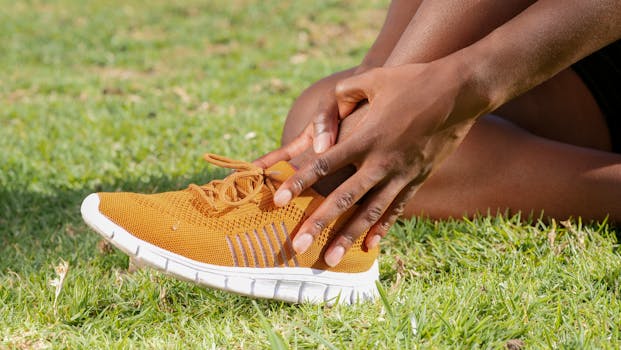
Ankle dorsiflexion loss after training typically shows up as a sudden change in how far your knee can travel forward over your toes during squats, lunges, step-downs, or sprint mechanics. People often notice one or more of the following:
- Reduced forward knee travel in weight-bearing positions (squat depth feels “capped”).
- Early heel lift during lunges, squats, or calf stretches.
- Stiffness or pinching at the front of the ankle when pushing into dorsiflexion.
- Altered foot loading (more weight on the heel or outer edge, or a collapse of the arch).
- Compensations such as leaning the torso back, turning the toes out, or shortening stride length.
- Post-workout soreness that feels more like joint restriction than normal muscle fatigue.
The key troubleshooting point: this problem can be temporary (tissue sensitivity, swelling, or fatigue) or a sign of a mechanical limitation (capsular tightness, tendon irritation, joint irritation, or altered foot mechanics). Your 2-week plan should sort that out quickly using targeted self checks and progressively build tolerance.
Most likely causes behind dorsiflexion loss after training
When dorsiflexion drops after a specific training block, the cause is often a combination of tissue irritation and mechanical restriction. The most common contributors include:
- Post-exercise swelling and joint sensitivity around the ankle can reduce available dorsiflexion even if your mobility was fine before.
- Calf muscle tightness or neural “guarding” from overuse. The gastrocnemius/soleus may not be structurally injured, but they become less willing to lengthen.
- Anterior ankle irritation (front-of-ankle discomfort during end-range dorsiflexion) that can limit motion through protective tightening.
- Capsular or soft-tissue restriction (front of the ankle joint, anterior capsule, or surrounding structures) that becomes more noticeable after repeated loading.
- Foot mobility changes such as reduced midfoot/arch function, leading to a “locked” chain and less ankle motion under load.
- Training-related technique changes (stance width, knee tracking, footwear, surface) that shift stress and make dorsiflexion harder to express.
- Less common factors like prior ankle sprain sequelae, nerve irritation, or significant tendon involvement that need clinical evaluation.
Your job over the next two weeks is not only to regain motion, but to identify what kind of restriction you have so you can choose the right repair strategy.
Step-by-step self checks to identify the restriction type

Do these checks once daily for 3–5 days, then repeat at the end of week 1 and week 2. Keep them consistent: same time of day, same shoes or no shoes, same surface, and no aggressive stretching right before.
1) Weight-bearing knee-to-wall test (baseline)
Stand facing a wall, feet about 5–10 cm from the wall. Keep your heel down and slowly bring your knee forward until you feel a firm end-range stop.
- Record the distance from wall to your foot when you hit the limit.
- Note the sensation: muscle stretch (back of calf) vs front-of-ankle pinch vs general stiffness.
If the test is dramatically worse after training, swelling or joint sensitivity is likely involved.
2) Seated dorsiflexion check (isolates calf behavior)
Sit with your knee bent to about 90 degrees. Move your ankle into dorsiflexion as far as comfortable without forcing. Compare sides.
- If seated dorsiflexion is also limited, the restriction may involve joint/capsule or tendon sensitivity beyond just the gastrocnemius.
- If seated dorsiflexion is better than weight-bearing, the gastrocnemius component may be the main limiter.
3) Straight-knee dorsiflexion check (tests gastrocnemius)
Repeat a dorsiflexion mobility effort with the knee more extended (or perform a gentle knee-straight calf stretch). Compare side-to-side.
- If straight-knee positions worsen the limit, prioritize gastrocnemius-focused mobility and load management.
4) Front-of-ankle vs back-of-calf symptom mapping
During a controlled lunge or knee-to-wall, ask: where is the “stop”?
- Front-of-ankle pinch suggests anterior joint irritation, capsular limitation, or impingement-type sensitivity.
- Back-of-calf tightness suggests muscular length restriction or protective guarding after overload.
- Both suggests a combined issue: calf tension plus joint sensitivity.
5) Swelling and temperature check
Look for puffiness around the ankle joint and compare warmth compared to the other side.
- If swelling/heat is present, prioritize recovery and gentle mobility rather than aggressive stretching.
Two-week troubleshooting and repair process
The plan below is designed to reduce irritability first, then restore dorsiflexion capacity under load. Use pain as your guide: mild discomfort is acceptable, sharp pain or worsening range means you need to scale back.
Rules for progress:
- Keep discomfort during drills at 0–3/10. Afterward it should not be worse the next morning.
- If range drops or symptoms intensify, reduce intensity by 30–50% and focus on the gentler steps.
- Do not “test hard” daily with maximal stretching. Use the knee-to-wall test and stop short of pain.
Week 1 (calm it down + restore tolerance)
Goal: improve mobility without triggering additional irritation. Expect some day-to-day variability.
Day 1–3: reduce irritability and reintroduce gentle dorsiflexion
- Mobility drill: knee-to-wall micro-sets (3–5 reps, 20–30 seconds each). Keep heel down and stop just before the limiting sensation.
- Calf length reset: gentle calf stretch with a towel or band for support (2 rounds of 20–30 seconds). For front-of-ankle pinch, keep the stretch shorter and more controlled; avoid forcing into the pinch.
- Ankle isometrics: push the foot into dorsiflexion against a wall or strap for 5 rounds of 10–15 seconds at moderate effort (not maximal). This often improves tolerance without joint flare.
- Foot control: practice short-foot activation (lift the arch without curling toes) for 2 sets of 8–10 reps. This helps if midfoot collapse is stealing dorsiflexion.
Training modification for Week 1: temporarily reduce depth and volume of movements that provoke immediate dorsiflexion loss (deep squats, deep lunges, heavy heel-elevated-free work if it worsens symptoms). Keep the movement pattern but reduce range, load, or total reps.
Day 4–7: load the new range lightly
- Supported knee-over-toe holds: 3 sets of 20–40 seconds with heel down. Use a counter or bench for balance.
- Tempo step-downs from a low step (2–3 sets of 5 reps each side). Control the knee forward while keeping heel contact. Stop before front-of-ankle pinch becomes noticeable.
- Calf strengthening (pain-free range): heel raises with slow lowering (3 sets of 6–10). If dorsiflexion loss is due to calf guarding, gradual strengthening helps restore the ability to lengthen later.
Optional tool (if you’re using footwear that changes your ankle angle): if you typically train in flat shoes or minimal footwear, try a consistent option for Week 1 and avoid frequent shoe changes. Consistency reduces confounding variables in your self checks.
Week 2 (restore dorsiflexion under load + build resilience)
Goal: translate mobility gains into weight-bearing performance and reduce the chance of recurrence after training.
Day 8–10: progress mobility into functional positions
- Knee-to-wall series with a rep target: 2–3 rounds of 8–10 controlled reps, each rep taking 2–3 seconds to reach end-range and 2 seconds to return.
- Split squat to a “safe depth”: 3 sets of 4–6 reps per side. Use a slightly reduced range where heel stays down and knee tracking feels stable. Increase depth only if next-day range and symptoms are stable.
- Anterior ankle-friendly mobility: if your limiter is front-of-ankle pinch, focus on gentle joint glides rather than aggressive stretching. A practical approach is seated dorsiflexion with heel-to-floor attempts held short and repeated, rather than long forceful holds.
Day 11–14: integrate dorsiflexion into training without flare
- Warm-up ladder before sessions: 1–2 minutes of ankle isometrics, then 1–2 minutes of knee-over-toe holds. This reduces the “cold start” stiffness that often appears after fatigue.
- Strength at the new limit: heel raises and controlled lunges/squats at manageable loads. Keep the principle: the ankle should be able to accept dorsiflexion without increasing front-of-ankle pinch.
- Volume control: if dorsiflexion loss reliably appears after a particular workout, cut that workout’s dorsiflexion demand by 20–40% for the remainder of Week 2, then reintroduce gradually.
By the end of Week 2, you should see either improved knee-to-wall distance or a less intense end-range sensation, with better heel tolerance in lunges/squats.
Solutions from simplest fixes to more advanced fixes
Use the list below like a decision path. Start at the top. Move down only if you’re not improving week-to-week.
1) Simplest: adjust training load and range immediately
If dorsiflexion loss appears right after training, your fastest win is to reduce the dose that triggers irritability. Choose one lever:
- Reduce depth (stop earlier in squats/lunges).
- Reduce load (lighter weight, fewer sets).
- Reduce frequency (fewer sessions emphasizing knee-forward positions).
- Use a temporary heel elevation only if it removes pain and helps you keep overall training quality—then taper it down over days, not weeks.
This approach is often enough when swelling and protective guarding are the main drivers.
2) Improve daily ankle tolerance with brief, repeatable drills
Short, frequent exposure beats long, aggressive stretching. Add:
- 2–3 micro-sets of knee-to-wall (20–30 seconds each)
- 2–3 rounds of dorsiflexion isometrics
- 1 set of short-foot activation
Track morning stiffness and knee-to-wall distance. If these stabilize or improve, you’re on the right track.
3) Target the likely limiter: calf mechanics vs anterior ankle sensitivity
Based on your self checks:
- If seated dorsiflexion is okay but weight-bearing is worse: prioritize gastrocnemius/soleus length and control (knee-straight and knee-bent calf work, plus slow heel raises).
- If front-of-ankle pinch dominates: keep mobility gentle, avoid forcing into the pinch, and emphasize isometrics, short holds, and controlled end-range reps rather than maximal stretching.
- If both front and back are restricted: combine calf strengthening with joint-tolerant mobility and reduce the training demand that provokes flare.
4) Correct foot and knee alignment to stop the “chain reaction”
Many cases worsen because the body finds an alternative path when dorsiflexion is limited. Practice:
- Short-foot during lunges and step-downs.
- Knee tracking over the second/third toe (avoid knee collapsing inward).
- Controlled stance width that allows heel-down mechanics without compensations.
If you use orthotics or insoles, keep them consistent during the 2-week plan. Sudden changes can make self-check results unreliable.
5) Advanced: address persistent joint restriction with clinician-guided options
If after 2 weeks you still have clear, consistent loss of dorsiflexion (especially if the pinch is sharp or movement is capped), the issue may involve joint mechanics that respond better to hands-on assessment and specific mobilization. At that point, a physical therapist or sports medicine clinician can evaluate:
- Anterior ankle joint mechanics and capsular mobility
- Tendon irritation and load response
- Whether there is underlying instability after prior sprain
- Neuromuscular control contributing to guarding
Self-management can help, but it cannot replace a precise diagnosis when range is blocked rather than just “tight.”
When replacement or professional help is necessary
Seek professional evaluation sooner rather than later if any of these apply. “Replacement” here means replacement of your current approach (stop self-treatment and get assessed), not replacement of a body part.
- Sharp pain in the front of the ankle or pain that worsens during the day and persists beyond 24–48 hours.
- Visible swelling, bruising, or warmth that doesn’t settle with load reduction.
- Mechanical blockage (a hard stop, catching, or you cannot progress range at all despite gentle efforts).
- Instability symptoms (giving way, repeated “rolls,” or a sensation that the ankle can’t trust dorsiflexion).
- Numbness/tingling or pain that radiates, suggesting nerve involvement.
- Failure to improve after 2 weeks of the plan, or a clear decline in knee-to-wall distance week-to-week.
- History of significant ankle injury (fracture, severe sprain, or surgery) where new loss of dorsiflexion could signal a complication.
If you can’t reach a comfortable, functional dorsiflexion range without provoking symptoms, the safest next step is a clinician assessment to determine whether the limitation is muscular, tendon-related, or joint-mechanical.
How to judge success by the end of 2 weeks
Use your self checks, not guesswork. Success looks like:
- Knee-to-wall test improves or the limiting sensation becomes less intense.
- Heel stays down more reliably in lunges/squats at the depth you’re training.
- Next-day response is stable: no escalating soreness or worsening range.
- Training feels more predictable: dorsiflexion loss is less dramatic after hard sessions.
If you meet these markers, continue the general approach—short mobility exposure, controlled end-range reps, and load management—so the ankle keeps its new tolerance. If not, escalate to a professional evaluation to target the exact restriction mechanism.
13.04.2026. 07:20