

HRV Wearable Optical vs Chest Strap Accuracy: What’s More Reliable?

Optical HRV on wearables vs chest straps: what’s actually being measured
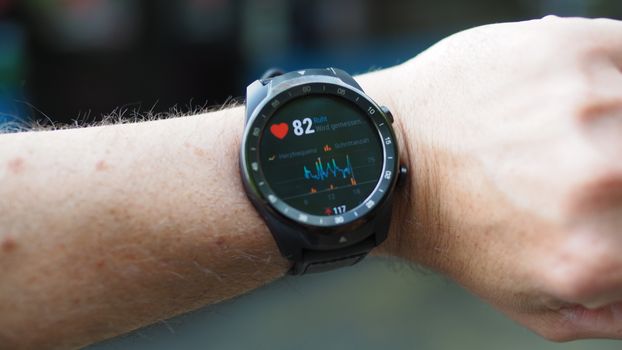
HRV (heart rate variability) tries to quantify how your autonomic nervous system is regulating your heart. In practice, your device estimates HRV from heartbeats—either by detecting blood flow changes at the skin (optical) or by reading electrical heart activity (ECG) with electrodes (chest strap).
This matters because “HRV” is not a single universal measurement. Two devices can both report RMSSD or a similarly named metric, yet still differ in how they detect beats, how they filter noise, and how reliably they can measure during motion, sweat, and sleep.
When you compare HRV wearable optical vs chest strap accuracy, you’re really comparing two sensor technologies and the signal-processing pipelines wrapped around them.
Quick summary: which option is strongest overall?
If you want the most consistent, measurement-grade HRV—especially during training, high sweat, or when you move a lot—a chest strap with ECG-style sensing is usually the stronger overall choice. It tends to produce cleaner beat-to-beat intervals, which improves HRV stability and reduces “random swings.”
If your goal is simple daily readiness trends during sleep or low-motion periods, optical wearables can be very usable. The tradeoff is that optical HRV is more sensitive to motion artifacts and skin contact variability, so the day-to-day numbers can be noisier.
Side-by-side: optical HRV wearables vs chest strap HRV accuracy
Below is a practical comparison focused on accuracy drivers: signal source, beat detection reliability, typical error patterns, and when each approach tends to perform best.
| Factor | HRV Optical Wearable (wrist/arm/ear) | Chest Strap (ECG-style) |
|---|---|---|
| Primary sensing method | Green/red/IR light reflects off skin; measures blood volume pulse | Electrodes detect electrical activity of the heart (ECG-like signal) |
| Beat-to-beat detection | Derived from photoplethysmography (PPG); sensitive to motion and contact | Direct electrical signal; typically more robust beat detection |
| Common accuracy failure mode | Motion artifacts (shaking, arm movement), pressure changes, sweat/sunlight interference | Electrode placement issues, strap looseness, dry skin/sweat mismatch |
| Typical best conditions | Sleep and low-motion sessions; steady skin contact | Training and recovery, including motion; consistent electrode contact |
| Typical worst conditions | Intervals, lifting, cycling with heavy arm movement; cold weather with poor perfusion | Very poor strap fit, incorrect placement, prolonged dryness without wetting |
| HRV stability day-to-day | Can show larger variability when signal quality drops | Often more stable because beat detection is cleaner |
| How quickly the device “locks on” | May take longer to stabilize after waking or during activity | Usually locks on quickly once strap is correctly positioned |
| Effect of skin tone and perfusion | Can vary by skin pigmentation and circulation; cold reduces signal quality | Less dependent on optical perfusion; still depends on electrode contact |
| Data output style | Often reports HRV as a readiness/recovery score or daily summary | Often reports HRV metrics continuously and supports training-focused analysis |
| Measurement “trust” for training decisions | Best when you treat results as trends and the device indicates good signal quality | Better suited for making decisions based on HRV shifts (especially with consistent setup) |
Why chest straps tend to be more accurate
Chest straps detect electrical signals, which are less affected by arm motion and skin contact pressure. Your chest stays relatively stable compared with your wrist during running, lifting, or cycling. That stability reduces the chance of missed beats or “false peaks” that can distort HRV calculations.
In practical terms, HRV is calculated from the intervals between consecutive beats (often summarized as RMSSD). If your device occasionally misidentifies a beat (or misses one), the interval series changes, and HRV can jump in ways that don’t reflect your actual physiology.
Why optical sensors can still be good
Optical sensors are convenient. You wear them all day and sleep tracking is frictionless. Many modern devices use advanced algorithms to estimate beat timing from PPG signals, then filter out noise. If you keep conditions consistent—tight band fit, stable skin contact, and mostly low motion—optical HRV can track meaningful trends.
But optical HRV is inherently more sensitive to the quality of the optical signal. If the device loses contact for even a few seconds, you may see HRV instability or missing data.
Real-world performance differences you’ll notice
Accuracy isn’t just “which is better in a lab.” It’s whether your numbers are consistent enough to guide how you train, recover, or manage weight-related behaviors like sleep timing, stress, and workout intensity.
Scenario 1: morning readiness while you’re still getting coffee
Imagine you wake up, check your wearable within 3–5 minutes, and it reports a low HRV value. If your wrist sensor is still adjusting to blood flow after sleep, or your arm position changes while you scroll, optical HRV can be affected. You might get a “low” reading that doesn’t match how you feel.
With a chest strap, you can sit quietly for 1–3 minutes before checking your HRV. Because ECG-style beat detection is more robust, the HRV estimate tends to be steadier. The practical difference is that you’ll spend less time wondering whether the number is real.
Scenario 2: interval training and arm movement
Now consider a 30-minute session with hard intervals and rest periods. Your wrist moves. Your forearm muscles contract. Your skin temperature changes. Optical HRV can degrade during the session, and some wearables will reduce confidence or output fewer usable segments.
Chest straps usually handle motion better because the signal is electrical and the sensor placement is stable on your torso. If you’re using HRV to decide whether to push harder or hold back, chest strap data is typically more dependable during and immediately after training.
Scenario 3: sleep HRV trends for recovery and weight regulation
For weight regulation, your sleep quality often matters as much as your workout. Many people use HRV as a proxy for recovery readiness: higher HRV often aligns with better parasympathetic tone.
In sleep, optical sensors can perform surprisingly well. Your wrist is mostly still, so PPG quality improves. Many users see consistent nightly HRV trends, especially with tight fit and good skin contact. The difference is that chest straps often produce cleaner beat intervals across the night, leading to smoother trends and fewer “outlier nights.”
What “accuracy” looks like in daily life
Even when both devices are measuring the same underlying physiology, optical HRV can be more prone to:
- Greater day-to-day swings that come from signal quality changes, not biology
- Occasional missing or low-confidence data segments
- More sensitivity to band tightness and how you position your device
Chest straps more often deliver:
- More stable beat-to-beat detection across motion
- Less “noise-driven” HRV spikes
- Better usability when you want to compare HRV across workouts
Pros and cons breakdown: what each option does well (and where it falls short)
Optical HRV wearable pros
- Convenience: You wear it continuously, so you get sleep and daily trends without extra steps.
- Better compliance: If you’re consistent, trends over weeks can still be valuable for recovery planning.
- Broader ecosystem: Many devices pair HRV with readiness, stress scores, activity, and recovery reminders.
- Comfort: No strap to adjust or electrodes to manage.
Optical HRV wearable cons
- Motion sensitivity: Arm movement can distort PPG signals, especially during workouts.
- Skin contact variability: Loose bands, sweat, dryness, and cold can reduce signal quality.
- More “confidence swings”: You may see HRV numbers change because the sensor temporarily loses lock.
- Less ideal for training-grade decisions: If you’re using HRV to fine-tune intensity in real time, optical can be less reliable.
Chest strap HRV pros
- Higher beat detection reliability: Electrical sensing typically yields cleaner intervals for HRV calculations.
- Better performance during movement: You can get more consistent HRV segments during post-exercise and active recovery.
- More stable metrics: HRV tends to be less affected by wrist position changes.
- Training-focused use: Great if you want to compare HRV across specific workouts and recovery days.
Chest strap HRV cons
- Setup matters: Correct placement and adequate strap tightness are essential for clean readings.
- Skin irritation risk: Some people experience chafing or irritation, especially with extended wear.
- Extra friction: You must put it on before you measure, which can reduce consistency.
- Maintenance: Many straps perform best when the sensors are kept clean and (depending on model) lightly moistened.
Best use-case recommendations for different buyers
You’ll get the best results by matching the sensor to your behavior. HRV is only useful if you can measure it consistently enough to interpret trends.
If you’re using HRV mainly for sleep recovery and weight regulation
Choose an optical wearable if:
- You want daily HRV trends without extra steps.
- You mainly check HRV in the morning or review it nightly.
- Your priority is habit-building (sleep timing, stress management, consistent bedtime).
Practical approach: wear the device snugly, stay consistent with bedtime, and look for multi-day patterns rather than single-number reactions.
If you want HRV to guide training intensity and recovery decisions
Choose a chest strap if:
- You plan to use HRV around workouts (pre-session, cooldown, post-session recovery).
- You do intervals, lifting, or sports where your wrist moves a lot.
- You’re serious about reducing “false alarms” caused by sensor noise.
Practical approach: measure HRV at the same time each day, with a short quiet period (often 1–3 minutes) before you check. Then compare week-to-week changes rather than reacting to one outlier day.
If you’re an athlete or coach stacking multiple metrics
Many people get the best of both worlds: optical for 24/7 context and a chest strap for high-confidence HRV sessions. For example, you might use your wrist device for nightly trends and use a chest strap for structured “test windows” (like every third morning or after key workouts).
In the weight regulation context, this can help you connect recovery status with appetite, training quality, and adherence. When HRV drops for several days, you may schedule lighter training and protect sleep—both of which often support better caloric control.
How this plays out with real products (naturally, without overpromising)
Optical options are common in fitness watches and rings. Chest strap options commonly pair with phones and training apps. For example:
- Optical wearables: popular smartwatches and fitness bands that report daily HRV and readiness scores. They’re convenient for sleep trends, but their accuracy depends heavily on sensor contact and motion.
- Chest straps: widely used in training ecosystems; they’re often more dependable for HRV during activity and structured recovery measurements.
If you’re deciding between them, treat your choice as a measurement strategy. If your HRV decisions affect training quality, chest straps tend to justify the extra setup.
Final verdict: which option suits your needs?
Chest strap HRV is the better choice when accuracy matters most. If you want HRV that’s less influenced by motion, sweat, and wrist positioning—and you plan to use HRV to guide training intensity or recovery—go with the chest strap.
Optical HRV is the better choice when consistency and convenience drive results. If your primary goal is nightly recovery trends for weight regulation (sleep, stress, readiness) and you can keep the sensor consistently fitted, optical wearables can be more than good enough. You’ll just need to interpret numbers as trends and pay attention to signal quality.
In short:
- Choose chest strap: training-grade HRV accuracy, motion-heavy days, fewer noise-driven outliers.
- Choose optical wearable: everyday HRV habits, sleep tracking, low-friction monitoring.
If you want the strongest overall reliability and fewer “is this real or a sensor artifact?” moments, chest straps usually win. If you want the easiest system you’ll actually use every day, optical wearables win—provided you treat HRV as a trend and keep your setup consistent.
14.06.2026. 04:35