

Wearable Metrics for Erectile Health: HRV & Resting Heart Rate Guide

Why you’re looking at HRV and resting heart rate for erectile health
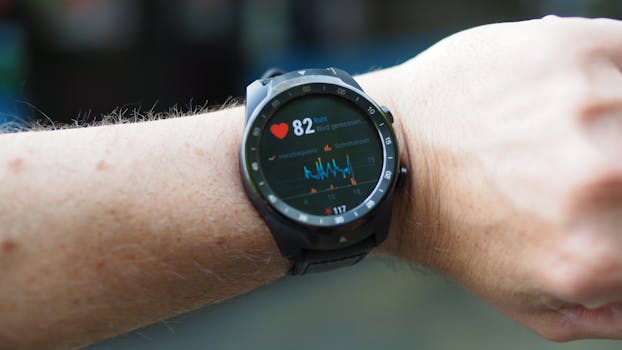
If you’re trying to understand erectile health with wearable data, you’re probably dealing with a common problem: you want actionable signals, but you don’t know which metrics actually matter. You may also notice that your sleep, stress, fitness routine, and relationship stress all seem to affect how you feel—yet it’s hard to connect the dots.
This is where metrics like heart rate variability (HRV) and resting heart rate (RHR) come in. They’re not “direct erectile health measures.” But they can reflect the body systems that influence sexual function—especially your autonomic nervous system (stress/relaxation balance), recovery status, circulation-related strain, and overall cardiovascular load.
When you buy a wearable with the right sensors and data quality, you can track trends over time. The goal isn’t to chase a single number. It’s to build a clearer picture of how your stress and recovery patterns line up with how you’re doing in your body.
What HRV and resting heart rate mean in plain language
Before you buy, it helps to understand what you’re measuring. These terms get thrown around a lot, so here’s the simple version.
HRV (heart rate variability)
HRV describes the tiny timing differences between heartbeats. Your heart doesn’t beat like a metronome; it naturally speeds up and slows down. HRV reflects how flexible your nervous system is—often interpreted as a sign of recovery and stress balance.
In many people, higher HRV during stable periods can suggest better recovery or lower stress load. Lower HRV can show higher stress, poor sleep, illness, overtraining, or other strain.
Important: HRV is highly personal. Two people can have different “normal” values. That’s why trend tracking matters more than absolute numbers.
Resting heart rate (RHR)
RHR is your heart rate when you’re at rest—usually measured during sleep or when you’re inactive. It can rise when your body is under stress (poor sleep, illness, dehydration, high workload) and drop when you’re recovered.
For erectile health, RHR is useful as a general “load” indicator. It doesn’t diagnose anything by itself, but it can help you notice patterns like: “When my RHR is elevated for several days, my sexual performance tends to feel worse.”
Important features and specifications to look for
Not all wearables measure HRV and resting heart rate the same way. When you’re buying specifically for wearable metrics for erectile health HRV resting heart rate, focus on accuracy, consistency, and data access.
1) HRV measurement method (optical sensor quality)
Most consumer wearables use optical heart rate sensors (photoplethysmography, or PPG). You want a device that can capture clean signals, especially during sleep.
Look for:
- Continuous heart rate tracking with sleep-time HRV analysis
- Strong sensor placement (watch-style devices often fit more consistently than loose bands)
- Stable fit guidance (tight enough to avoid slipping, not so tight it irritates)
If your wearable frequently loses signal, your HRV trend will be noisy. That’s the fastest way to end up with confusing data.
2) Resting heart rate definition and reporting
Some devices calculate “resting” based on inactivity; others use nighttime averages. For trend tracking, you want a consistent method.
Practical tip: check that the device provides daily RHR (or a daily resting trend) and that it’s measured during similar conditions (often sleep). If the wearable only shows RHR occasionally, you’ll struggle to correlate it with your week-to-week changes.
3) Sleep staging and sleep duration reliability
HRV is strongly influenced by sleep quality. A wearable that tracks sleep duration and sleep stages (even if imperfect) can help you interpret HRV changes.
Look for:
- Sleep duration and consistency metrics
- Sleep timing (bedtime/wake time)
- Sleep disturbance estimates (movement/fragmentation)
You don’t need perfect sleep science. You need enough context to explain why HRV dropped (late night, alcohol, stress, poor sleep).
4) Data access: app dashboards and export options
For erectile health tracking, you’ll likely want to review patterns over weeks. If the wearable’s app is hard to interpret or doesn’t let you export data, you’ll stop using it.
Prioritize:
- Clear daily summaries for HRV and resting heart rate
- Trends over 7, 14, and 30 days
- Ability to export or integrate with common health platforms (where available)
Some people start with the built-in app and then move to a spreadsheet. That’s fine. The key is that you can see patterns without guessing.
5) Battery life and wearing consistency
Wearables only help if you wear them consistently. If you have to charge every 1–2 days, you may end up with gaps right when you need trend data.
Target a device that can reliably run for at least 4–7 days without interruption. If you’re serious about HRV and RHR tracking, daily wear is non-negotiable.
6) Comfort and fit for long-term use
Comfort sounds basic, but it’s a buying spec that matters. If the band irritates your skin or feels loose at night, you’ll get signal issues and lower data quality.
Choose a strap that:
- Stays in place during sleep
- Doesn’t cause pressure points
- Has adjustable sizing and breathable materials
7) Optional sensors that can help with context
While HRV and RHR are the headline metrics, other sensors can add context. Consider devices that also track:
- SpO2 (oxygen saturation) for sleep-related stress signals
- Respiratory rate trends (some devices estimate it)
- Stress scores (use as directional context, not as a medical measure)
These can help explain HRV swings, especially around sleep and illness.
What you should prioritize before you hit “buy”
Here’s a buyer-first approach. You don’t need the most expensive wearable. You need the right combination of measurement consistency and interpretability.
Prioritize trend quality over flashy features
Your main goal is a stable HRV and resting heart rate trend over time. That means you should prioritize:
- Reliable sleep-time HRV capture
- Daily resting heart rate reporting
- Good app charts and easy review
If a wearable gives you HRV data but the signal drops frequently, it’s not a good match for your erectile health tracking goals.
Prioritize comfort for night wear
HRV often looks best when measured during sleep. If you can’t comfortably wear the device overnight, your data will be less useful.
Real-world scenario: You buy a sleek fitness band that feels fine during the day. After three nights, you notice it shifts during sleep. HRV readings become inconsistent—some nights show “missing” or sudden jumps. You’ll spend weeks second-guessing the data instead of using it. A slightly heavier watch-style device that stays put can outperform a “lighter” band for this specific purpose.
Prioritize a measurement window you can actually commit to
Don’t expect immediate conclusions. Give yourself time. A practical timeframe:
- 2 weeks to establish baseline HRV and RHR patterns
- 4–6 weeks to start seeing repeatable links with stress, sleep, and performance
- 8–12 weeks for more confident trend interpretation
If you only track for a few days, you’ll likely misinterpret normal day-to-day variation as a problem.
Prioritize easy journaling (even simple notes)
Wearables give physiology signals. Your lived experience gives context. You don’t need a complex journal. Just add a few short entries:
- Sleep quality (1–5)
- Stress level (1–5)
- Alcohol (yes/no) and late nights
- Sexual performance notes (brief, private, non-graphic)
This helps you interpret HRV and RHR changes without turning your life into a spreadsheet project.
Use reputable brands and established ecosystems when possible
You’ll see different levels of data clarity and app usability across brands. If you want fewer headaches, consider mainstream devices with mature apps and consistent firmware updates. If you already use an ecosystem (Apple Health, Google Fit, Samsung Health), choosing a wearable that integrates smoothly can reduce friction.
For example, many people use Apple Watch models for sleep and HRV-style metrics, while Garmin devices are popular for recovery and resting heart rate trend tracking. Fitbit can also be useful for general heart rate and sleep context. Choose the one that you’ll wear consistently and review daily without frustration.
Don’t buy solely because a device “mentions HRV.” Buy because it gives you usable daily trends and you can interpret them.
Common purchasing mistakes and misunderstandings
These are the traps that lead to wasted money or confusing data.
Mistake 1: Treating HRV as a direct erectile health score
HRV is a stress/recovery signal. Erectile function is influenced by many factors—blood flow, nerve function, hormones, mental state, medication effects, and relationship context. HRV can be a useful piece of the puzzle, but it’s not a diagnostic tool.
Mistake 2: Comparing your HRV to someone else’s numbers
HRV varies widely by age, baseline fitness, breathing patterns, sleep quality, and even how the watch sits on your wrist. Two people can have very different HRV ranges and still both be healthy. Use your own baseline and look for changes relative to you.
Mistake 3: Ignoring signal loss and fit issues
If your wearable frequently loses the heart rate signal at night, HRV becomes less reliable. Before you blame your body, check whether the device fit changed, the strap loosened, or you wore it on a different wrist.
Mistake 4: Buying a device without clear HRV trends in the app
Some wearables show HRV only in summaries or buried views. If you can’t quickly see daily HRV changes and 14–30 day trends, you won’t use the data long enough to matter.
Mistake 5: Expecting a “single metric fix”
RHR and HRV are correlated with stress and recovery, but they won’t capture everything. Performance can be affected by anxiety, medication changes, porn habits, pelvic floor tension, alcohol timing, and more. Your wearable should support your broader approach, not replace it.
Practical buying checklist for wearable metrics
Use this decision framework before you purchase. If a wearable fails multiple items here, it’s probably not the right fit for your HRV and resting heart rate tracking goals.
Step 1: Confirm the metrics you want are actually tracked daily
- HRV is available as a daily value or consistent sleep-time metric
- Resting heart rate is reported daily (or near-daily) with consistent definitions
- Charts show at least 7–30 day trends
Step 2: Check measurement conditions
- HRV is measured reliably during sleep (not just occasional snapshots)
- Device indicates signal quality or uses algorithms that reduce missing data
- Fit is comfortable enough for overnight wear
Step 3: Validate interpretability in the app
- HRV and RHR are easy to find without multiple taps
- Sleep summary gives context (duration, timing, disturbances)
- Data is exportable or at least easy to review over time
Step 4: Make sure you can keep a consistent routine
- Battery life allows continuous wear (aim for 4–7 days+)
- You can wear it through workouts and nights without removing it
- Straps and sizing are adjustable to maintain stable sensor contact
Step 5: Decide how you’ll use the data for decisions
- You’ll review HRV and RHR trends weekly, not hourly
- You’ll log a few context notes (sleep, stress, alcohol)
- You’ll treat anomalies as “signals to investigate,” not as immediate conclusions
Final buyer guidance and recommendations
If your goal is to use wearable metrics for erectile health—specifically HRV and resting heart rate—the best purchase is the wearable you’ll wear consistently and understand quickly. The most important “spec” isn’t brand prestige. It’s data stability: clean HRV measurements at night and consistent daily resting heart rate reporting.
Start with a baseline approach. For the first 14 days, focus on learning your normal range. Then look for patterns. For example:
- If your resting heart rate trends higher for 3–5 days, your HRV may drop and your stress levels may feel higher too. That’s a cue to improve sleep timing, hydration, and workload recovery.
- If your HRV consistently dips after late nights or heavy alcohol, you’ll know what lifestyle inputs most affect your autonomic balance.
- If you notice performance changes on weeks where sleep is fragmented, your wearable is helping you identify a controllable lever.
Finally, keep things realistic. Erectile health is complex, and wearables can’t replace medical evaluation. If you have persistent erectile difficulties, pain, numbness, or sudden changes, you should speak with a qualified clinician. In the meantime, a well-chosen wearable can give you structured, repeatable insight into stress and recovery—two factors that often sit at the center of the problem.
If you want a practical next step, choose a wearable that clearly tracks HRV and resting heart rate with strong sleep-time reliability, offers easy trend views (7–30 days), and fits comfortably enough for nightly wear. That combination will do more for your tracking than chasing every extra feature.
27.12.2025. 19:39