

Rep Range for Strength vs Hypertrophy: How to Choose

Why rep range matters—and why it’s not the whole story

“Rep range for strength vs hypertrophy” is one of the most common questions in strength training because it sounds simple: lift heavier for strength, lift lighter for muscle growth. In practice, the relationship is more nuanced. Rep ranges are a tool for managing training variables like load, intensity, fatigue, and how close you train to failure. These variables determine whether you emphasize neural adaptations (strength) or muscle growth signals (hypertrophy), and they also affect how much progress you can recover from.
Rep range is best viewed as a practical guideline tied to effort and movement quality, not a strict rule. You can build strength in higher rep ranges and build size in lower rep ranges—what changes is the balance of mechanical tension, metabolic stress, and stimulus quality across your sets.
Defining strength and hypertrophy in training terms
Strength and hypertrophy overlap in the muscles they use, but they differ in what your body adapts to most strongly.
Strength: improving force production
Strength adaptations include improved motor unit recruitment, better coordination, and increased efficiency of the movement pattern. These changes are strongly influenced by lifting heavy loads with high intent, typically with fewer total reps per set and longer rest periods to manage fatigue.
Hypertrophy: increasing muscle size
Hypertrophy is driven by repeated exposure to sufficient mechanical tension on the muscle, adequate volume, and training that creates a strong growth stimulus. This can be achieved across a wide rep range, as long as sets are performed with enough effort and the load is challenging enough to stimulate the target muscle fibers.
In other words, both strength and hypertrophy depend on effort and effective training volume. Rep range influences how easily you can reach those targets.
Common rep ranges for strength: what the evidence suggests

When people talk about “strength rep ranges,” they often mean sets of about 1–6 reps. This range allows you to use heavier loads and maintain high force output with manageable fatigue within a session.
1–6 reps: a practical strength zone
Sets in the 1–6 rep range are commonly used for compound lifts like squats, deadlifts, presses, and rows. The heavy loading supports high levels of tension and emphasizes neural factors. Most lifters also find it easier to keep technique stable when reps stay low.
To make this rep range effective for strength, the key is not only weight—it’s proximity to failure. Many strength-focused sets are performed with a small buffer (often leaving a few reps in reserve) to preserve bar speed, coordination, and recovery. If you push too close to failure on every set, you may accumulate fatigue that reduces performance and slows progress.
How rest and set structure affect strength
Strength-oriented training typically uses longer rest intervals (often 2–5 minutes for heavy compound work). Longer rest helps you maintain output and repeat quality reps. Short rest can turn a strength session into an endurance or fatigue session, even if the rep target is low.
Common rep ranges for hypertrophy: what the evidence suggests
Hypertrophy training is often associated with 6–15 reps, with many programs including some work in the 15–25 rep range. The underlying concept is that moderate loads allow you to accumulate enough quality reps, sustain tension through a larger portion of the set, and complete enough total volume to drive growth.
6–15 reps: the workhorse zone
This rep range is popular because it balances load and repetition volume. Many lifters can train with loads that feel heavy enough to tax the muscle while still generating sufficient reps per set to contribute meaningful volume. When performed with good technique and adequate effort, it tends to produce strong hypertrophy results.
For hypertrophy, the “dose” is usually better measured by sets and reps performed close to failure rather than by the rep range alone. Sets that end with a few reps left in reserve (commonly around 0–3 for many lifters, depending on experience and exercise) tend to create a strong growth stimulus.
15–25 reps: when higher reps still build muscle
Higher reps can work well for hypertrophy, especially for isolation movements (like lateral raises, curls, leg extensions, and hamstring curls) where it’s easier to control tension and avoid technique breakdown. The main limitation is that fatigue can rise quickly, and it can become harder to maintain mechanical tension if form deteriorates.
Higher-rep sets may also be useful when joint comfort or recovery favors lower loads. They can complement a program that already includes moderate-rep work.
How to choose the right rep range for your goal
Instead of choosing a rep range based only on labels like “strength” or “hypertrophy,” use your goal to decide the emphasis and then select rep ranges that let you train effectively.
Use your primary goal to set emphasis, not exclusivity
If your priority is strength, you’ll generally spend more time in lower rep ranges for the main lifts. If your priority is muscle gain, you’ll spend more time in moderate rep ranges with enough total volume. But you don’t need to eliminate other rep ranges entirely. Including some higher reps for assistance work can improve muscle development and help balance weak points.
Let exercise type guide rep selection
Compound lifts often pair naturally with lower to moderate reps because heavy loading is easier to apply and technique is easier to manage. Isolation exercises frequently pair well with moderate to higher reps because they allow you to focus on the target muscle without requiring maximal whole-body coordination.
- Squat/press/deadlift variations: commonly 1–6 reps for heavier work, with some 6–10 reps for supplemental volume.
- Rows/pull-ups/hinges: often 4–10 reps for strength-to-hypertrophy overlap, with some higher reps for back thickness.
- Isolation work (curls, extensions, raises): often 8–20 reps depending on your control and fatigue tolerance.
Choose a rep range that helps you train close enough to failure
The most practical driver of hypertrophy is training sets with sufficient effort. If your rep range is too high, you may reach failure mainly from discomfort or burning rather than sustained mechanical tension. If it’s too low, you might not accumulate enough effective reps for volume. A rep range that lets you finish sets with consistent form and a strong effort level tends to work best.
Rep range vs intensity: the real mechanism behind outcomes
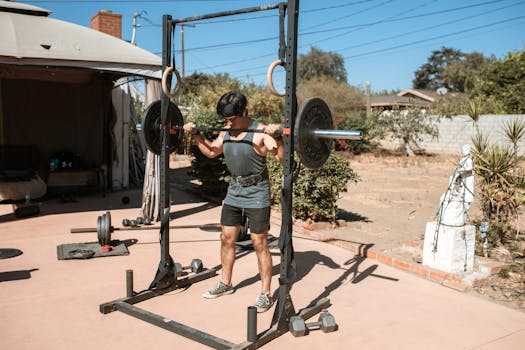
Rep range is tightly linked to intensity, but intensity is not identical to rep count. Intensity refers to how heavy the load is relative to your maximum capacity, while rep range describes how many times you lift that load.
Why “heavy” often builds strength
Heavy training supports strength because it requires high force production. It also encourages skillful execution under load. Even when hypertrophy happens during heavy training, the dominant adaptation for many lifters is improved performance in the trained movement.
Why “moderate” rep work often builds muscle
Moderate loads often let you accumulate more total work per set while maintaining a challenging stimulus. Many hypertrophy protocols rely on enough sets taken near failure, regardless of whether the reps fall closer to 6 or closer to 15.
Why you can grow in any rep range if the sets are effective
If you perform sets with sufficient effort—meaning the muscle experiences strong tension and you approach failure without losing form—you can stimulate growth across a broad rep spectrum. The main difference is how efficiently you can create that stimulus and how much fatigue you accumulate.
Practical guidance: how to program sets and effort
To apply rep range intelligently, focus on effort, volume, and how you progress over time.
Pick a rep range and define your “effort target”
For strength emphasis (often 1–6 reps), many lifters use a buffer—stopping with several reps left in reserve on most sets—especially for the first sets of an exercise. For hypertrophy emphasis (often 6–15 reps), many lifters stop closer to failure, particularly on isolation movements.
Experience level matters. Beginners often improve quickly with less precise effort calibration, but they still benefit from leaving a reasonable margin on very heavy lifts. Advanced lifters may need more deliberate effort management to avoid grinding reps that cost technique and recovery.
Use total weekly volume, not just rep range
Hypertrophy responds strongly to volume. Strength also benefits from volume, though it’s often limited by recovery capacity and the stress of heavy loads. A lifter might build strength with fewer total reps per muscle group but with higher intensity. A hypertrophy-focused lifter might use more total reps and more sets across the week.
In practice, rep range influences volume delivery: moderate reps make it easier to accumulate work without turning every set into a maximal grind.
Progression should be specific to the rep range
If you train in low reps for strength, progression often comes from adding weight while keeping reps in the target range. If you train in moderate reps for hypertrophy, progression might come from adding reps first and then increasing load once you reach the top of your range on multiple sets.
A common approach is to use a “rep target window” for each exercise and aim to add either load or reps over time while maintaining good technique.
How to structure a program for both strength and hypertrophy
Many lifters want both: improved performance and visible muscle gain. The most reliable approach is to use rep ranges strategically across exercises within the week.
Lead with strength on key movements
For your main lifts, emphasize lower reps. For example, you might work in the 3–6 rep range for squat or bench variations, using longer rest and controlled practice. This keeps the skill and force demands high.
Add hypertrophy volume through accessories
Use moderate reps on assistance movements. Rows, lunges, hip hinges, and presses that target specific muscles can be trained in the 6–12 rep range for multiple sets. Isolation movements can be trained in the 10–20 rep range if your form stays consistent and the muscle is doing the work.
Example emphasis by exercise (without rigid rules)
- Main compound lift: 1–6 reps, effort managed to preserve performance.
- Secondary compound: 4–10 reps to bridge strength and size.
- Accessory for weak points: 6–15 reps with good technique and consistent effort.
- Isolation: 8–20 reps, often closer to failure to maximize stimulus.
This structure respects the strengths of different rep ranges while keeping the overall training stimulus balanced.
Common mistakes when using rep ranges

Most rep range problems come from misunderstanding what the rep range is doing.
Treating rep range as a substitute for effort and volume
If you choose a “hypertrophy rep range” but stop far from failure every set, growth stimulus may be weak. If you choose a “strength rep range” but use poor technique, excessive failure grinding, or too little rest, strength practice becomes ineffective.
Ignoring fatigue and exercise selection
Some exercises are not good candidates for very high reps because technique breaks down quickly or the joint loading becomes uncomfortable. Others can handle higher reps well because they allow controlled tension. Your rep range choices should match your exercise mechanics and recovery.
Using the same rep range for everything
Programs often stagnate when every movement is trained identically. Variation helps distribute stress. A balanced approach typically includes lower reps for strength emphasis, moderate reps for hypertrophy volume, and sometimes higher reps for isolation work.
Helpful monitoring: how to tell if your rep range is working
You can’t see muscle growth in real time, but you can monitor training signals.
Strength markers
If your strength-focused rep work is effective, you should gradually increase load, reps at a given load, or maintain performance with improved bar speed and fewer breakdowns in form.
Hypertrophy markers
For hypertrophy, look for progressive increases in total reps or sets at the same load, stable technique under fatigue, and improved “pump” and muscle soreness that doesn’t derail recovery. More importantly, you should observe changes in circumference and performance on isolation movements over time.
Recovery signals
If you repeatedly miss sessions, feel unusually sore for too long, or your performance drops across multiple lifts, you may be exceeding your recovery capacity. Adjusting rep ranges is one lever—often by reducing how close you train to failure on some sets or by shifting some work to less fatiguing variations.
Prevention guidance: avoid overuse and joint stress while chasing stimulus
Rep range choices can reduce risk if they match how your body responds.
- Protect joints on high-rep work: prioritize controlled tempo and stable form, especially for knees and shoulders.
- Manage grinding on low-rep work: stop sets before technique collapses; heavy reps should be crisp, not chaotic.
- Use variation wisely: if one rep range repeatedly causes discomfort, adjust exercise selection or reduce the frequency of the most stressful pattern.
- Don’t ignore total weekly stress: a high-rep accessory plus heavy main lifts can be more fatiguing than either alone.
Consistency beats perfection. A rep range that you can recover from and progress with is usually the best rep range for your long-term results.
Summary: the best rep range is the one that matches effort, volume, and recovery

The rep range for strength vs hypertrophy is best understood as an organizing tool. Strength emphasis typically aligns with lower reps (often 1–6) using heavier loads, longer rest, and effort managed to maintain performance. Hypertrophy emphasis often aligns with moderate reps (commonly 6–15) and sometimes higher reps for isolation, with enough sets taken near failure to create a strong growth stimulus.
Because both strength and muscle growth can occur across a wide rep spectrum, the most reliable approach is to structure your program so that main lifts emphasize force production while accessories provide the volume and targeted tension needed for size. Choose rep ranges that help you train hard with good technique, progress steadily, and recover well—then let your results guide fine-tuning.
10.01.2026. 06:11