

Wearable Fertility Monitoring Accuracy: Lab vs Wearable

What “accuracy” means in fertility monitoring—and why lab and wearables differ
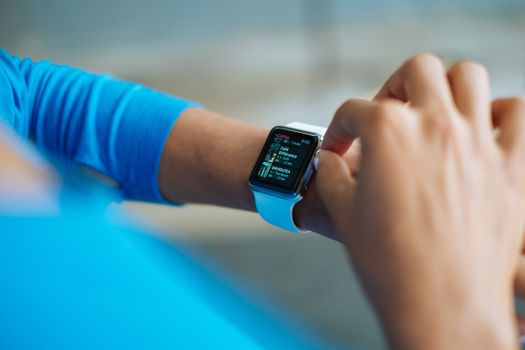
When you look at fertility tracking, “accuracy” isn’t one single number. It usually means how well a method identifies fertile windows, how precisely it estimates ovulation timing, and how consistently it performs across different cycle types (regular, irregular, anovulatory, postpartum, perimenopause). It also includes how often the device produces a usable signal when you actually wear it—night after night, with real skin, real sweat, real sleep, and real-life behavior.
Lab-based fertility monitoring typically relies on controlled measurement and clinical reference standards, such as hormone assays (for example, serum or urine testing for luteinizing hormone), ultrasound-based follicle tracking, or validated lab protocols that reduce confounders. Wearable fertility monitoring, by contrast, infers fertility-related physiology from sensors like temperature, heart rate variability, skin conductance, or optical signals. These signals can be affected by ambient conditions, stress, illness, alcohol, sleep disruption, and individual baseline differences.
Your practical question is therefore not only “Which is more accurate?” but also “Accurate for what—and under what conditions?” The most important differences between lab and wearable systems tend to show up in three places: signal source, calibration and thresholds, and error propagation from raw measurement to final fertile-day prediction.
Quick summary: which option is strongest overall?
If you need the highest certainty about ovulation timing or cycle physiology, lab-based monitoring is generally stronger. It can directly measure hormones and/or visualize reproductive structures with tighter control over conditions. However, wearables can still be highly informative for many people—especially when they use basal body temperature patterns and when you have enough data (often several cycles) for personalized baselines.
In short: lab wins on measurement fidelity; wearables win on day-to-day continuity and practicality. The “best” choice depends on your tolerance for false fertile windows, your need for timing precision, and how you plan to use the information.
Wearable fertility monitoring accuracy: lab vs wearable side-by-side

The table below compares common categories of lab reference methods to common wearable approaches. Exact performance varies by study design and the specific device or protocol, but the patterns are consistent.
| Dimension | Lab-based fertility monitoring | Wearable fertility monitoring |
|---|---|---|
| Primary signal | Hormone levels (e.g., luteinizing hormone, estradiol, progesterone), or ultrasound follicle/ovulation visualization | Physiological proxies: basal body temperature (BBT) from skin/thermal sensors, heart rate/HRV, skin conductance, photoplethysmography-derived signals |
| Typical measurement control | Controlled sampling, validated assays, standardized timing for specimen collection | Continuous consumer use with variable sleep, stress, room temperature, and device fit |
| How “fertile window” is determined | Often based on direct markers of follicle maturity/ovulation timing and hormone profiles | Algorithms infer fertile days from temperature shifts and autonomic/thermal patterns; some also incorporate LH urine testing compatibility |
| Resolution and timing | Can detect hormonal changes around ovulation with high specificity; ultrasound can show structural timing | Temperature-based methods detect the post-ovulation shift reliably, while pre-ovulation detection can be more variable |
| Common error sources | Sampling variability, assay variability, and timing of test collection | Sleep disruption, illness, alcohol, heat/cold, sensor drift, skin contact variability, algorithm thresholds that may not match your physiology |
| Personalization | Often uses population-validated reference ranges; may include individualized clinical context | Usually uses per-user baselines after initial learning periods; personalization strength varies by platform |
| Evidence strength (typical pattern) | Higher when studies compare directly to clinical reference standards | Strong for temperature-confirmation of ovulation in many studies; weaker for precise pre-ovulation prediction depending on algorithm and study design |
| Best fit for | Clinical assessment, fertility workups, high-stakes timing when you need confirmatory evidence | Routine cycle awareness, identifying patterns, supporting timing strategies with ongoing feedback |
Where performance diverges in real life: timing, false signals, and confidence
In real-world monitoring, the biggest accuracy gap usually isn’t whether a wearable can detect a temperature rise after ovulation. Many wearables can. The gap is often how early they can identify the fertile window before the temperature shift, and how stable their predictions remain across messy cycles.
Scenario example: Imagine you’re tracking for conception during a month where you travel across time zones and sleep at irregular times for three nights. A lab approach could still measure hormone changes with scheduled sampling (for example, daily urine LH or scheduled blood draws). Your wearable may record temperatures that are noisier due to altered sleep timing, and the algorithm may either delay fertile-window start or produce extra “uncertain” days.
Another common divergence is around illness and stress. A low-grade fever, disrupted sleep, or elevated stress can shift autonomic and thermal patterns. Lab methods can distinguish fever-related effects from reproductive hormone changes more directly. Wearables may interpret those signals as cycle-related unless the platform has robust artifact detection and you have established baselines.
Finally, there’s the issue of algorithm thresholding. Lab assays report quantitative values against known reference ranges. Wearables generally convert continuous sensor data into categorical predictions (fertile / not fertile). Two people with similar physiology can receive different fertile windows if their device’s internal thresholds or learning phase behaves differently for them.
Detailed strengths and limitations: lab-based monitoring
Strengths
- Higher specificity when detecting ovulation via direct hormone markers or structural confirmation.
- Better control of timing through standardized specimen collection or scheduled imaging.
- Clinically interpretable outputs: hormone concentrations or imaging results can often be reviewed and contextualized.
- More reliable in complex cases (irregular ovulation, suspected anovulatory cycles, fertility workups) because clinicians can adjust interpretation.
Limitations
- Cost and access: lab monitoring often requires appointments, trained staff, and repeat sampling.
- Less continuous: you don’t get “every night” physiological data; you get discrete time points.
- Sampling burden: daily tests or scheduled visits can be disruptive.
- Still not perfect: hormone assays have biological variability, and even ultrasound interpretation depends on timing and clinician expertise.
Detailed strengths and limitations: wearable fertility monitoring
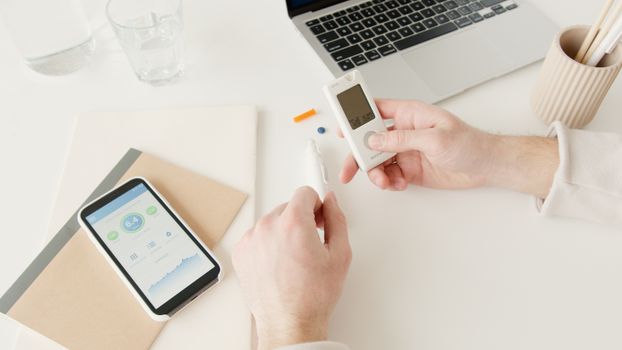
Strengths
- High continuity: wearables track over weeks and months, which helps identify your personal patterns.
- Temperature-based ovulation confirmation often performs well because ovulation is followed by a sustained basal temperature rise driven by progesterone.
- Fast feedback loop: you see changes in your cycle awareness daily, not only after lab results.
- Behavioral insight: you can correlate predictions with sleep duration, stress, alcohol, and travel—factors that often explain “why this month looks different.”
Limitations
- More variable pre-ovulation detection: fertile-window start often depends on subtle changes that are harder to measure indirectly than hormone surges.
- Sensor and environment artifacts: room temperature, bedding, skin contact, and device fit can affect thermal readings.
- Algorithm dependence: different platforms use different models, smoothing methods, and confidence scoring. Two wearables can disagree about the same cycle.
- Learning period variability: early cycles may be less accurate until the platform calibrates to your baseline.
How accuracy is typically evaluated in studies (and why results can’t be compared blindly)
When you read “accuracy” claims, look for what outcome was measured. Studies may report:
- Ovulation detection accuracy (e.g., agreement with a clinical reference for ovulation day or luteal phase onset).
- Fertile window sensitivity and specificity (how often fertile days are captured vs. how often non-fertile days are mislabeled as fertile).
- Timing error (how many days early/late the method predicts ovulation or fertile start).
- Usability under real conditions (percentage of cycles with usable data; device performance when sleep is disrupted).
Lab comparisons usually have clearer reference points. Wearable studies can be strong, but the design matters: whether participants used the device consistently, whether the study included irregular cycles, and whether the algorithm used fixed settings or personalized learning. These factors can shift performance by meaningful margins.
Real-world performance differences you’re most likely to notice
Even without digging into study-level statistics, you’ll usually see consistent patterns in day-to-day use:
- Post-ovulation clarity is often better than pre-ovulation certainty. After ovulation, temperature trends stabilize and wearables tend to “lock in” the luteal pattern more reliably.
- Uncertainty spikes with sleep disruption. If you wake up during the night, sleep later than usual, or travel, the temperature signal can blur, and the device may shift predictions.
- Cycles with irregular ovulation can reduce wearable confidence. If ovulation doesn’t follow a typical pattern, the thermal/autonomic proxies may be less distinct.
- Confidence scores and “low data” periods matter. Some platforms show when the model is less sure. Ignoring those signals can make your perceived accuracy drop.
In practical terms, lab monitoring often provides a clearer answer in difficult months. Wearables provide a more continuous and personalized view, but they may be less decisive when your physiology or your routine deviates from the patterns the algorithm expects.
Pros and cons breakdown: lab vs wearable
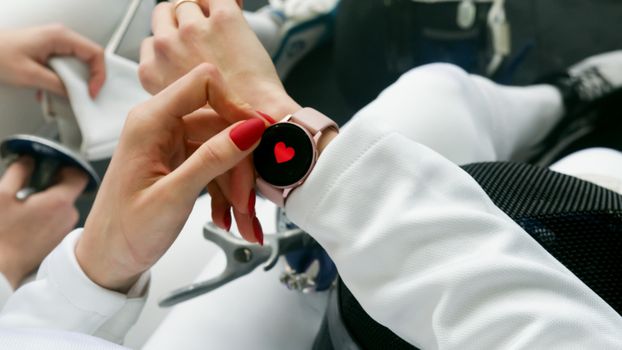
Lab-based monitoring
- Pros
- Greater likelihood of direct measurement of reproductive markers
- More interpretable results for clinicians and structured follow-up
- Better performance in complex or irregular cycle scenarios
- Cons
- Higher cost and logistical burden
- Discrete sampling can miss rapid changes between visits
- Requires clinical infrastructure and trained interpretation
Wearable fertility monitoring
- Pros
- Continuous tracking across cycles and seasons
- Often strong at confirming ovulation after the fact via temperature shifts
- Useful for pattern recognition and cycle awareness in everyday life
- Cons
- More uncertainty in pre-ovulation fertile window prediction
- Sensitive to sleep, illness, ambient temperature, and device fit
- Algorithm-based outputs can vary between platforms
Best use-cases: who should lean toward lab, who should lean toward wearables
If you need the highest certainty about timing
You’ll typically benefit from lab-based monitoring when timing precision is critical and when you’re dealing with irregular cycles, prior fertility concerns, or a clinical workup. In these settings, the ability to directly measure hormones or visualize ovulation structure can reduce ambiguity.
For example, if your cycles are highly irregular—say, ranging from 24 to 40+ days—wearables may still detect patterns, but the fertile window can be harder to predict. Lab monitoring can clarify whether ovulation is occurring and when.
If you want day-to-day cycle awareness with minimal friction
Wearables are often the better fit if you want routine tracking and you can interpret the results as probability rather than certainty. They’re particularly useful if your cycles are fairly regular and you’re able to maintain consistent device wear and sleep routines.
Many people find that using a wearable alongside standardized temperature confirmation improves understanding. Even if you don’t use lab testing, you can still validate patterns by comparing predicted ovulation timing to the sustained temperature rise that follows.
If you’re comparing systems for “accuracy” but your goal is decision-making
Accuracy should be tied to your risk tolerance. If the cost of being wrong is high (for example, missing a narrow fertile window), lab-based confirmation is usually more defensible. If the cost of being wrong is lower (for example, wanting general awareness rather than strict timing), wearables can be sufficient—especially when you use them consistently across multiple cycles.
Final verdict: which suits your needs?
Lab-based fertility monitoring is the stronger choice when you need direct reproductive marker measurement or when your cycles are irregular and you want clinical clarity. It generally provides the most reliable reference for ovulation timing and fertile window interpretation.
Wearable fertility monitoring is the stronger choice when you want continuous, personalized insight with low effort. If your main need is to identify the post-ovulation shift and track cycle patterns over time, wearables can perform well—often better than sporadic testing because they capture trends, not just snapshots.
So the decision isn’t “lab vs wearable” in the abstract. It’s about what you mean by accuracy and what you’ll do with the information. If you want the most confident biological measurement, lean toward lab reference methods. If you want practical daily awareness and pattern learning, wearables are often the better match—particularly when you treat predictions as probabilistic and watch for signs that your data quality or sleep routine has changed.
30.01.2026. 06:43