

Fertility Wearable: Basal Body Temperature & HRV Explained

Fertility tracking has moved beyond guesswork. Today, many wearables combine signals from your body—especially basal body temperature (BBT) and heart rate variability (HRV)—to help you understand where you might be in your cycle. If you’re trying to conceive, manage symptoms, or simply learn your physiology, these metrics can be informative. But they’re not crystal balls. The value is in how you collect data consistently and interpret patterns in context.
In this guide, you’ll learn how a fertility wearable basal body temperature HRV approach works, what each signal typically reflects, how to use the readings responsibly, and when to seek clinical input. You’ll also see a practical example of how someone might apply these signals over a few weeks.
How fertility wearables track your cycle with BBT and HRV
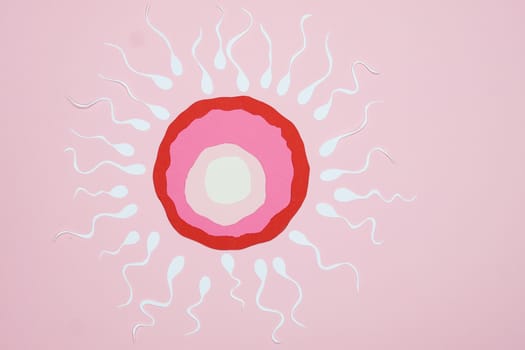
A fertility wearable typically doesn’t “detect ovulation” directly. Instead, it measures physiological signals that change around ovulation and then uses algorithms to highlight likely fertile windows and post-ovulation shifts.
Two of the most common inputs are:
- Basal body temperature (BBT): A temperature baseline measured at rest, usually upon waking.
- Heart rate variability (HRV): A measure derived from the variation in time between heartbeats (via an optical sensor on the wrist or chest strap).
BBT is primarily used for confirming a shift that often occurs after ovulation. HRV may provide earlier clues by reflecting changes in autonomic nervous system activity, stress physiology, and recovery patterns that can shift around fertile days. Together, they can create a more complete picture than either alone.
It’s also important to understand that different devices use different methods. Some estimate “BBT” indirectly from wrist temperature (which is influenced by ambient conditions and skin blood flow), while others may use more specific sensor approaches. HRV can also vary by sensor type and measurement window.
Basal body temperature: what it means for fertility tracking
What is basal body temperature?
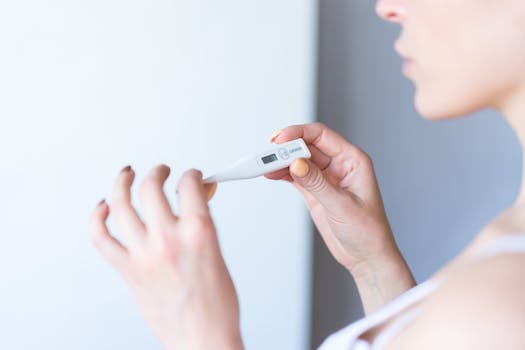
Your basal body temperature is your lowest body temperature over a 24-hour period, typically measured immediately after waking before you get out of bed. In the luteal phase (the time after ovulation), progesterone tends to raise resting temperature by a small but meaningful amount.
In many cycles, the post-ovulation rise is on the order of 0.2°F to 0.5°F (about 0.1°C to 0.3°C). The absolute number matters less than the pattern: you’re looking for a consistent upward shift that lasts through much of the luteal phase.
Why BBT often rises after ovulation
After ovulation, the corpus luteum produces progesterone. Progesterone has a thermogenic effect, increasing resting body temperature. That’s why BBT is often described as a “confirmation” signal—your temperature typically rises after ovulation rather than before it.
Wrist temperature versus true BBT
If your wearable uses a wrist sensor, you may see “baseline temperature” or “estimated BBT” rather than a lab-grade basal measurement. Wrist readings can be affected by:
- Room temperature and bedding
- Alcohol intake the night before
- Late-night movement
- Sleep interruption
- Peripheral circulation changes
Even with these limitations, consistent trends can still be useful. The key is stable measurement habits: same general sleep schedule, similar bedtime routine, and the same device placement each night.
How to interpret BBT trends day to day
You generally don’t interpret BBT as a single-day event. Instead, you look for:
- A baseline in the pre-ovulatory days (lower and fairly steady)
- A sustained rise lasting several days
- Consistency across multiple cycles if you’re tracking over time
For example, if you see a small spike one morning but your temperatures return to baseline the next day, that spike may be noise (illness, poor sleep, or room changes). A more meaningful pattern is a shift that persists.
HRV: how heart rate variability relates to fertility signals
What HRV measures
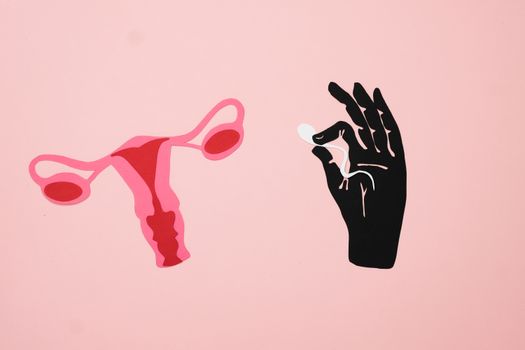
HRV reflects the variation in time between successive heartbeats, usually presented as an index such as RMSSD or similar metrics. Higher HRV often corresponds to greater parasympathetic (rest-and-recovery) influence, while lower HRV can be associated with stress, fatigue, illness, or poor sleep.
Many wearables calculate HRV during sleep or a specific resting window. Because it’s a dynamic measure, HRV can change daily—even within the same cycle.
Why HRV can shift around fertile windows
During your cycle, hormonal changes influence the autonomic nervous system. Around ovulation and in the early luteal phase, some people see HRV patterns that differ from their typical baseline. However, responses are not uniform across individuals. Some people may show increased HRV around fertile days; others may show decreases. The more reliable approach is to learn your own pattern.
HRV is sensitive to lifestyle factors
HRV doesn’t “care” about ovulation only. It responds to many inputs that can confound cycle interpretation, including:
- Alcohol (often strongly affects the night after)
- Exercise intensity and timing
- Sleep duration and sleep fragmentation
- Illness, fever, or inflammation
- Travel and jet lag
- Emotional stress
That’s why HRV is most useful when you track consistently for at least a few cycles and pay attention to context. If your HRV drops sharply because you were sick, you don’t want to interpret that drop as a fertility signal.
How to interpret HRV data without overreacting
Instead of focusing on one HRV reading, use HRV to identify:
- Your typical baseline during different phases
- Relative changes compared with your own recent days
- Trends across multiple days rather than a single spike
A practical rule: if you can’t explain a big HRV change with a plausible factor (poor sleep, stress, illness), treat that day as less informative. Consistency beats intensity.
Using fertility wearable basal body temperature HRV data in real life
Set up your tracking for reliability
To get meaningful information from a fertility wearable, you’ll want to reduce measurement noise. Here are practical habits that make a noticeable difference:
- Wear the device consistently (same wrist, same fit snugness).
- Keep your sleep schedule stable as much as possible.
- Use the same bedtime routine when you can (e.g., similar light exposure, no late-night alcohol).
- Record unusual events in your notes app (travel, illness, late workouts).
Even if your wearable has an “ovulation prediction” feature, manual context helps you interpret why predictions may shift.
Example scenario: interpreting a pattern over 3 cycles
Imagine you track with a wearable for three months. In Cycle 1, you notice that around mid-cycle, HRV dips slightly compared with your usual rest days, then you see a clear BBT rise 1–3 days later. In Cycle 2, you take a late evening workout one night and your HRV drops more than usual; however, your BBT still rises after the same approximate mid-cycle time. In Cycle 3, you have a small temperature rise that doesn’t persist due to a disturbed sleep night, and the wearable’s predicted fertile window seems off.
What you learn from this pattern isn’t just “it predicted correctly.” You learn your personal rhythm: HRV may be an early indicator for you, BBT confirms, and sleep disruption can create misleading temperature shifts. After you identify that HRV is sensitive to your late workouts, you can adjust your training schedule in the days you’re most focused on cycle awareness.
How to combine BBT and HRV logically
A sensible way to integrate the two signals is:
- Use HRV for earlier context (possible changes in recovery/autonomic state).
- Use BBT for confirmation (a sustained rise after ovulation).
- Look for convergence: when HRV changes align with a subsequent BBT shift, your confidence increases.
It’s not about forcing a single “answer.” It’s about improving your ability to interpret your own physiology.
Common pitfalls: why readings can mislead you
Sleep disruption and temperature artifacts
BBT is vulnerable to anything that changes your resting state. If you wake up briefly, change rooms, or sleep with different blankets, your wrist temperature may drift. Even a single night of poor sleep can create a small bump that looks like a shift. That’s why you should avoid making major conclusions based on one morning.
Illness, inflammation, and HRV suppression
When you’re sick—especially with fever—HRV can drop and BBT can change. Inflammation can also alter resting physiology. If you’re tracking while unwell, consider pausing interpretation for that cycle segment or at least down-weighting the data.
Stress and overtraining
HRV is often used as a readiness or recovery metric. If you’re training hard, working long hours, or dealing with acute stress, HRV may reflect those factors more than cycle physiology. This doesn’t mean the data is useless. It means you should interpret it with awareness.
Device placement, sensor contact, and algorithm differences
Wrist devices are sensitive to fit and sensor contact. A loose strap can reduce signal quality. Also, algorithms differ: the same day’s raw physiology might be processed differently across platforms. If you switch devices mid-tracking, expect changes in how BBT and HRV are presented.
Practical guidance: when and how to act on the data
Track long enough to learn your baseline
For fertility awareness, you generally need more than a few days. A practical minimum is 2–3 cycles to establish a personal baseline for HRV variability and BBT shift patterns. If your cycles are irregular, consider extending to 3–6 cycles and using additional context.
Pair wearable data with symptom awareness
Wearables work best when you integrate them with other observations you can verify, such as:
- Changes in cervical mucus texture
- Ovulation-related discomfort (for some people)
- Typical luteal symptoms (bloating, breast tenderness)
- Consistent cycle timing patterns
These signals are not perfect either, but they provide independent context. When multiple signals align, your interpretation becomes more grounded.
Use additional confirmation methods when stakes are high
If you’re actively trying to conceive and want confirmation, consider using evidence-based ovulation testing (such as urine luteinizing hormone testing) alongside wearable insights. A wearable can hint at likely timing, while ovulation tests can provide a clearer biochemical signal. This is especially helpful when HRV patterns are ambiguous or when you have irregular cycles.
Nothing here replaces medical care. If you have known fertility concerns, irregular cycles, or a history of reproductive health conditions, it’s often appropriate to involve a clinician rather than relying solely on device data.
Supplement and device considerations (without assuming they solve fertility)
Why supplements can affect your data indirectly
Even if a supplement doesn’t target ovulation directly, it can influence sleep, stress, or metabolism—factors that, in turn, influence HRV and temperature patterns. For example:
- Sleep-support supplements may change sleep quality and thus HRV.
- Iron status, thyroid-related supplements (when appropriate), and general micronutrient balance can affect overall physiology.
- Magnesium is sometimes used for sleep or muscle relaxation; changes in sleep can alter HRV patterns.
If you start a new supplement, consider tracking how your HRV and temperature patterns shift over 1–2 weeks before interpreting cycle-specific changes.
Device choice: what matters for data quality
While you don’t need to buy anything to use these metrics responsibly, it helps to understand what affects data quality:
- Sensor reliability (optical HR sensors vary in accuracy).
- Measurement window (HRV calculated during sleep vs. resting periods).
- Temperature estimation method (wrist vs. other approaches).
If you already own a wearable, focus first on consistency and correct wear position. If you’re using a chest strap for HRV (where available), you may get more stable HR signals than some wrist-based sensors, but interpretation still requires context.
When to talk to a clinician
Wearables can support awareness, but they can’t diagnose infertility or hormonal disorders. Consider speaking with a healthcare professional if you experience any of the following:
- Your cycles are consistently very irregular (for example, often far outside your usual range)
- You have symptoms suggesting hormonal imbalance (significant cycle disruption, persistent abnormal bleeding)
- You’ve been trying to conceive for 12 months without success (or 6 months if you’re 35 or older)
- You have a history of conditions such as PCOS, endometriosis, thyroid disease, or prior reproductive surgery
A clinician can evaluate factors that wearables can’t measure directly—such as hormone levels, ovulation quality, tubal and uterine factors, and sperm parameters.
Summary: using BBT and HRV together for clearer cycle insight
A fertility wearable basal body temperature HRV approach can help you learn your cycle by combining two complementary signals. BBT typically supports post-ovulation confirmation through a sustained temperature rise. HRV can offer earlier context by reflecting changes in autonomic nervous system activity, but it’s highly sensitive to sleep, stress, and illness.
To get the most value, you’ll want consistent wear and sleep routines, interpret trends over multiple days (and multiple cycles), and use context notes for factors like late workouts or sickness. If you need stronger confirmation, pairing wearable data with established ovulation testing can improve clarity. And if you have persistent irregularities or difficulty conceiving, professional evaluation is the most reliable next step.
Above all, treat wearable data as a tool for learning—not a substitute for medical guidance.
24.04.2026. 05:59