

Decision Fatigue Science: How Mental Exhaustion Shapes Choices

Decision fatigue science in plain terms
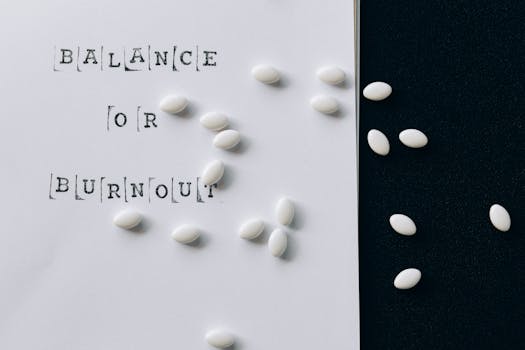
Decision fatigue science studies what happens when the brain has to make many choices in a limited time. The core idea is simple: effortful decisions draw on limited self-regulation resources, and after enough decisions, people tend to show poorer judgment, reduced patience, and a greater tendency to choose easier or more habitual options.
This is not the same as “laziness” or a lack of willpower. It’s a cognitive and physiological phenomenon rooted in how attention, working memory, and self-control operate. When these systems are repeatedly engaged—especially with complex, high-stakes, or emotionally charged decisions—performance often degrades. The result can look like impulsivity, procrastination, or a shift toward default choices.
Understanding the science helps you design environments and routines that reduce unnecessary decision-making. It also clarifies what decision fatigue can and cannot explain, so you can apply the insights without misattributing every bad outcome to fatigue.
What “decision fatigue” means scientifically
In research, decision fatigue is typically discussed as a decline in self-control or decision quality after prolonged decision-making. The effect is often described as “ego depletion,” a term that appeared in early psychology work suggesting that self-regulation draws on a finite resource. Over time, the field has refined this view. Many researchers now frame the phenomenon in terms of cognitive load, attentional depletion, and motivational changes rather than a single measurable “resource” running out.
Regardless of the exact mechanism, the pattern is consistent across many tasks: repeated choices can make it harder to inhibit impulses, sustain careful evaluation, and maintain consistent goals. In everyday terms, you may start the day planning thoughtfully, then later become more likely to accept the first reasonable option or to avoid making decisions altogether.
The difference between decision fatigue and simple tiredness
Fatigue broadly can include sleep loss, stress, and physical exhaustion. Decision fatigue science focuses on the specific impact of making choices and exerting self-control repeatedly. Sleep deprivation can amplify decision fatigue, but even well-rested people may show changes in decision-making after long sequences of choices.
In practice, the two interact: cognitive effort increases arousal demands, and stress can narrow attention. So the “feel” of decision fatigue often overlaps with general tiredness, even when the underlying driver is choice-related mental effort.
Key brain and cognition mechanisms behind decision fatigue

Several cognitive processes are repeatedly recruited during decision-making. When they’re engaged over and over, performance can shift. Decision fatigue science points to a few major mechanisms.
Attentional depletion and narrowing of focus
Each decision typically requires attention to relevant information and suppression of irrelevant details. After many decisions, the brain may conserve effort by narrowing attention and reducing the amount of information processed. This can lead to less thorough evaluation and more reliance on heuristics (“good enough” rules) rather than careful comparison.
When attention narrows, you may also become more sensitive to immediate cues—what’s easiest, what’s most salient, or what matches a default pattern—rather than what best aligns with long-term goals.
Working memory strain and reduced mental simulation
Many decisions require holding options in mind, forecasting outcomes, and integrating constraints. Working memory supports this mental simulation. Repeated decision-making can strain working memory capacity, making it harder to weigh trade-offs or consider future consequences.
When working memory is taxed, people may simplify the decision process: fewer comparisons, fewer “what if” checks, and more reliance on previously learned preferences.
Self-control as an active process, not a passive trait
Self-control is often treated as a stable personality trait, but decision fatigue science emphasizes that self-control is an active cognitive process. Maintaining a goal (“I’ll stick to my plan,” “I’ll choose the better option even if it’s slower”) requires continuous monitoring and inhibition.
As that monitoring becomes more frequent, it can become harder to sustain. Importantly, this does not mean self-control disappears. It means the brain may switch from effortful control to lower-effort strategies.
What research shows: patterns and mixed findings
Decision fatigue has been studied in laboratory tasks and observational settings. A widely discussed early finding suggested that participants who made many choices showed worse performance on subsequent self-control tasks. Subsequent research has produced more nuanced results, with some studies finding strong effects and others reporting smaller or inconsistent patterns depending on context, task type, and measurement approach.
Modern interpretations often highlight that decision fatigue is likely influenced by:
- Task characteristics (complexity, novelty, emotional stakes)
- Motivation and expectations (whether people believe they’re “running out”)
- Time pressure and stress (which can change how effort is allocated)
- Individual differences (habits, coping skills, baseline cognitive capacity)
In other words, decision fatigue science supports the general idea that repeated choices can degrade decision quality, but it also suggests the effect is not uniform and not always a single mechanism.
Why “default” behavior becomes more common
One of the most practical aspects of decision fatigue is the shift toward defaults. Defaults can be beneficial when they reflect good planning, but harmful when they reflect inattention or short-term convenience. Under cognitive strain, people may:
- Choose the first option that meets minimal criteria
- Stick with familiar routines
- Avoid effortful evaluation and delay decisions
- Become more sensitive to immediate rewards
This pattern is often observed in both consumer contexts and non-consumer settings, because the underlying cognition is similar: when mental resources are strained, the brain prioritizes efficiency.
Real-world examples of decision fatigue effects
Decision fatigue science becomes clearer when you see how it shows up across common life domains.
Food and eating choices later in the day
Many people notice that after a busy period of work and choices, food decisions become less planned. This can involve impulsive snacking, choosing highly palatable options, or eating quickly without considering long-term goals. Sleep, stress, and hunger interact with decision fatigue, but the pattern of “less deliberation later” is common.
Administrative and logistical decisions
Repeated small decisions—messages to answer, forms to complete, scheduling conflicts—can cumulatively tax attention. Even when each choice is minor, the total cognitive load can be substantial. People may then become more likely to make errors, respond emotionally, or postpone tasks rather than resolve them.
Emotional and interpersonal decisions
Decision fatigue can also influence how people handle conflict. If you’ve been making many decisions, you may have less capacity for perspective-taking or impulse inhibition. That can affect tone, patience, and conflict resolution quality—especially when you’re tired or under stress.
How to reduce decision fatigue in daily routines

Because decision fatigue science points to cognitive load and effortful self-control, the most effective interventions usually reduce the number of decisions you must make and lower the cognitive cost of the ones you keep.
Use implementation intentions (“if-then” planning)
Implementation intentions reduce the need to generate a decision from scratch. Instead of deciding in the moment, you pre-plan the response to a likely situation. For example: “If it’s late afternoon and I feel tempted to snack without planning, then I’ll choose a preselected option from my kitchen.”
This works because it shifts the decision from active generation to cue-triggered action, reducing working memory demands and attentional searching.
Batch decisions and protect high-quality attention
Schedule complex decisions when your cognitive resources are likely higher—often earlier in the day. Batch similar choices (e.g., errands, administrative tasks, content planning) so you don’t repeatedly switch contexts. Context switching adds cognitive overhead beyond the decisions themselves.
Even simple strategies like “one planning session per day” can reduce the total number of decision points.
Create structured defaults for recurring choices
Defaults are powerful when they’re aligned with your goals. Instead of deciding what to wear, what to eat, or how to spend your first hour, set a limited set of options. For example, you might keep a small rotation of meals or define a short morning routine with minimal variation.
Decision fatigue science suggests that fewer open loops reduce the brain’s need to keep evaluating. Structured defaults also reduce the temptation to improvise under strain.
Reduce the “choice set” when you can
Choice overload can compound decision fatigue. If you’re choosing among many similar options, the cognitive cost rises. Narrowing the set—through preselection, constraints, or criteria—can reduce the mental work of evaluation.
In nutrition, this might mean deciding on a short list of healthy staples rather than evaluating every meal from scratch. In scheduling, it might mean using time blocks rather than deciding each day what fits.
Separate values-based decisions from convenience-based ones
Not all decisions require the same level of deliberation. Decision fatigue science is most relevant when you need consistent value-based choices (e.g., long-term goals) under conditions that encourage convenience-based shortcuts.
A practical approach is to decide in advance which categories are “value-critical” and which are “low-stakes.” Value-critical decisions should be scheduled earlier or pre-planned. Low-stakes decisions can be handled with simple rules to conserve effort.
Practical strategies that target the underlying cognitive load
Below are interventions that align with what cognitive science suggests: reduce mental search, limit working-memory demands, and preserve self-control resources for the decisions that matter most.
Plan a “decision buffer” after demanding periods
After a high-demand block (meetings, deadlines, emotional conversations), protect a short buffer before you face more choices. A buffer can be as simple as scheduling a walk, a meal you’ve already planned, or a task that doesn’t require rapid evaluation.
This isn’t about eliminating decisions; it’s about preventing the most consequential choices from landing at the end of a long cognitive day.
Lower friction for good options
Decision fatigue often pushes people toward what is easiest. If you want good outcomes, make the good options easier to access. For example, keeping healthier snacks visible and portioned can reduce the need for in-the-moment self-control. Similarly, organizing work so that next steps are clear reduces the “where do I start?” decision cost.
In the research world, this is sometimes described as reducing “choice effort” through environmental design.
Use checklists for complex tasks
Checklists act as external working memory. They reduce the need to remember steps and evaluate what comes next under strain. This can be especially helpful for tasks with many components—planning a project, preparing for a meeting, or completing recurring administrative workflows.
When you rely on a checklist, you shift from decision-making to verification. That distinction matters: verification can be less cognitively demanding than generating decisions.
Adjust for stress and sleep, not just “willpower”
Decision fatigue science interacts strongly with stress physiology and sleep. If you’re under chronic stress or sleep-deprived, your capacity for effortful control can drop, making decision fatigue more likely and more intense.
Prioritizing sleep, reducing prolonged stress exposure when possible, and using short recovery periods can improve decision quality even if the number of decisions stays the same.
Do supplements and tools help? What to know
People often ask whether decision fatigue can be solved with supplements, productivity apps, or wearable tech. The evidence base varies by intervention, and decision fatigue science emphasizes that the strongest levers are cognitive and environmental: reducing choice load, lowering friction, and preserving attention.
That said, there are “tools” that can support the underlying mechanisms:
- Habit tracking and reminders can reduce the need to remember and decide in the moment.
- Planning apps can externalize working memory, especially when they provide templated workflows.
- Structured meal planning systems can limit daily food choices to a preselected set.
As for supplements, there is no universally accepted supplement that reliably “prevents decision fatigue” in the way environmental design and planning can. If you consider any supplement, it’s wise to evaluate it based on safety, evidence for the specific effect you want, and how it fits into your broader routines.
If you want to mention relevant products naturally in your own context, focus on tools that reduce decision points (templates, checklists, scheduling structures) rather than tools that promise to override cognitive limits.
Common misconceptions in decision fatigue science
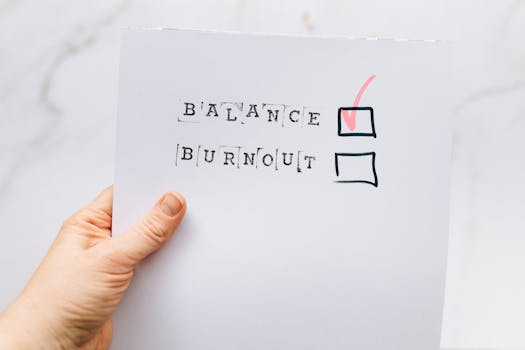
Decision fatigue is widely discussed, and a few misunderstandings are common.
“Decision fatigue means you’re powerless”
Decision fatigue science does not imply that people become irrational or incapable. Instead, performance can shift toward less effortful strategies. With good planning, you can steer what those strategies look like—using defaults, pre-decisions, and constraints.
“One bad decision proves you had decision fatigue”
Bad decisions can arise from many factors: incomplete information, risk preferences, misunderstanding, or situational incentives. Decision fatigue may contribute, but it’s not the only explanation. A useful way to apply the science is to look for patterns: repeated choices over time followed by consistent declines in thoroughness or patience.
“More choices always cause worse outcomes”
Choice overload can contribute, but decision fatigue science also recognizes that some decision contexts are less taxing. The effect depends on complexity, novelty, and the cognitive demands of evaluating options. Sometimes, reducing choices can help; other times, improving information quality or decision criteria matters more.
Prevention guidance: designing a lower-decision day
If you want to apply decision fatigue science without turning it into a rigid theory, aim for practical prevention. The goal is not to eliminate decisions, but to protect the decisions that require careful thought.
Consider these prevention steps:
- Pre-plan recurring choices (meals, clothing, schedules) so you’re not deciding from scratch.
- Batch similar tasks to reduce context switching and repeated evaluation.
- Use constraints (a short list of options, clear criteria) to reduce cognitive search.
- Protect attention for value-critical decisions earlier in the day.
- Externalize memory with checklists and templates.
- Support recovery with sleep and stress management, because they amplify or buffer decision fatigue effects.
Over time, these strategies can make your decision environment “lighter,” so fewer decisions require sustained effort. That’s the practical takeaway from decision fatigue science: cognition performs better when the brain isn’t constantly re-choosing from scratch.
Summary: what decision fatigue science suggests you can do
Decision fatigue science explains why repeated choices can lead to less careful evaluation, more default behavior, and reduced self-control. The most consistent theme is that decision-making is cognitively demanding—especially when it requires attention, working memory, and ongoing inhibition of impulses.
The most effective responses are usually structural: reduce unnecessary decisions, set good defaults, batch tasks, and use planning tools that externalize memory. When you design your day so that high-stakes decisions aren’t stacked at the end of a long cognitive stretch, you lower the likelihood that fatigue-driven shortcuts will dominate.
In that sense, decision fatigue isn’t just a problem to endure. It’s a signal to build routines that support better thinking when it matters most.
31.01.2026. 01:24