

Sonic Vibration Therapy for Recovery: Muscle Soreness Evidence

Sonic vibration therapy is often discussed as a way to speed recovery after exercise and reduce muscle soreness. The idea is straightforward: controlled vibration delivered to muscles may influence circulation, nerve signaling, and tissue mechanics. However, the quality of the evidence varies across studies, and results depend heavily on the device type, vibration settings, treatment timing, and the population studied.
This article reviews what is known—based on clinical research and physiological plausibility—about sonic vibration therapy recovery muscle soreness evidence. It also explains how to interpret findings realistically and how to use vibration sessions in a way that aligns with safety and practical training needs.
What “sonic vibration therapy” means in research
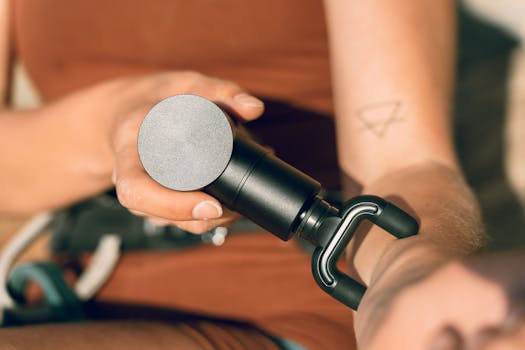
“Sonic vibration therapy” is used broadly in consumer and clinical settings, but research typically distinguishes between different categories of vibration and delivery methods. In many studies, vibration is produced by a handheld or contact device placed on the skin over muscle groups, or by a platform that transmits vibration through the body. Some protocols use audible sound components; others use mechanical vibration that may be perceived as “sonic” due to the way the device is marketed or experienced.
When reading evidence, the most important details are:
- Frequency and amplitude: Different settings can produce different tissue responses.
- Contact method: Handheld applicators, pads, and whole-body platforms may stimulate tissues differently.
- Session duration and total dose: A short “pulse” protocol may not match a longer exposure.
- Treatment timing: Pre-exercise, immediately after, or 24–48 hours post-exercise can change the physiological target.
- Outcome measures: Some studies use subjective soreness scales, while others assess strength, range of motion, muscle damage markers, or functional performance.
Because these variables differ from study to study, “evidence” is best viewed as a range of findings rather than a single definitive answer.
How vibration may affect muscle soreness and recovery
Muscle soreness after training—commonly referred to as delayed onset muscle soreness (DOMS)—is influenced by exercise-induced microtrauma, inflammation, and changes in muscle function and nerve sensitivity. Vibration therapy is thought to influence several processes that may relate to soreness and recovery:
Neuromuscular modulation
Vibration can stimulate sensory receptors in skin and muscle, altering afferent nerve input to the spinal cord and brain. This may temporarily change muscle activation patterns and perceived discomfort. In practical terms, some people feel looser or less “stiff” after a session, which may reflect changes in sensory processing rather than structural repair.
Circulation and tissue fluid dynamics
Mechanical oscillation may increase local blood flow and promote fluid movement in soft tissue. Improved microcirculation is a plausible mechanism for reducing stiffness and supporting recovery processes, especially when vibration is applied soon after exercise.
Inflammatory signaling and oxidative stress (indirectly)
Some studies suggest vibration may influence inflammatory markers or stress-related pathways. The evidence here is mixed, and even when biomarkers change, it does not always translate into meaningful improvements in soreness or performance.
Temperature and viscoelastic properties
Depending on intensity and contact pressure, vibration may change muscle viscoelastic behavior and perceived stiffness. This can affect range of motion and comfort, which are often reported outcomes in recovery-focused studies.
Overall, the mechanisms most consistently supported by physiology relate to short-term changes in sensory input, muscle stiffness, and circulation. Structural repair of muscle tissue is more difficult to demonstrate directly.
What clinical studies show about muscle soreness outcomes
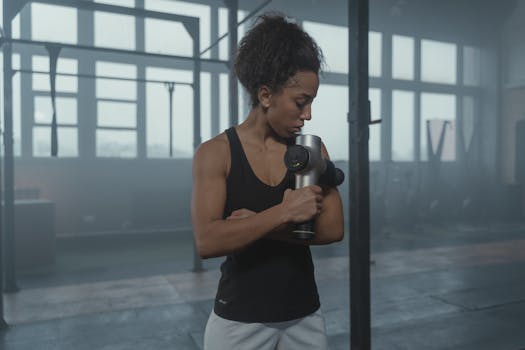
Research on vibration therapy for recovery often targets DOMS and exercise-induced soreness. Across studies, the general pattern is:
- Some protocols show reduced soreness compared with control conditions, particularly when vibration is timed appropriately and delivered at effective parameters.
- Other studies show no significant difference or only small changes that may not be clinically meaningful.
- Effects are frequently more consistent for perceived soreness and mobility than for objective markers of muscle damage.
Timing effects: pre- vs post-exercise
Vibration applied before training may help “prepare” tissues and influence neuromuscular responsiveness. Post-exercise vibration is often studied as a recovery tool to modulate inflammation and discomfort. The evidence does not uniformly favor one timing strategy, but many positive findings occur when treatments are delivered in close proximity to exercise.
For example, studies that apply vibration soon after a damaging workout sometimes report lower soreness at 24–72 hours. In contrast, trials that apply vibration too late or at insufficient intensity may show limited impact.
Population and exercise type matter
Results tend to vary by:
- Training status: Untrained individuals may experience different soreness dynamics than trained athletes.
- Exercise modality: Eccentric-heavy protocols reliably induce DOMS, making them common in research designs.
- Body region: Vibration delivered to large muscle groups may have different effects than targeted small areas.
Evidence is strongest for short-term soreness-related outcomes in controlled exercise settings, but it is less definitive for long-term adaptation or injury prevention.
Interpreting “evidence”: what is strong and what is uncertain
When evaluating sonic vibration therapy recovery muscle soreness evidence, it helps to separate methodological quality from the direction of findings.
Where the evidence is more convincing
- Consistency in subjective outcomes: Multiple studies report modest reductions in perceived soreness or improved comfort.
- Physiological plausibility: Neuromuscular and circulation effects are well supported in principle.
- Short-term functional benefits: Some protocols improve range of motion or immediate post-session stiffness.
Where uncertainty remains
- Heterogeneous protocols: Differences in frequency, amplitude, duration, and device type make it hard to generalize.
- Small sample sizes: Many studies involve limited participants, reducing certainty.
- Outcome selection: Not all studies measure the same endpoints, and some focus on biomarkers that may not closely track how sore someone feels.
- Blinding challenges: People can sometimes feel vibration intensity, making placebo control more difficult.
In short, the best interpretation is that vibration therapy may be a useful adjunct for soreness in some contexts, but it is not a guaranteed or universally effective recovery intervention.
Practical guidance for using vibration sessions for soreness
If you choose to use sonic vibration therapy as part of recovery, the goal should be to apply it in a structured way that matches how soreness develops after training—while respecting individual tolerance and safety considerations.
Start with a conservative protocol
Because studies use varied parameters, a cautious approach is reasonable:
- Use short sessions first to assess comfort and skin tolerance.
- Target the main soreness-prone muscles rather than trying to treat every region.
- Keep sessions consistent so you can tell whether soreness changes over time.
Timing: consider immediate or within-day use
Many protocols that show benefits treat muscles soon after exercise or within the first day. If soreness is the primary goal, applying vibration soon after training may align better with the window when stiffness and sensory discomfort are emerging.
Duration and intensity should be tolerable
Vibration should not cause pain. Mild to moderate sensations are typical, but burning, numbness, or sharp discomfort is a reason to reduce intensity, shorten time, or stop.
Combine with evidence-based recovery basics
Vibration therapy should be viewed as an adjunct to fundamentals that have stronger evidence, such as:
- Progressive training and adequate rest days
- Sleep and consistent nutrition
- Hydration and carbohydrate intake to support recovery
- Light activity or mobility work to reduce stiffness
These steps address the underlying recovery demands that vibration alone cannot resolve.
Safety considerations and who should be cautious
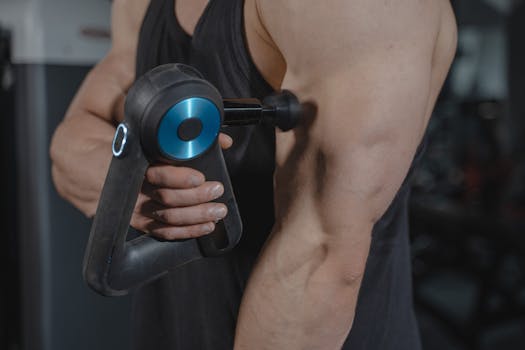
Sonic and vibration-based therapies are generally considered low risk when used appropriately, but safety is not universal. Consider the following:
Avoid direct use over certain conditions
- Do not apply vibration over areas with acute injury, open wounds, or unexplained swelling.
- Use caution over regions with impaired sensation.
- Be cautious if you have implanted medical devices or neurological conditions; consult a clinician for personalized guidance.
Monitor skin and tissue response
Because contact pressure and vibration intensity vary, watch for redness that persists, bruising, or irritation. If skin discomfort lasts beyond the session, the protocol should be adjusted.
Pregnancy, circulation issues, and clotting concerns
People with conditions affecting circulation, clotting risk, or pregnancy should seek medical advice before using vibration therapies, especially over large areas or with high intensity.
Stop if symptoms worsen
If soreness increases, range of motion decreases, or pain becomes sharper after sessions, discontinue and reassess. A therapy that aggravates symptoms is not supporting recovery.
Relevant device categories and how to assess them
Even though the evidence is not tied to a single brand, device features influence outcomes. When evaluating a vibration device for soreness recovery, look for information that matches research-like parameters rather than marketing claims.
Key specs to look for
- Frequency range (and whether it is stable or varies during use)
- Amplitude or intensity settings (and how they are calibrated)
- Session timer and repeatability
- Applicator design and contact area
Protocol transparency
Devices that provide clear guidance on how long to use, where to apply, and recommended frequency of sessions are easier to align with evidence-based principles.
It is also reasonable to note that some vibration devices marketed as “sonic” may rely on sound waves, while others primarily deliver mechanical vibration. The physiological effects may differ, so the term “sonic” alone is not enough to predict outcomes.
Prevention: reducing soreness before it starts
Because muscle soreness is partly a training adaptation signal, prevention strategies often outperform any single recovery tool. Vibration may help symptom management, but soreness can be reduced by planning:
- Warm up effectively before sessions, especially for eccentric or downhill running style workouts.
- Progress volume and intensity gradually to avoid abrupt increases that trigger high DOMS.
- Use smart training frequency so muscles are exposed to manageable stress rather than repeated maximal damage.
- Incorporate mobility and light recovery movement in the 24–48 hour window.
When soreness is consistently high, it may indicate that training load is too aggressive relative to recovery capacity, not that vibration is missing.
Summary: what the evidence supports for muscle soreness recovery
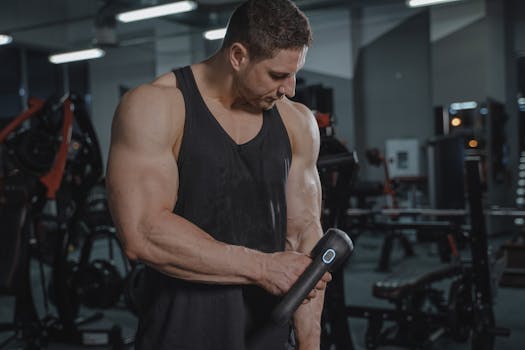
The sonic vibration therapy recovery muscle soreness evidence base suggests that vibration interventions can modestly reduce perceived soreness and improve short-term comfort or mobility in some people and protocols. The most plausible mechanisms involve neuromuscular modulation, sensory input changes, and local circulation effects. However, study results are not uniform due to differences in device type, vibration settings, timing, and outcome measurements.
For practical use, vibration is best treated as an adjunct to foundational recovery practices—applied conservatively, timed close to training when appropriate, and discontinued if symptoms worsen. The strongest takeaway is that vibration may help with soreness in certain contexts, but it is not a universal solution, and it should not replace sleep, nutrition, and training load management.
02.03.2026. 05:33