

Retrieval Practice: How to Study for Better Memory

Why retrieval practice works

Retrieval practice is a study approach built on a simple idea: memory strengthens when you actively pull information out of your brain, not when you only re-read or highlight it. When you practice recalling facts, concepts, or steps from memory, your brain treats that information as something to be accessed—not just something to be recognized. Over time, this creates more durable learning and better performance when you need the information later.
Unlike passive review, retrieval practice forces productive effort. That effort helps you notice what you truly know and what you don’t. The result is a feedback loop: you attempt recall, identify gaps, and then correct them. This is why retrieval practice is commonly linked to long-term learning and exam readiness.
Retrieval practice how to study: the core method
The basic workflow is straightforward. You study a topic briefly, then you stop studying and try to recall what you learned. After that attempt, you check accuracy, patch errors, and repeat the recall process. Think of it as testing without waiting for the test.
A practical way to structure a session:
- Choose a small learning target (for example, a definition, a set of concepts, or the steps in a process).
- Study briefly using your usual materials.
- Close the materials and recall from memory.
- Check and correct by reviewing only what you missed or misunderstood.
- Repeat with another recall attempt, or move to a new target and come back later.
To make retrieval practice effective, the recall attempt should be challenging enough to matter. If you can answer instantly without effort, the task may be too easy. If you cannot recall anything at all, the task may be too large or the initial study segment too broad.
Choose the right retrieval tasks

Not every recall activity is equally helpful. The goal is to practice retrieving information in a way that resembles how you will use it. The best retrieval tasks depend on the subject and the outcome you care about.
Here are common, effective retrieval task types:
- Short-answer recall: Write or speak key points without looking.
- Question answering: Turn headings into questions and answer them from memory.
- Blank-fill practice: Complete missing terms in definitions or formulas.
- Practice problems: For math, science, or coding, solve problems without re-checking steps.
- Teach-back: Explain a concept as if to someone else, focusing on accuracy rather than performance.
- Flashcards: Use for discrete facts, vocabulary, or structured steps.
For many learners, flashcards are a practical way to implement retrieval practice at scale. Tools such as Anki and Quizlet can support spaced repetition and help you keep recall sessions consistent. The key is how you write the prompts: they should require recall, not recognition.
Design questions that force recall
Retrieval practice works best when prompts require you to generate the answer. If your study system mostly lets you recognize the correct information, you may feel fluent during practice while still struggling during recall on exams.
Good retrieval prompts tend to:
- Ask for meaning, not just labels (for example, “What does X mean?” rather than “Is X true?”).
- Use cues that match your test (definitions, steps, scenarios, or question formats).
- Target common confusions (compare similar terms, distinguish overlapping concepts).
- Allow partial credit during checking so you can learn from near-misses.
Example prompt upgrades:
- Instead of: “Highlight the causes of photosynthesis.”
Try: “List three causes and briefly explain how each contributes.” - Instead of: “Review the vocabulary list.”
Try: “Given the definition, provide the term. Then provide an example sentence.” - Instead of: “Look at the worked solution.”
Try: “Solve the problem again from scratch, then compare your method to the original.”
Use spacing and repetition to make learning last
Retrieval practice is strongest when it is repeated over time. Spacing means you don’t compress all recall into one sitting. Instead, you revisit the material after a delay, which increases the difficulty of recall and improves retention.
A simple spacing approach for independent study:
- First recall: same day, soon after initial learning.
- Second recall: one to two days later.
- Third recall: three to seven days later.
- Ongoing recall: weekly or before assessments.
You don’t need a complicated schedule to benefit. What matters is that you return to information after you’ve had time to forget a portion of it. If you always review immediately, you may confuse familiarity with mastery.
Balance difficulty: productive struggle without frustration

One of the most common mistakes is making recall attempts either too easy or too hard. Too easy creates illusion of competence; too hard can lead to discouragement and shallow learning if you give up before checking.
Here’s a practical way to calibrate difficulty:
- If you recall correctly with minimal effort, reduce support by shortening the study segment or increasing the time between practice attempts.
- If you cannot recall anything, your initial learning chunk may be too large. Break the topic into smaller targets and try again.
- When you check, don’t just look at the correct answer—identify the specific reason you missed it (wrong detail, missing step, confusing similar terms, or misunderstanding).
Productive struggle is not about suffering; it’s about making your brain work to reconstruct the information. That reconstruction is where learning consolidates.
Turn review time into retrieval time
Many students spend most of their study time re-reading notes, re-watching lectures, or scanning highlighted sections. Those activities can be useful for initial exposure, but they often dominate the schedule even when they don’t build recall strength.
To shift from review to retrieval:
- Use a “study then close” rule: study for a short period, then close materials and attempt recall.
- Convert headings into questions: after reading, generate questions for each heading and answer them without looking.
- Replace rereading with summaries from memory: write a short explanation, then compare with the source.
- Practice mixed sets: instead of doing only one type of problem, alternate between related question types to strengthen flexible retrieval.
When you do need to re-read, keep it targeted. Look up only the parts you missed or misunderstood, then return to recall quickly.
Track gaps and correct them efficiently
Retrieval practice is not only about recalling; it is also about diagnosing. Each failed or partial attempt reveals a gap. The most efficient learning happens when you correct those gaps promptly and in a way that supports future recall.
A correction routine you can use after checking:
- Rewrite the correct answer from your own words.
- Mark the misconception (for example, “I confused term A with term B”).
- Create a new prompt that targets the exact failure point.
- Do another recall attempt after correction, even if it’s brief.
This approach prevents the common cycle of repeatedly studying the same section without addressing the underlying reason you missed it in the first place.
Retrieval practice for different subjects

The principles stay the same, but the implementation differs. Here are subject-specific ways to apply retrieval practice:
For factual learning (history, biology, definitions)
Use prompts that ask for meaning and relationships. Instead of only “What is X?”, include “Why does X matter?” or “How is X different from Y?” Create short explanations that you can produce from memory.
For problem-solving (math, physics, coding)
Practice solving problems without looking at solutions. After checking, redo the problem again after a short delay. If solutions are long, break them into steps and retrieve each step in order.
For writing and language learning
Recall vocabulary and grammar by generating sentences from prompts. For essays, outline from memory first, then fill in details. In language learning, retrieve the word or structure from a definition or scenario rather than selecting it from multiple choices.
For understanding complex processes (psychology, engineering, workflows)
Use sequence-based prompts: “What happens first?”, “What causes the next step?”, and “What would change if X were different?” Process recall strengthens not only facts but also the structure of how ideas connect.
Use spaced retrieval sessions that fit real life
Consistency matters more than perfection. Retrieval practice can be integrated into everyday routines without turning your life into a study spreadsheet.
A realistic weekly plan might look like this:
- Daily: 10–20 minutes of recall for the most recent material plus one older topic.
- Two or three times per week: longer sessions focused on problem sets or deeper question answering.
- Before assessments: switch to mixed practice and timed recall, prioritizing weak areas.
If you use a flashcard system like Anki, you can rely on its scheduling to revisit items at increasing intervals. Regardless of tool, the study quality comes from active recall and careful correction, not from the app itself.
Common mistakes to avoid
Retrieval practice is powerful, but it’s easy to implement it in ways that reduce its benefits. Watch for these common pitfalls:
- Using recognition instead of recall: multiple-choice can help, but it shouldn’t replace generating answers from memory.
- Checking too quickly: if you look at answers immediately, you may not fully engage retrieval.
- Overloading sessions: cramming too many topics together can make it hard to diagnose what you missed.
- Failing to correct: recalling wrong information without updating it can reinforce errors.
- Confusing fluency with learning: feeling familiar after re-reading is not the same as retrieving accurately under pressure.
How to evaluate whether retrieval practice is working
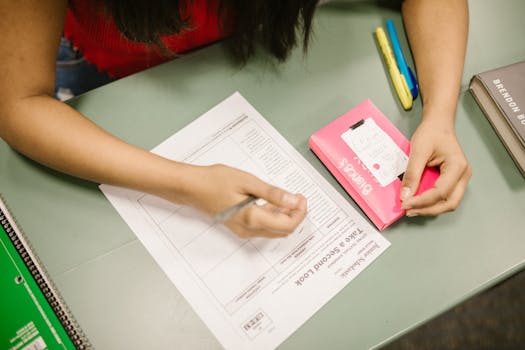
You can’t always feel the benefits during the first session, but you can measure progress. Look for changes in two areas: accuracy and speed.
Signs retrieval practice is working include:
- You can produce answers with fewer prompts or fewer mistakes over time.
- You remember information after delays (days or weeks), not just immediately after studying.
- You improve on practice tests without re-reading the same material repeatedly.
- Your explanations become more complete and less dependent on copying notes.
If performance doesn’t improve, the issue is usually prompt design, insufficient correction, or inadequate spacing—not the concept of retrieval practice itself.
A practical example of a retrieval practice study session
Here’s a concrete way to apply retrieval practice without special equipment. Imagine you’re studying a chapter section with several key concepts.
- Step 1: Brief study (10–15 minutes). Read the section and note the major headings.
- Step 2: First recall (5–10 minutes). Close the notes and write what you remember under each heading. If you can’t recall something, leave a blank.
- Step 3: Check and correct (5 minutes). Compare your recall to the text, then rewrite the missing or incorrect parts in your own words.
- Step 4: Second recall (5 minutes). Without looking, answer a short set of questions you created from the headings.
- Step 5: Spacing. Revisit the same prompts later that day or the next day, then again after several days.
This cycle turns study time into retrieval time, and it creates the repeated opportunities needed for durable learning.
Conclusion: make recall the center of your study routine
If you want a reliable way to improve long-term memory, retrieval practice how to study starts with one shift: treat recall as the main event. Use short study segments, generate answers from memory, check what you missed, and repeat with spacing. Over time, this approach reduces the gap between what you feel you know and what you can actually retrieve when it matters.
With consistent practice, retrieval becomes easier and more accurate—because your brain has trained the skill of accessing information, not just recognizing it.
26.02.2026. 20:01