

How to Run an N=1 Trial for a Nootropic

What you’re trying to achieve with an N=1 nootropic trial
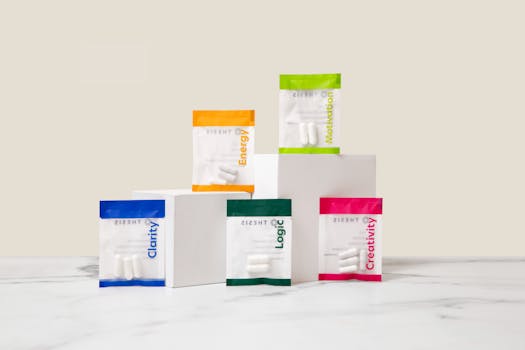
An N=1 trial is a structured way to figure out whether a specific nootropic affects you. Instead of relying on general claims, you run a self-experiment with clear start/stop rules, track outcomes consistently, and make a decision based on your own data.
The goal is to reduce guesswork and placebo/nocebo effects by using a repeatable protocol. In practice, that means you’ll define what “works” looks like, standardize the conditions around dosing, and analyze whether changes line up with the treatment periods.
For nootropics, this approach is especially useful because effects can be subtle, depend on baseline sleep and stress, and vary widely between individuals. A well-run N=1 trial helps you answer questions like: Does this substance improve focus? Does it worsen anxiety? Does it change sleep quality? Does it affect reaction time or productivity in a measurable way?
Preparation: set expectations, choose outcomes, and gather tools
Before you start, take time to design the trial so you can interpret the results. Most “failed” N=1 experiments aren’t truly failures—they’re missing structure, inconsistent tracking, or unclear outcome definitions.
1) Decide what you’re testing and what “success” means
Pick one nootropic (or one ingredient) and one primary outcome. Secondary outcomes are fine, but you need a main target so you don’t drown in data.
Examples of primary outcomes:
- Focus/attention: performance on a short attention task or self-rated focus during a fixed time window
- Work output: number of meaningful tasks completed in a set timeframe
- Sleep quality: time to fall asleep, awakenings, or next-day sleepiness
- Mood/anxiety: a consistent rating scale at the same times of day
- Reaction time: a timed test you repeat under similar conditions
Define how you’ll measure it. “I feel better” is valid, but it should be recorded in a consistent way (for example, a 0–10 rating at the same time each day).
2) Choose a dosing and washout plan
Many nootropics have effects that can last beyond the day you take them. To interpret results, you’ll want a washout period between active and inactive phases.
Use the product’s dosing guidance as your starting point, but base washout length on pharmacology and practical experience. If you’re unsure, choose a conservative washout so carryover effects are less likely to blur the comparison.
For substances with short-lived effects, shorter washouts may be reasonable. For longer-lasting effects, longer washouts reduce the chance that the “off” period is still influenced by the prior dose.
3) Pick your trial design: simple AB or ABAB
The most common N=1 designs for nootropics are:
- AB: Active period (A) then baseline/control period (B). Simpler, but less robust.
- ABAB: Baseline/control (A), active (B), then repeat (A again) to see if the effect returns. More informative.
If you want stronger evidence, ABAB is usually better because it tests whether the change is reproducible for you.
4) Prepare tracking materials you’ll actually use
Use a method you can maintain for the full trial. Options include:
- A notes app or spreadsheet with fixed fields
- A daily log template with the same questions
- Wearable data (optional) like sleep duration or heart rate variability, if it’s reliable for your device
At minimum, plan to record:
- Dose taken (and time)
- Whether the day was active or control
- Primary outcome rating(s)
- Sleep and caffeine/alcohol use
- Any side effects (anxiety, headache, nausea, insomnia, jitteriness)
You don’t need perfection, but you do need consistency.
5) Control major confounders
Because nootropic effects can be masked or amplified by lifestyle, standardize what you can:
- Keep caffeine timing and dose consistent (or record it precisely)
- Maintain similar sleep schedules where possible
- Avoid starting new supplements or medications during the trial
- Keep exercise patterns stable, or record changes
If you can’t control something, record it so you can interpret anomalies later.
Step-by-step: how to run an N=1 trial for a nootropic
Follow these steps in order. The key is to build a protocol you can execute without improvising mid-trial.
1) Choose a trial length that matches expected variability
Decide how many days you’ll run in each phase. Too short a trial makes results noisy; too long increases the chance your life circumstances change.
As a practical starting point, many people use 1–2 weeks per phase for day-to-day variability, especially when the primary outcome is subjective or influenced by sleep/stress. If your outcome is objective and stable (like reaction time under consistent conditions), you may be able to use fewer days.
Write the plan down before you begin.
2) Establish a baseline “control” condition
Your control condition needs to be something that lets you compare against active dosing. Options include:
- No dose: You take nothing during control days
- Placebo-like routine: You take an inert capsule or a nonactive equivalent if feasible
- Lower dose control: Only if appropriate and safely justified
For many self-experiments, the simplest control is no dose. If you have strong expectations about effects, a placebo-like routine reduces bias.
3) Create a dosing schedule with fixed timing
Pick a time window for dosing that aligns with the nootropic’s intended use (for example, morning or early afternoon). Keep timing consistent across active days.
Examples of scheduling rules:
- Take the dose at the same time each active day
- Avoid taking it late in the day if you’re tracking sleep outcomes
- If the nootropic is typically split, keep the split consistent
Consistency matters because timing changes can create apparent “effects” that are really schedule effects.
4) Implement a washout period between phases
After finishing active dosing, insert a washout period before starting the next phase. The washout reduces carryover effects that would contaminate the control days.
Choose a washout length you can follow reliably. If you’re running ABAB, you’ll likely need washout between each phase transition.
Record the washout days too, even if you’re not actively dosing—at least note sleep, caffeine, and any lingering symptoms.
5) Track outcomes at the same times and under similar conditions
To make your data interpretable, measure outcomes consistently.
For subjective ratings, pick a consistent schedule such as:
- Primary outcome rating at a fixed time (for example, late morning)
- Secondary outcome rating later (for example, early afternoon)
- Evening sleepiness rating before bed
If you’re using an objective test (reaction time, a short cognitive task, or a standardized focus exercise), do it at the same time relative to dosing and with similar environment conditions.
Track side effects every day. If a nootropic causes mild but persistent issues, that’s still valuable information.
6) Use a daily log template with a small number of fields
Keep your log short enough that you’ll complete it. A practical daily entry can include:
- Date
- Phase (active vs control)
- Dose and time (or “none”)
- Primary outcome rating (0–10)
- Sleep duration and sleep quality rating
- Caffeine/alcohol notes
- Side effects checklist (yes/no + severity)
- One sentence on what you did that day (optional but helpful)
When you keep the fields limited, you’ll collect more complete data, which improves your conclusions.
7) Reduce bias: blind yourself if you can
If you can manage it, blinding reduces expectation effects. True double-blinding is hard for self-experimentation, but partial blinding is possible.
Approaches include:
- Use identical capsules for active and control (even if you know which is which, you can randomize within a schedule)
- Have someone else prepare the schedule if feasible
- Randomize which days are active vs control within your planned structure (only if it doesn’t break the washout logic)
At minimum, avoid checking your “phase” mid-day. If you know, your ratings may drift toward what you expect.
8) Review the data while staying within your rules
Once the trial is complete, review outcomes by phase. Don’t make decisions mid-trial based on a few days.
Look for:
- Consistent improvements in the primary outcome during active days
- Consistent worsening or new side effects during active days
- Whether the effect size is meaningful for your goals
- Whether results reverse in the later control phase (in ABAB designs)
It’s fine to notice patterns, but base your decision on the overall phase comparison, not one standout day.
9) Make a decision with pre-defined criteria
Create decision rules before you start. Examples:
- Keep: Primary outcome improves by at least 1–2 points on your 0–10 scale and side effects remain minimal
- Adjust: Primary outcome improves but side effects are significant—try a lower dose next trial
- Stop: Primary outcome shows no consistent improvement or side effects outweigh any benefit
Decision criteria prevent “moving the goalposts” after you’ve invested time.
10) Document everything so the next trial is easier
Write a short summary after each phase:
- How you felt overall
- Primary outcome trend
- Sleep changes
- Side effects and when they appeared
- Caffeine or stress changes that might explain anomalies
If you repeat the trial later (for dose optimization or to test another nootropic), your notes will speed up setup and improve quality.
Common mistakes that derail N=1 nootropic trials
Most problems come from avoidable errors in design, tracking, or interpretation. Here are the most frequent issues and how to prevent them.
1) Changing dose or timing mid-trial
If you change dose because you “feel” something on day 3, you break the protocol. Stick to the plan. If you need a dose change, schedule it for the next trial cycle.
2) Skipping washout periods
Without washout, the control phase may still reflect the active phase. This can make the effect look smaller or inconsistent. If you suspect carryover, lengthen washout in your next attempt.
3) Measuring too many outcomes without a primary target
When you track everything, you’ll find patterns that are just noise. Choose a primary outcome and keep secondary outcomes limited.
4) Inconsistent measurement times
Subjective ratings taken at different times of day won’t be comparable. Fix the timing relative to dosing or use the same clock time every day.
5) Allowing major lifestyle changes to overlap the trial
Starting a new exercise routine, changing sleep schedule, or increasing caffeine can all masquerade as nootropic effects. Record these variables, and if changes are large, consider pausing or restarting the trial.
6) Ignoring side effects because they seem minor
For nootropics, “mild” side effects can still meaningfully reduce net benefit. Track side effects daily and weigh them against performance improvements.
7) Stopping early because you want an answer
Early stopping increases the chance of false positives. If you’re unsure, let the protocol run to completion, then analyze.
Additional practical tips to improve reliability and interpret results
These steps focus on making your N=1 trial more credible and actionable.
Use a simple scoring system for the primary outcome
If your primary outcome is subjective (focus, calmness, energy), use a consistent scale. For example:
- 0 = worse than usual
- 5 = same as usual
- 10 = significantly better than usual
Write a one-line anchor description for what “4,” “6,” or “8” means to you. That reduces drift in how you interpret the scale.
Separate “momentary effects” from “next-day effects”
Some nootropics feel immediate but don’t improve performance later; others affect sleep and next-day cognition. If you care about both, track at least two time windows:
- During the dosing window (acute effects)
- Next morning or evening (carryover and sleep impact)
Then decide based on the outcome that matters most to your goal.
Track caffeine and sleep like they matter—because they do
Caffeine can confound focus measures, and sleep quality can dominate mood and cognition. Record:
- Caffeine amount and cutoff time
- Sleep duration
- Sleep onset latency (if you can)
- Number of awakenings (even roughly)
When you later review data, you’ll be able to identify whether a “nootropic benefit” is actually a sleep benefit.
Consider using objective tasks you can repeat
If you want stronger evidence than self-ratings alone, use a repeatable task:
- A short reaction time test
- A consistent focus exercise
- A timed reading/comprehension check
Keep the environment stable (same device, similar time of day, minimal distractions). Objective tasks reduce interpretive bias.
Handle irregular days with a consistent rule
Not every day will be “normal.” Decide ahead of time what you’ll do if you have travel, illness, or an unusual workload.
For example:
- Record the day but flag it as “unusual”
- Exclude it from your primary analysis only if it’s clearly out of bounds
Don’t silently ignore days that don’t fit your expectations.
Optimize dose only after you finish the trial
If you see a promising trend but effects are weak or side effects are noticeable, the next step is usually a new trial with a revised dose rather than tweaking mid-stream.
For example, you might run a second N=1 trial with the same structure but a lower dose. Or you might adjust timing (morning vs early afternoon) if sleep outcomes are affected.
Use caution with safety and contraindications
An N=1 trial can be educational, but safety comes first. Before starting, review any known contraindications and interactions for the nootropic—especially if you take prescription medications, have cardiovascular conditions, or have a history of anxiety or sleep disorders.
If you experience concerning symptoms (persistent chest pain, severe agitation, allergic reactions, or significant insomnia), stop the experiment and seek appropriate medical guidance. Do not “push through” adverse effects to complete a protocol.
Record the exact product details
Nootropic effects can depend on formulation. Document:
- Brand and product name
- Active ingredient(s) and label dose
- Batch or lot number if available
- Any additional ingredients (fillers, caffeine in the formula, etc.)
This is also helpful if you later need to repeat the trial or compare across products.
Where “natural product” confounders show up: caffeine, stimulants, and sleep disruptors
Some nootropic blends include caffeine or other stimulants. If your trial includes a stimulant-like nootropic, it’s easy to misattribute jitters or sleep disruption to the active ingredient rather than to caffeine content or timing.
If you’re tracking sleep outcomes, keep stimulant exposure consistent, and record whether the nootropic contains any additional stimulants. If it does, you may need to treat it as part of the “dose effect” and interpret results accordingly.
Example protocol you can adapt
Here’s a practical example of a simple ABAB structure for a focus-oriented nootropic:
- Week 1 (Control A): No dose. Track primary focus rating at 10:30am. Record sleep the prior night.
- Week 2 (Active B): Take the nootropic at 9:00am. Track the same focus rating at 10:30am. Record side effects daily.
- Washout: If effects are likely to linger, insert a 3–5 day washout with no dose.
- Week 3–4 (Control A again): No dose. Track the same outcomes.
- Optional repeat: If you want stronger evidence, repeat active phase again (B) after another washout.
Throughout, keep caffeine cutoff consistent (for example, no caffeine after 1:00pm) and avoid starting new supplements.
How to interpret outcomes without overreacting
If you see improvement during active days but not during control, that’s a strong signal. If you see improvement during both active and control, lifestyle factors may be driving the change. If you see improvement during active but also clear side effects, you may decide the net effect isn’t worth it.
Also watch for patterns like “better focus only on days with good sleep.” That can still be useful: it suggests the nootropic may not be the main driver, but it might amplify what you already have.
Keep your trial grounded in your real goals
A nootropic that improves one metric but harms another may not meet your personal definition of success. Define success based on tradeoffs you care about—such as focus versus sleep, or calmness versus energy.
When you decide, do it using your pre-defined criteria and phase comparisons, not the most recent day’s experience.
Summary of the N=1 process you can reuse
To run an N=1 trial for a nootropic, you design a structured protocol (clear phases, washout, and fixed timing), track a primary outcome consistently, and interpret results based on phase comparisons rather than momentary impressions. This approach turns nootropic experimentation into a repeatable, data-informed process.
Once you’ve completed one trial, you’ll have a template you can reuse for dose optimization, timing changes, or testing another nootropic—while keeping the same discipline around outcomes and measurement.
26.02.2026. 09:58