

HRV Wearable Accuracy: Optical vs Chest Strap (What’s Better?)

Optical HRV and chest-strap HRV: what’s actually being measured
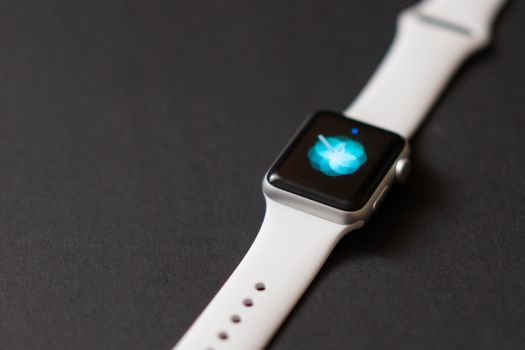
HRV (heart rate variability) is one of the most useful recovery signals you can track—if you measure it consistently. The big question for most people is not whether HRV is “real,” but how accurately your wearable captures it and whether the signal is stable enough to guide decisions.
Two common HRV measurement approaches dominate the market:
- Optical HRV wearables (wrist rings, watches, and some armbands) use green/red LEDs plus photodiodes to estimate blood volume changes. From that signal, they infer inter-beat intervals (IBIs) and compute HRV.
- Chest strap HRV monitors use electrical heart sensing (ECG or near-ECG). They measure the timing of heartbeats directly, then compute HRV from beat-to-beat intervals.
Because these systems measure “beat timing” differently, they behave differently in the real world. Optical sensors can be excellent for trends, but they’re more sensitive to motion, skin contact, and lighting. Chest straps generally deliver more consistent beat timing—especially during higher movement or workouts—because they’re measuring electrical activity close to the heart.
Quick summary: which option is strongest overall
If you want the most accurate and reliable HRV data for training decisions, a chest strap is usually the stronger overall choice. You’ll typically get cleaner inter-beat intervals, fewer artifacts, and better day-to-day stability—especially when you’re moving.
Optical wearables can still be a smart pick if your priority is comfort and continuous tracking (sleep, daily recovery trends) and you’re willing to accept that the absolute HRV numbers may be less precise. For many people, optical HRV is “good enough” to spot patterns, but it’s not usually the best tool for precise comparisons across time or protocols.
Side-by-side: optical HRV vs chest strap accuracy
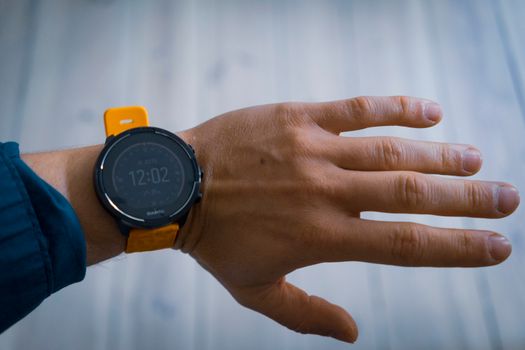
Below is a practical comparison focused on accuracy-related behavior: signal quality, artifact sensitivity, and how that translates into HRV reliability. (HRV is often reported as RMSSD or similar metrics; the exact algorithm varies by brand, but the measurement physics still matter.)
| Category | Optical HRV wearables (wrist) | Chest strap HRV monitors |
|---|---|---|
| Primary sensing method | LED light + photodiode (blood volume changes) | Electrical heart sensing (ECG/near-ECG) |
| Beat-to-beat timing | Estimated from pulse waveform; timing can drift under motion | Measured directly; timing is typically more stable |
| Motion sensitivity | High. Writing, lifting, cold weather, and loose fit can degrade signal | Lower. Some straps shift, but electrical sensing tolerates movement better |
| Skin contact requirements | Tight fit helps. Sweat and consistent contact improve quality | Fit matters, but contact is usually more forgiving than optical |
| Environmental factors | Cold skin, different lighting, and wrist position affect readings | Less affected by lighting; still depends on placement and strap quality |
| Data consistency during workouts | Often unreliable for exact HRV during intense movement | Typically more reliable during running, cycling, and intervals |
| Sleep HRV accuracy | Often better at night because motion is lower; still varies by sensor fit | Generally strong for sleep HRV because beat timing remains steady |
| Typical artifact pattern | Missed beats, waveform distortion, and signal dropouts | Occasional contact loss, but fewer beat-timing errors overall |
| How brands usually present HRV | “Daily readiness” style metrics or nightly HRV averages; fewer raw details | Clearer raw HRV trends; many apps allow export and deeper analysis |
| Best use for decision-making | Trend-based recovery monitoring when consistency is maintained | More confident HRV-based training and recovery decisions |
Real-world performance differences you’ll notice
The biggest differences show up when you compare “quiet conditions” versus “messy conditions.” Optical HRV tends to be strongest when your wrist is still and circulation is stable—think sleep and easy walks. Chest straps tend to hold up when things get dynamic.
Scenario 1: morning readiness after a restless night
You wake up and check your HRV score. With an optical watch, you may see a lower HRV reading after tossing and turning. That drop might reflect real physiology, but it can also be influenced by wrist movement, varying contact pressure, and motion artifacts.
With a chest strap, you’re much more likely to see a reading that matches your actual beat-to-beat timing. If your HRV drops because your nervous system is still recovering, you’ll see it. If your optical reading drops because the sensor lost quality, you’ll see less of that problem.
In practice, this means chest-strap HRV is better for comparing “this week vs last week” when your sleep isn’t perfect.
Scenario 2: intervals or hard sessions
Say you do 8 x 400m at a hard pace. An optical wrist sensor often struggles here. Even if it continues to show heart rate, the HRV portion can be noisy or limited to short stable windows.
A chest strap is typically more reliable for HRV during training windows—especially if your goal is to understand how your body responds to stress and recovery between sessions.
If you use HRV to guide whether you should push, you want the measurement to reflect physiology, not sensor limitations.
Scenario 3: cold weather and loose fit
Cold hands can reduce peripheral blood flow and make optical signals weaker. If your watch is slightly loose (or your sleeve rides up), the optical HRV can become inconsistent for days.
Chest straps are not immune to comfort issues, but they usually keep electrical contact and beat timing steadier. You’ll still want a snug fit, but you’re less likely to see sudden HRV changes caused by sensor behavior.
Pros and cons breakdown: optical HRV wearables
What optical sensors do well
- Convenience and compliance: You wear it all day and all night. That matters more than perfection if you’re building long-term trends.
- Low friction: No strap to wet, no extra device to manage.
- Good sleep tracking for many users: When you’re still, optical signals often stabilize. For many people, nightly HRV trends correlate well with recovery patterns.
- Broader ecosystem: Most optical wearables integrate readiness, sleep stages, and training load into one dashboard.
Where optical HRV usually falls short
- Motion artifacts: HRV is sensitive to beat timing. Wrist movement can distort the waveform and produce incorrect beat interval estimates.
- Fit variability: A strap that’s slightly loose or a watch that rotates changes results. Even small differences can shift HRV numbers.
- Less reliable HRV during activity: If you’re looking for HRV during workouts, optical sensors often provide limited or noisy data.
- Absolute accuracy is harder to trust: Even if daily trends are meaningful, comparing exact HRV values across weeks can be risky if sensor conditions change.
Optical examples you may consider
Many popular watches and rings include HRV features. Brands differ in algorithms, but the optical measurement method is the same core concept. If you’re already in an optical ecosystem—like an Apple Watch-style approach, Garmin-style wrist HRV, or Whoop/other wrist-first systems—you can likely get solid trend tracking.
For best results with optical HRV, you’ll want tight, consistent placement and to avoid reading HRV during active periods as if it were equivalent to ECG-grade beat timing.
Pros and cons breakdown: chest strap HRV monitors
What chest straps do well
- Higher beat-to-beat timing fidelity: Electrical sensing generally produces more accurate inter-beat intervals, which improves HRV reliability.
- Better robustness during workouts: If you want HRV data for training stress, chest straps are typically the more trustworthy option.
- More consistent cross-day measurement: When you keep the strap position consistent, you’ll often see steadier HRV outputs.
- Better for research-style tracking: If you want to export HRV and compare protocols, chest strap data is usually easier to trust.
Where chest straps can be annoying
- Comfort and setup: You may need to moisten electrodes (depending on model) and ensure proper placement.
- Skin irritation: Some people get chafing or irritation—especially with sweat and long wear.
- Adherence varies: If you hate wearing it, you’ll skip days. Less data can reduce the value of HRV trends.
- Contact loss still happens: Straps can shift; if the strap slips, you can still lose signal.
Chest strap examples you may consider
Look for chest strap HRV monitors that are designed for beat-to-beat accuracy and that pair with your training platform. Common options include Polar H10/H9-style straps and similar ECG-capable devices used by endurance athletes. These are often paired with apps like Polar Flow, TrainingPeaks integrations, or other platforms that compute HRV metrics.
If your goal is “optical vs chest strap accuracy,” it’s usually these ECG/near-ECG strap designs that set the practical benchmark.
Best use-case recommendations for different buyers
The right choice depends on what you want HRV to do for you. Here’s how to match your goal to the measurement method.
Choose an optical wearable if you primarily want recovery trends
If you care about nightly HRV trends, readiness scoring, and general recovery monitoring, optical wearables are often the best fit. You’ll get the most value from HRV when you wear your device consistently for weeks or months.
Best for: busy schedules, sleep-focused recovery tracking, and people who want one device for everything (sleep, HR, activity, and HRV trends).
How to make it work: keep the watch placement consistent day to day, wear it snugly, and interpret changes as trends rather than exact numbers.
Choose a chest strap if you want training-grade HRV reliability
If you want HRV to inform training decisions—like whether you should complete a hard session, do a different intensity block, or adjust volume—chest straps usually win. The measurement is less likely to be distorted by motion or fit changes.
Best for: endurance training, interval sessions, athletes using HRV for structured programs, and anyone who wants more confidence in day-to-day comparisons.
How to make it work: keep the strap position consistent, consider using it for workouts and sleep if you tolerate it, and track HRV as a metric that depends on consistent measurement conditions.
Use both if you want the best of each world
A practical compromise is to use your optical wearable for convenience and long-term context, while using a chest strap for periods where you need higher accuracy—like during a 4–8 week training block, when you’re sick/injured, or when you’re trying to validate a specific recovery response.
For example, you might:
- Use your watch for nightly HRV and readiness trends most nights.
- Use a chest strap during key workouts (interval days) and a handful of sleep nights per week to confirm whether a sustained HRV drop is real or sensor-related.
This approach helps you avoid “overreacting” to optical fluctuations while still keeping daily tracking simple.
Final verdict: which option suits your needs?
Chest strap HRV monitors are the better choice when you prioritize accuracy, stability, and confidence—especially during movement and workouts. If you’re serious about using HRV to guide training intensity or you need reliable beat-to-beat timing, you’ll typically get more trustworthy data from a strap.
Optical HRV wearables are the better choice when you prioritize comfort, continuous wear, and trend-based recovery insights. For sleep and general wellness tracking, optical HRV can be highly actionable—just treat it as a pattern signal, not a lab-grade measurement.
If you’re deciding right now, here’s the simplest rule: use a chest strap for accuracy-demanding sessions, and use optical for consistent long-term monitoring. That combination is often the most effective way to get both reliable HRV and high adherence.
07.01.2026. 19:20