

Indoor CO2 Ventilation for Sleep: How HRV Fits the Science

Why indoor CO2 matters for sleep quality
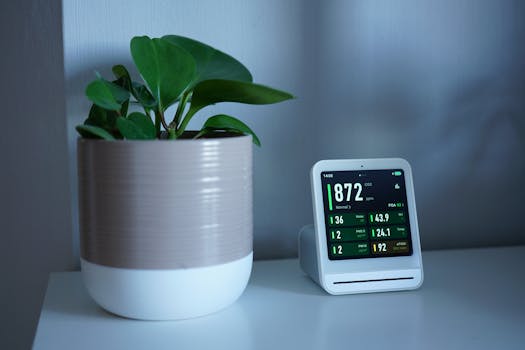
Breathing isn’t just about oxygen; it’s also about the air you’re exchanging while you sleep. In an enclosed bedroom, human respiration steadily adds carbon dioxide (CO2) to indoor air. When CO2 rises, it can correlate with stuffiness, reduced perceived air freshness, and—importantly—sleep disruption for some people. The goal of “indoor CO2 ventilation sleep HRV” thinking is not to chase a perfect number, but to keep indoor air renewal high enough that CO2 buildup and related indoor air issues don’t quietly accumulate all night.
Most homes have ventilation by default through leaks, pressure differences, and occasional window opening. But modern airtight construction and energy-efficient habits can reduce that natural air exchange. That’s where controlled ventilation strategies—especially heat recovery ventilation (HRV)—become relevant. HRVs can help maintain a steadier supply of outdoor air while limiting heat loss, which supports consistent CO2 management across the night.
To understand how to apply this science, it helps to connect three pieces: (1) how CO2 changes in bedrooms, (2) what CO2 indicates about ventilation rate, and (3) how HRV systems deliver fresh air without turning the bedroom into an energy sink.
How CO2 builds up during sleep in a closed bedroom
CO2 is a byproduct of metabolism. During sleep, you still exhale CO2, and because you’re not moving around much, the air in the room can stratify and become uneven—especially in larger rooms or rooms with limited air mixing. Even though the absolute CO2 concentration may remain far below outdoor levels, the rate of increase in an enclosed space can be meaningful.
CO2 buildup depends on:
- Occupancy: number of people and their breathing rate (sleep stages, restlessness, illness).
- Room volume: smaller rooms reach higher concentrations faster.
- Ventilation rate: air exchange with outdoors (mechanical ventilation, infiltration, open windows).
- Air mixing: how quickly fresh air distributes and how well stale air is removed.
- Time: CO2 often rises gradually and may peak later in the night if ventilation is inadequate.
In practice, many bedrooms show a “slow climb” in CO2 during the first half of the night, followed by a plateau if ventilation is stable. If ventilation is too low, CO2 can keep rising, which can contribute to a feeling of heaviness or impaired comfort.
CO2 as a ventilation proxy (not a toxin story)
It’s easy to overinterpret CO2. CO2 is not typically a direct acute poison at typical indoor concentrations. Instead, CO2 is widely used as a proxy for ventilation adequacy because it tracks how much exhaled air is accumulating relative to fresh air entering the room.
When ventilation is insufficient, CO2 rises. When ventilation improves, CO2 stabilizes or falls. That’s why CO2 monitoring is often more actionable than trying to infer ventilation from temperature alone.
CO2 also co-varies with other indoor air factors: volatile organic compounds from materials and cleaning products, humidity changes, and aerosol buildup. While CO2 itself isn’t the whole story, it’s a useful indicator that “air renewal is lagging.”
What sleep changes when indoor CO2 ventilation is inadequate
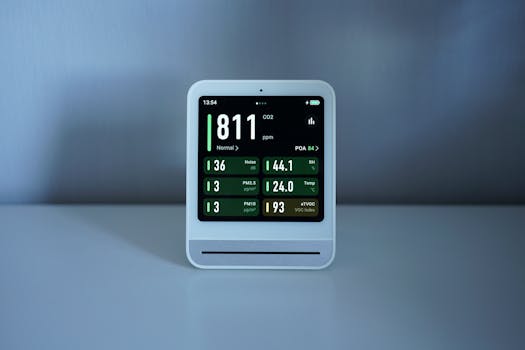
Research linking CO2 to sleep outcomes is nuanced, but several mechanisms are biologically plausible:
- Respiratory comfort: higher CO2 can correlate with a perception of stuffiness and reduced comfort, which can fragment sleep for some people.
- Ventilatory control: CO2 directly influences breathing drive. Elevated levels can alter breathing patterns and arousal thresholds.
- Autonomic stress: discomfort and poor air quality can raise stress signaling, which affects sleep depth.
- Co-accumulation: inadequate ventilation can also allow other irritants to accumulate, compounding the effect.
It’s also important to note that people differ. Some individuals are more sensitive to CO2-related comfort changes, while others notice little. However, the practical takeaway for most households is consistent: if CO2 rises significantly overnight, ventilation is likely not keeping pace with occupancy.
Common indoor CO2 patterns that signal a ventilation problem
CO2 monitoring can reveal whether your bedroom ventilation is stable. Patterns that often indicate inadequate ventilation include:
- CO2 steadily rising throughout the night with no plateau.
- CO2 peaking shortly after bedtime and staying high due to low air exchange.
- Large day-to-day swings depending on whether windows are opened or HVAC is running.
- High baseline CO2 even when the room is unoccupied, suggesting lingering air from adjacent spaces or insufficient whole-home ventilation.
These patterns don’t prove a specific health outcome, but they do indicate that the room’s ventilation rate is likely too low for consistent overnight air renewal.
How HRV systems reduce CO2 buildup while preserving comfort
Heat recovery ventilation (HRV) is designed for continuous or timed outdoor air supply while recovering energy from exhaust air. Instead of simply exhausting warm indoor air and replacing it with cold outdoor air (or vice versa), an HRV transfers heat between the two air streams. This matters for sleep because it allows ventilation to run steadily without making the bedroom uncomfortable.
In an HRV setup, indoor air is extracted from designated points (often bathrooms or kitchens, sometimes bedrooms depending on design). Outdoor air is brought in through another stream and distributed to living spaces or bedrooms. The “recovery” component reduces the energy penalty, which supports longer runtimes—exactly what you need for CO2 control overnight.
Where HRV helps the most: steady ventilation during sleep
CO2 management is fundamentally about air exchange rate and consistency. Sleep is long and relatively still, so if ventilation is intermittent, CO2 can rise for hours. HRV systems are typically capable of running at low continuous rates, then boosting when sensors detect higher demand. Even without advanced control, the ability to maintain baseline ventilation through the night helps prevent the “slow climb” pattern.
For CO2 specifically, HRV helps by:
- Supplying outdoor air that dilutes exhaled CO2.
- Exhausting stale air so CO2 doesn’t accumulate.
- Reducing reliance on window opening, which can be inconsistent, noisy, or temperature dependent.
HRV vs ERV in cold climates (why it can affect sleep comfort)
HRV and energy recovery ventilation (ERV) are closely related. HRV primarily recovers heat; ERV can recover some moisture as well. In dry climates, moisture recovery can reduce overly dry indoor air that may affect comfort and perceived breathing quality. In humid climates, moisture handling can influence how the system maintains indoor humidity overnight.
While CO2 is the focus, humidity and thermal comfort often determine whether people tolerate continuous ventilation. If ventilation dries the bedroom too much or cools it excessively, occupants may override it by turning it off or opening windows irregularly—undermining CO2 control.
Designing an indoor CO2 ventilation strategy around your bedroom
“Better ventilation” is not one-size-fits-all; it depends on room size, occupancy, and how your home is laid out. A practical approach is to treat the bedroom as the target zone for CO2 stability and air comfort.
Start with measurement: CO2 logging over a full night
If you want to know whether CO2 ventilation is supporting sleep, measure. Place a CO2 monitor in the breathing zone—roughly where your head would be during sleep. Log data over multiple nights to capture typical behavior: weekdays vs weekends, windows open vs closed, and whether you have guests.
Look for:
- Peak CO2 and when it occurs.
- Trend: rising continuously vs stabilizing.
- Effect of ventilation modes: if your HRV has “sleep,” “auto,” or “boost” settings, compare nights.
CO2 monitors are not medical devices, but they are valuable for ventilation diagnostics. Choose a monitor that can log over time and has a stable sensor performance for indoor conditions.
Use occupancy-aware ventilation rather than guesswork
Many homes run ventilation based on time schedules or simple indoor humidity triggers. CO2 can help refine that strategy. If your bedroom is occupied only at night, you can schedule HRV to maintain a stronger baseline during sleep hours rather than during the day when the room is empty.
In homes with multiple zones, airflow paths matter. If air supply and exhaust aren’t balanced, CO2 dilution may be less effective in the bedroom even if whole-home ventilation seems adequate. That’s why understanding duct layout and balancing is important.
Practical HRV settings for overnight CO2 control

HRV controls vary widely by model, but the principles for sleep CO2 ventilation are consistent: maintain enough outdoor air supply to prevent CO2 from climbing, while keeping noise and temperature within comfortable ranges.
Baseline ventilation during sleep
Many HRVs can run at a continuous low level. The purpose is to keep a steady dilution rate rather than relying on periodic air exchanges. For CO2 control overnight, baseline ventilation is often more effective than short bursts.
If your HRV has a “sleep” mode, use it as a starting point, but verify with CO2 logging. If CO2 still rises significantly through the night, the baseline may be too low or the bedroom airflow may not be receiving enough fresh supply.
Demand-controlled boosting (and how to interpret it)
Some systems support demand-controlled ventilation using CO2, occupancy, or air quality sensors. When properly implemented, boosting can reduce energy use while still preventing CO2 peaks. However, boosting algorithms can be slow or overly conservative. CO2 may rise before the system responds, especially if the sensor is located far from the bedroom.
If you rely on demand control, ensure the sensor location reflects the zone you care about for sleep. Otherwise, the system may respond based on conditions elsewhere in the home.
Noise and airflow direction: comfort influences consistency
Ventilation that is technically sufficient can still fail in practice if it disrupts sleep. Airflow from supply vents can cause drafts, and fan noise can be noticeable. Adjust diffuser direction, airflow rate, and duct balancing where possible.
Consistent, quiet ventilation is more likely to be tolerated all night, which supports stable CO2 levels. In other words, comfort is part of ventilation performance.
Common mistakes that prevent CO2 ventilation from working
Even with an HRV installed, CO2 levels can remain high if the system is configured or operated in a way that doesn’t match real bedroom needs.
Running HRV only intermittently
If the system is scheduled to run only during daytime or only for short periods, CO2 can accumulate during sleep. HRV is most effective when it can provide continuous or near-continuous dilution.
Ignoring airflow balance and duct placement
Some bedrooms may receive limited fresh air if supply registers are far away or if exhaust is pulled mostly from other zones. Balancing ensures that the bedroom actually gets the outdoor air that the system is designed to deliver.
Placing the CO2 sensor in the wrong location
If your system uses CO2 sensors for control, sensor placement matters. A sensor in the hallway might stay low while the bedroom rises, or vice versa. For sleep-focused control, the relevant air volume is the breathing zone during occupancy.
Over-airtight construction without compensating ventilation
Newer homes can be very airtight. That improves energy performance, but it reduces natural infiltration. If HRV is undersized, poorly balanced, or not running long enough, CO2 buildup becomes more likely overnight.
How to verify improvement: CO2 trend checks and comfort outcomes
After adjusting HRV schedules or settings, the best confirmation is another set of logged nights. The goal is a stable overnight trend rather than a one-time “good night.”
Verification steps:
- Run HRV with your intended overnight settings for several nights.
- Compare CO2 slope: does it still rise steadily, or does it flatten?
- Check peak values and timing relative to bedtime.
- Track comfort: dryness, stuffiness, and perceived air quality on waking.
If CO2 still climbs despite HRV operation, the issue may be insufficient ventilation capacity, misbalanced airflow, or control logic that doesn’t respond fast enough. At that point, you’d typically look toward system sizing, commissioning, and duct balancing rather than simply increasing ventilation blindly.
Prevention guidance: reduce CO2 sources and support ventilation effectiveness

CO2 is largely driven by occupancy, so you can’t eliminate it. But you can reduce how quickly it accumulates and improve the effectiveness of your ventilation strategy.
- Keep doors and airflow paths consistent: if a bedroom is closed for sleep, ensure the ventilation system is designed for that condition.
- Avoid prolonged indoor activities that add pollutants (strong cooking odors, heavy fragranced cleaning) before bed; ventilation helps, but source control still matters.
- Maintain filters and airflow paths: clogged components can reduce performance and airflow.
- Consider humidity management: if ventilation leads to overly dry air, occupants may open windows or turn off fans, undermining CO2 control.
- Use CO2 monitoring to guide adjustments: it’s the most direct feedback loop for ventilation adequacy in the breathing zone.
For many households, the most reliable prevention is simply making sure HRV runs long enough and delivers sufficient fresh air to the sleeping zone. When ventilation is consistent, CO2 trends stabilize, and sleep tends to be more comfortable.
Summary: using indoor CO2 ventilation and HRV to support healthier sleep air
Indoor CO2 ventilation sleep HRV thinking is grounded in a practical scientific idea: CO2 is a measurable proxy for how well a room is being ventilated relative to human occupancy. In bedrooms, CO2 can rise gradually overnight when ventilation is too low or too intermittent. That rise can correlate with reduced comfort and may affect sleep for sensitive individuals.
HRV systems help by providing steady outdoor air exchange while recovering energy, making it easier to maintain ventilation during sleep hours without turning the bedroom into an uncomfortable temperature zone. The most effective approach combines (1) CO2 monitoring in the breathing zone, (2) HRV settings that support continuous baseline ventilation, and (3) attention to airflow balance and sensor placement.
If you implement HRV changes thoughtfully and verify with overnight CO2 trends and comfort outcomes, you can target the underlying ventilation cause rather than relying on guesswork.
21.03.2026. 05:17