

Biomarkers Disagree: HRV vs RHR vs SpO2 vs CGM Interpretation

Modern physiology tracking increasingly relies on multiple biomarker streams. Yet it is common to see disagreement: HRV trending down while resting heart rate rises; SpO2 appearing stable while glucose metrics show stress-related changes; or CGM-derived variability increasing without a corresponding HRV shift. This is not necessarily a data failure. Biomarkers often measure different physiological layers—autonomic regulation, cardiovascular load, oxygenation, and metabolic state—each with its own timescale, sensitivity, and confounders.
This article explains why biomarkers disagree and how to interpret HRV, RHR, SpO2, and CGM signals in a systems biology framework. The goal is not to “pick the winner,” but to understand what each metric can and cannot tell you, then apply practical checks to determine whether the signals reflect physiology, artifacts, or both.
Why biomarkers disagree in real life

In systems biology terms, “health state” is an emergent property of interacting subsystems. HRV is primarily linked to autonomic nervous system dynamics and respiratory-coupled variability. RHR is influenced by basal autonomic tone, fitness, hydration status, sleep quality, inflammation, and recovery. SpO2 reflects arterial oxygen saturation and is sensitive to ventilation-perfusion matching, altitude, airway patency, and sensor quality. CGM metrics represent glucose flux and insulin-glucagon dynamics, which can change with carbohydrate intake, stress hormones, sleep, activity, and insulin sensitivity.
Because these subsystems respond on different schedules, disagreement is expected. For example:
- Autonomic changes can occur quickly (minutes to hours) and may shift HRV before resting heart rate or glucose metrics move.
- Inflammation and recovery processes can elevate resting heart rate and reduce HRV over days, while oxygen saturation remains unchanged if gas exchange is intact.
- Metabolic stress can alter CGM patterns even when cardiovascular markers look stable, depending on diet timing, sleep, and insulin sensitivity.
- Sensor artifacts can selectively distort one modality (e.g., SpO2 during motion, HRV during poor contact), creating apparent contradiction.
Therefore, interpretation should be anchored to the underlying physiology, the measurement conditions, and the expected time course for each biomarker.
HRV signals: what they reflect and why they shift
Heart rate variability (HRV) typically describes variations in the intervals between heartbeats (often derived from ECG or photoplethysmography). Many consumer devices estimate HRV using inter-beat interval variability during rest. HRV is influenced by parasympathetic activity (vagal tone), sympathetic modulation, respiration, and baroreflex dynamics.
Common reasons HRV decreases
HRV can drop for many reasons, including:
- Physical or psychological stress: elevated sympathetic tone reduces variability.
- Poor sleep or fragmented sleep: autonomic balance shifts and HRV often trends down.
- Illness or immune activation: systemic inflammatory signals can alter autonomic control within 24–72 hours.
- Dehydration or electrolyte imbalance: can affect cardiovascular control and rhythm stability.
- Alcohol or late meals: can worsen sleep architecture and indirectly suppress HRV.
- Breathing pattern changes: slower, deeper breathing can increase HRV; rapid shallow breathing can reduce it.
Why HRV can disagree with RHR
HRV and resting heart rate are related but not identical. RHR is a slower-moving aggregate of baseline cardiovascular load and autonomic tone. HRV is a measure of dynamic regulation. During some stress states, autonomic regulation may change before average rate shifts. In other cases, average rate may rise due to increased basal sympathetic tone while HRV remains relatively stable if respiration and measurement quality preserve variability.
Additionally, HRV estimates are sensitive to data quality. Motion, loose wrist contact, irregular pulse detection, and ectopic beats can reduce HRV reliability. If HRV drops while the device reports poor signal quality or inconsistent pulse detection, the “disagreement” may be measurement-driven rather than physiological.
RHR signals: basal load, recovery, and confounders

Resting heart rate (RHR) is often derived from the lowest heart rate during a rest window or an algorithmic baseline. It is influenced by fitness, age, medications (especially beta-blockers), hydration, sleep, stress hormones, and recovery status.
Common reasons RHR increases
- Incomplete recovery after training or illness.
- Sleep debt or circadian disruption.
- Dehydration or high ambient heat, which increases cardiovascular strain.
- Systemic inflammation, which can elevate basal sympathetic tone.
- High caffeine intake or withdrawal effects.
- Changes in body temperature due to infection or environmental exposure.
Why RHR can remain stable while HRV changes
RHR may be relatively resistant to short-term shifts if the algorithm averages across multiple minutes or if the person maintains stable basal load. HRV, by contrast, can respond quickly to autonomic modulation. For instance, a stressful day could reduce HRV due to altered parasympathetic activity without immediately changing the measured resting rate.
Conversely, RHR may rise when the body’s baseline load increases (dehydration, heat, inflammatory signals) even if HRV does not drop dramatically, especially if sleep quality is adequate and respiration remains consistent.
SpO2 signals: oxygenation vs sensor reality
Peripheral oxygen saturation (SpO2) estimates the percentage of hemoglobin saturated with oxygen. In healthy conditions at sea level, SpO2 is often stable. Therefore, disagreement with HRV or RHR is common: autonomic and cardiovascular changes can occur without measurable oxygen desaturation.
Physiological situations where SpO2 can change
- Altitude exposure or rapid ascent.
- Respiratory illness affecting ventilation-perfusion matching.
- Sleep-disordered breathing (often more apparent during sleep than waking).
- Severe anemia can affect oxygen delivery even if SpO2 looks normal.
- Shunting or lung pathology in more advanced cases.
Measurement and artifact issues
SpO2 is particularly sensitive to measurement conditions:
- Motion (wrist movement) can corrupt readings.
- Cold extremities reduce perfusion and signal quality.
- Skin pigmentation, tattoos, and fit can affect photoplethysmography-based sensors.
- Low perfusion during rest can increase variability.
When SpO2 remains normal while HRV and RHR shift, it often suggests the stressor is not primarily impairing oxygenation. But it can also reflect that oxygenation changes are subtle or episodic, or that the SpO2 sampling window missed them.
CGM signals: glucose dynamics and metabolic control
Continuous glucose monitoring (CGM) provides a time-resolved view of glucose concentration and derived metrics such as time in range, time above range, glycemic variability, and post-meal excursions. These measures reflect the balance between glucose appearance (diet, hepatic output) and clearance (insulin secretion and action, muscle uptake), shaped by circadian rhythm and stress physiology.
Why CGM can shift without HRV or SpO2 changes
CGM patterns are strongly influenced by:
- Meal timing and composition (carbohydrate quantity, fiber, fat/protein content).
- Exercise (especially timing relative to meals) which can enhance insulin sensitivity.
- Sleep quality and circadian misalignment affecting insulin sensitivity.
- Stress hormones (cortisol, catecholamines) that can raise glucose even if oxygenation is unchanged.
- Insulin sensitivity changes across the menstrual cycle, illness recovery, or training cycles.
Thus, a person can experience metabolic stress that increases glucose variability without a measurable change in SpO2. HRV may or may not change depending on whether autonomic regulation is affected in the same way and whether measurement quality is high.
CGM artifacts and interpretation pitfalls
CGM has its own limitations:
- Lag time: interstitial glucose can trail blood glucose by several minutes.
- Calibration drift and sensor-specific bias.
- Compression lows during sleep can cause transient drops.
- Hydration and sensor placement can affect signal stability.
Therefore, when CGM indicates a major event (e.g., a spike), it is important to check whether it coincides with a meal, exercise, or sleep period, and whether the CGM signal quality looks reliable.
Reconciling disagreement: a systems approach
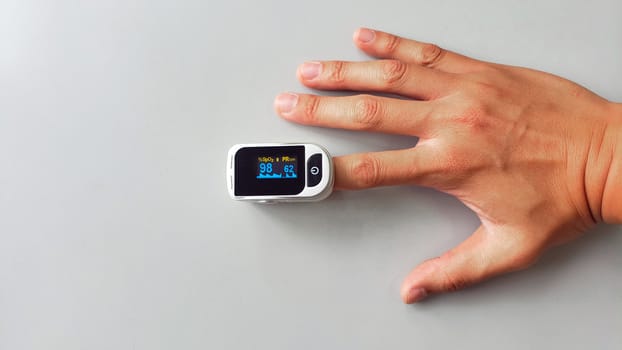
When HRV, RHR, SpO2, and CGM point in different directions, a structured reconciliation strategy helps. The key is to interpret each biomarker as a partial view of system state, then test which explanation best accounts for all signals.
Step 1: Verify measurement quality first
Start with the simplest explanations:
- HRV: check signal quality indicators, whether the device flagged poor contact, and whether the data was collected during true rest.
- RHR: confirm that the “rest window” was consistent (e.g., waking vs bedtime) and not contaminated by movement or late caffeine.
- SpO2: look for motion artifacts, cold-related variability, and whether readings were taken during stable conditions.
- CGM: consider sensor warm-up period, calibration status, and whether spikes/dips align with known behaviors.
If one modality is clearly unreliable on that day, disagreement may be superficial.
Step 2: Align timelines across biomarkers
Different biomarkers respond on different timescales. A useful mental model:
- Minutes to hours: HRV can change with stress, breathing, and immediate behavioral factors; CGM can respond to meals and activity.
- Hours to days: RHR may rise with recovery deficits or inflammation; HRV may remain suppressed if the stressor persists.
- Oxygenation-related changes: SpO2 typically shifts when ventilation or oxygen delivery is impaired; otherwise it may remain stable.
For example, if HRV drops the morning after poor sleep and CGM shows higher post-breakfast excursions, the shared driver could be sleep-related autonomic and metabolic dysregulation. If SpO2 stays normal, the mechanism likely does not involve hypoxemia.
Step 3: Use physiological “directionality” to generate hypotheses
Rather than forcing one biomarker to explain the others, propose hypotheses that can account for the pattern:
- Autonomic stress hypothesis: HRV decreases and RHR increases; CGM variability increases due to cortisol/catecholamine effects; SpO2 remains normal because oxygenation is intact.
- Metabolic-only hypothesis: CGM shows spikes and variability, while HRV and RHR remain stable; SpO2 remains normal. Likely driven by meal composition, timing, or insulin sensitivity changes.
- Oxygenation-limited hypothesis: SpO2 decreases (often with symptoms or respiratory context); HRV may change due to altered breathing and sympathetic activation; RHR may increase; CGM could vary secondarily depending on stress and activity.
- Measurement/artifact hypothesis: only one stream looks abnormal, while other streams and context do not support physiology.
Then check context: illness symptoms, training load, sleep quality, alcohol, hydration, altitude, and respiratory complaints.
Practical scenarios: what disagreement often means
The following scenarios illustrate common patterns and how to interpret them more responsibly.
HRV down, RHR up, SpO2 stable, CGM variable
This pattern often suggests autonomic and metabolic stress without overt oxygen desaturation. Possible drivers include poor sleep, acute psychological stress, recovery deficit, or early inflammatory effects. If CGM variability increases around meals or at night, it may reflect stress hormone–mediated changes in insulin sensitivity or hepatic glucose output.
Practical guidance: review sleep duration/continuity, late caffeine/alcohol, and training intensity from the prior 24–72 hours. Consider whether meals were larger or later than usual. If symptoms like sore throat, fever, or unusual fatigue appear, treat the HRV/RHR shift as a recovery signal and note that oxygenation may not change early in illness.
HRV down, RHR stable, SpO2 stable, CGM normal
When only HRV changes, it may reflect short-term autonomic modulation that does not translate into elevated basal load or metabolic dysregulation. Breathing pattern changes, mild dehydration, or a stressful day can reduce HRV while leaving RHR and CGM relatively unaffected.
Practical guidance: focus on measurement quality and the conditions of HRV capture (resting posture, breathing, device fit). If the change persists for several days without clear behavioral causes, consider broader context such as recovery after training or subtle illness.
SpO2 dips, HRV/RHR shift modestly, CGM unchanged
SpO2 dips with limited HRV/RHR change can occur from sensor artifacts (motion, cold) or transient physiological events like shallow breathing episodes. If CGM remains stable, the metabolic system may not be under major stress at that time.
Practical guidance: verify whether SpO2 dips coincide with movement or poor signal quality. If dips cluster during sleep or there are respiratory symptoms (wheezing, persistent cough, shortness of breath), oxygenation changes may be real and worth clinical evaluation rather than algorithmic interpretation alone.
CGM spikes and variability rise, HRV/RHR stable, SpO2 stable
This pattern points toward metabolic control changes rather than oxygenation stress. Common explanations include carbohydrate-heavy meals, larger portions, reduced activity after meals, or circadian effects from late eating. Some individuals also experience insulin sensitivity fluctuations unrelated to autonomic metrics.
Practical guidance: examine meal composition and timing, and check whether spikes follow specific foods or late-night meals. If the pattern persists despite consistent diet and activity, it may indicate a longer-term change in insulin sensitivity that deserves medical discussion.
How to interpret “biomarker disagreement” without overfitting
One risk in multi-biomarker tracking is overfitting: building a causal story from a single day’s pattern. Systems biology emphasizes that biomarkers are noisy and influenced by many inputs. To avoid false conclusions:
- Use baseline comparisons: interpret changes relative to your own multi-week patterns rather than day-to-day fluctuations.
- Look for convergence: stronger confidence comes when multiple independent streams shift in the same direction with plausible timing (e.g., HRV and RHR together after poor sleep).
- Separate stable from transient signals: SpO2 often remains stable in healthy conditions; a single dip may be artifact unless it repeats.
- Avoid treating derived metrics as direct measurements: CGM variability, time-in-range, and HRV indices are summaries that can be influenced by sensor characteristics.
If you use wearable ecosystems such as Apple Health with HRV/RHR, or a CGM platform that reports time-in-range and variability, ensure that the data streams are synchronized in time. Even small offsets between sleep windows, meal logging, and sensor timestamps can create apparent disagreement.
Prevention and monitoring guidance for discordant signals
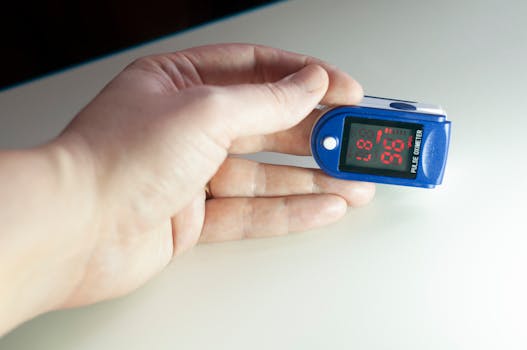
When biomarkers disagree, prevention is best approached as reducing common confounders and improving measurement reliability.
Stabilize context
- Keep sleep timing consistent and reduce late alcohol.
- Hydrate and avoid extreme heat exposure before resting measurements.
- Standardize the conditions under which you compare HRV (same device fit, similar rest posture, minimal movement).
- For SpO2, ensure good sensor contact and avoid measuring during cold, high-motion periods.
- For CGM interpretation, treat “spikes” as context-dependent—track meals and activity to understand cause.
Use a “triage mindset”
If SpO2 shows repeated low values, especially with symptoms (shortness of breath, chest pain, cyanosis), biomarker interpretation must not be limited to algorithmic reconciliation. In such cases, clinical assessment is appropriate because oxygenation problems can be time-sensitive.
By contrast, if disagreement is limited to HRV/RHR/CGM patterns with normal SpO2 and no respiratory symptoms, it often reflects autonomic-metabolic stress rather than hypoxemia. The prevention approach then focuses on recovery, sleep quality, and dietary timing.
Document patterns, not single events
Create a simple log of factors that commonly drive all four systems: sleep duration/quality, training load, illness symptoms, meal timing, caffeine/alcohol, and altitude or travel. Over weeks, you can identify which drivers produce consistent multi-biomarker patterns in your case.
Summary: interpreting disagreement as a normal systems feature
Biomarkers disagree because they measure different biological subsystems with distinct timescales and sensitivities. HRV reflects autonomic regulation, RHR reflects basal cardiovascular load and recovery status, SpO2 reflects oxygenation, and CGM reflects glucose dynamics and insulin sensitivity. Oxygenation may remain stable while autonomic and metabolic markers shift; metabolic stress can change CGM without necessarily altering SpO2; and measurement artifacts can selectively distort one stream.
The most reliable interpretation comes from verifying measurement quality, aligning timelines, and using physiology-based hypotheses that can explain the entire pattern. Rather than forcing a single narrative, treat each biomarker as a partial view of system state and confirm your conclusions with repeated patterns and relevant context.
02.03.2026. 00:10