

Wearable VO2max Accuracy: How to Validate It

Why you should validate wearable VO2max numbers
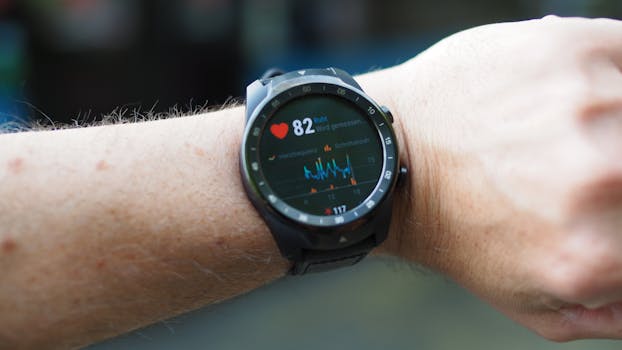
Wearable VO2max estimates are tempting because they turn a complex physiology metric into a single number. You see it in your training app, you watch it change over weeks, and you start using it as a proxy for fitness. That’s useful—but only if the number is measuring something close to your real VO2max.
“VO2max” itself is a specific concept: the maximum rate at which your body can use oxygen during intense exercise, usually expressed as milliliters per kilogram per minute (mL/kg/min). In a lab, this is measured with breath-by-breath gas analysis while you reach exhaustion. Wearables typically estimate VO2max indirectly using heart rate patterns, pace or power, movement data, and sometimes additional signals like running dynamics or environmental assumptions.
So the question isn’t whether the wearable number is “good” or “bad.” The real question is: how accurate is it for you, under your conditions, and how consistently can you reproduce it? Validating accuracy helps you avoid two common traps: over-trusting a single high value, or dismissing meaningful trends because one day’s estimate was off.
In the sections below, you’ll learn what influences wearable VO2max accuracy, how validation differs from general “reliability,” and practical ways to test your wearable against lab-style benchmarks or field protocols you can repeat.
What wearable VO2max is actually estimating
Most wearables estimate VO2max using a model that links your performance and physiology to oxygen uptake. The model may use:
- Heart rate response during submaximal or ramp-like efforts (for example, how quickly your heart rate rises as workload increases).
- Work rate or speed (running pace, cycling power, or a proxy for intensity derived from motion).
- Individual calibration parameters such as age, sex, height, weight, and sometimes resting heart rate or heart rate variability.
- Sensor data quality such as optical heart rate performance, cadence, and motion stability.
Because it’s an estimate, not a direct measurement, wearable VO2max accuracy depends on whether the model’s assumptions match your physiology and the way you train. A model trained on broad populations may work reasonably well for many people, but your personal biomechanics, aerobic efficiency, and heart rate dynamics can shift the relationship between workload and oxygen consumption.
In practice, wearable estimates tend to be more accurate when you perform the kind of exercise the algorithm expects. For example, a running algorithm may do better with consistent running form and stable GPS pace, while a cycling algorithm may rely more heavily on power and cadence stability.
Accuracy vs reliability: the difference that matters
Validation often gets simplified into “How close is it to lab VO2max?” That’s accuracy. But there’s also reliability: if you repeat the same test under similar conditions, does your wearable estimate land near the same value?
You can have a wearable that is reliable but biased. For example, it might consistently estimate 5–8% higher than your lab VO2max, yet still track changes over time. That can still be useful for training decisions if you interpret the number correctly.
Conversely, you can have a wearable that is unbiased on average but noisy for you. If your day-to-day heart rate signal or GPS-derived pace shifts due to heat, hydration, or sensor fit, your estimate may swing even if your fitness is stable.
When you validate wearable VO2max accuracy, you’re looking for both:
- Agreement (closeness to a reference measurement).
- Consistency (repeatability across similar sessions).
Both are necessary if you plan to use VO2max changes as a training feedback signal.
What “validation” looks like in real life
True validation means comparing your wearable estimate to a reference standard. In sports science, the reference is often a lab VO2max test using a metabolic cart with breath-by-breath gas analysis, plus a protocol that ramps workload until you reach exhaustion or clear VO2max criteria.
In everyday life, you may not have access to the exact lab setup. So validation typically happens in one of three ways:
- Lab comparison: you do a VO2max test in a lab, then compare that measured VO2max to the wearable estimate during the same timeframe.
- Field protocol comparison: you use a repeatable field test designed to estimate VO2max (or a related aerobic metric) and compare the wearable estimate to that field-derived value.
- Within-device consistency validation: you test whether the wearable estimate changes in a plausible direction when you do structured training (or detraining), and whether it matches expected physiological trends.
For most people, the best balance is a lab comparison once (if feasible), then a field and repeatability approach for ongoing tracking.
Choose a reference: lab VO2max vs field estimates
Lab VO2max: the clearest benchmark
If you can access a lab, ask for a VO2max test with gas analysis. A typical test uses a treadmill or cycle ergometer with a ramp protocol, increasing workload every 1–2 minutes until you reach exhaustion. The lab should report VO2max in mL/kg/min and often other indicators like peak oxygen uptake and respiratory exchange ratio.
Timing matters. If your wearable updates VO2max based on recent activity, you want your wearable estimate to reflect the same fitness window as the lab test. A practical approach is to do the lab test after a few days where your wearable has “enough data” from similar training (for example, 2–4 sessions in the preceding 1–2 weeks, depending on the device’s logic).
Field tests: useful when labs aren’t available
Field tests can approximate aerobic fitness, but they add their own sources of error. Common options include step tests, time-trial based estimations, or protocols that infer VO2max from performance and heart rate response.
When you validate wearable VO2max accuracy using field tests, treat the field reference as a proxy rather than a perfect standard. Your goal becomes: does the wearable estimate track the field-derived aerobic metric in a consistent, plausible way?
For example, if your field test suggests you improved aerobic capacity by roughly 5% after 6–8 weeks of structured training, your wearable’s VO2max should generally trend upward in the same direction, even if the absolute values don’t match perfectly.
How to design a validation test you can repeat
Validation fails when conditions vary too much. You want to hold constant what the wearable algorithm is sensitive to, and you want to control the variables that commonly shift heart rate and performance.
Here’s a practical validation framework you can run over 4–6 weeks.
Step 1: Standardize your testing environment
Pick one modality: running or cycling. Don’t mix modalities during the validation period unless your wearable explicitly separates estimates. Then standardize:
- Time of day (for example, morning vs evening changes thermal stress and baseline arousal).
- Surface and route (especially for running if GPS quality varies).
- Footing or bike position (changes in efficiency can alter heart rate at a given pace/power).
- Temperature and humidity as much as possible. Heat can raise heart rate at the same workload.
Step 2: Use consistent intensity targets
Most wearable VO2max estimators respond best to workouts that cover a range of intensities and show predictable cardiovascular response. A simple example is a structured workout with:
- Warm-up of 10–15 minutes at easy effort.
- Main set of 2–4 intervals that gradually move you from submax to hard but controlled intensity.
- Cooldown of 5–10 minutes.
You’re not trying to “max out” every time. You’re trying to produce stable, interpretable data for the wearable model. If you always do all-out sprints, the algorithm may not work as intended.
Step 3: Ensure high-quality heart rate data
Heart rate is central to many VO2max models. If your heart rate signal is noisy, your estimate may drift.
Practical checks:
- Chest strap vs wrist: if your wearable supports a chest strap, it can reduce optical tracking errors during hard running or when your skin perfusion changes.
- Fit and placement: for optical sensors, ensure the sensor sits firmly and the strap is snug enough to avoid micro-slips.
- Skin and temperature: cold weather and dry skin can worsen optical readings. Warm up longer to stabilize signals.
A real-world scenario: you compare VO2max on two days where you ran the same route. On day one, the wearable estimate is stable and your heart rate curve looks smooth. On day two, your heart rate spikes unusually early, likely due to poor sensor contact. The VO2max estimate jumps even though your perceived exertion and pace were similar. That’s not a fitness change—it’s a data quality problem.
Common reasons wearable VO2max accuracy varies
Even with good methodology, wearable VO2max accuracy can vary. The main drivers are physiological and measurement-related.
1) Sensor and data quality issues
Optical heart rate can be affected by motion, sweat, and changes in blood flow. GPS pace can be affected by signal loss, urban canyons, or treadmill vs outdoor differences.
If your wearable estimate relies heavily on pace and your GPS is noisy, you may see VO2max estimates that change after you move from a track to a tree-lined route. That doesn’t mean your fitness changed; it means your input data changed.
2) Training mode mismatch
VO2max is modality-dependent to a degree. If your wearable estimates VO2max during running but your fitness changes mostly through cycling, the number may lag or behave unpredictably.
Similarly, if your training includes lots of strength work or high-intensity bursts that don’t produce sustained cardiovascular response, the algorithm may not “see” the kind of data it expects.
3) Individual physiology and efficiency
Two people can have the same VO2max but different running economy. If you’re unusually efficient at a given pace, your heart rate may run lower than someone else’s at the same speed. Wearable models that use heart rate and speed can therefore over- or under-estimate VO2max for you.
4) Day-to-day factors: sleep, stress, hydration
Heart rate at a given workload shifts with fatigue, dehydration, and stress hormones. If you validate on a day when you’re under-recovered, your wearable may interpret elevated heart rate as “less oxygen delivery capacity,” pushing the estimate in the wrong direction.
To reduce this, avoid validating immediately after:
- very short sleep (under 6 hours the night before)
- hard races or time trials
- significant illness or travel
Practical validation steps using your wearable
You don’t need a lab every time to validate. You can build a validation mindset around three checks: agreement, repeatability, and trend plausibility.
Agreement check: compare to a reference once
Pick one occasion to compare. If you can access a lab, do it. If not, use a field test protocol you trust and repeat it multiple times to estimate typical error.
Record:
- Measured or field-estimated VO2max.
- Your wearable VO2max estimate that day and/or within the wearable’s update window (some devices update based on recent sessions).
- Heart rate data quality (for example, whether the curve looked smooth).
Then interpret differences cautiously. A wearable might not match lab VO2max exactly, but if it’s consistently within a reasonable range for you, you can use it for tracking.
Repeatability check: repeat the same workout pattern
Choose a workout pattern the wearable model likely recognizes—often a structured interval session. Repeat it 2–3 times over 1–2 weeks, ideally with similar sleep and nutrition.
If your wearable VO2max estimate changes wildly (for example, jumping by 10–15%), that suggests measurement noise or model mismatch. If it changes modestly and in plausible directions, the estimate may be reliable enough for trend tracking.
Trend plausibility check: does the number move when fitness should?
After 6–8 weeks of consistent training, aerobic capacity usually changes. If your VO2max estimate stays flat while your performance improves (for example, your threshold pace improves and your recovery heart rate drops), the wearable might not be capturing your adaptation well.
On the other hand, if your VO2max estimate rises while you’re not actually training (or you’re detraining), the number may be reacting to day-to-day heart rate shifts or sensor artifacts.
How to handle the “too-high” or “too-low” VO2max estimate
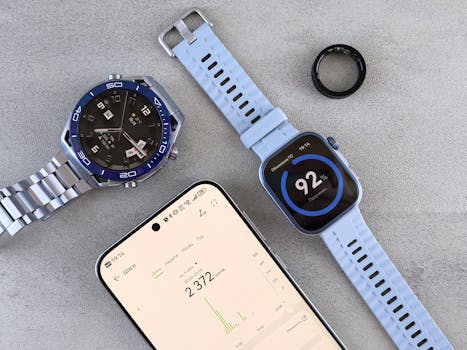
It’s common to see a wearable VO2max number that feels implausible. Before you assume it’s wrong, you should diagnose whether the estimate is being driven by accurate training data or by conditions that distort heart rate and pace relationships.
Look for data quality red flags
- Erratic heart rate during steady efforts.
- Large pace swings that don’t match perceived exertion.
- Device fit issues (loose strap, slipping sensor).
- GPS inconsistencies (route changes, heavy signal loss).
Re-test with controlled conditions
Instead of re-running the same day, re-run the validation workout on a day with stable conditions. Aim for similar temperature, similar warm-up duration, and consistent hydration.
If the VO2max estimate returns closer to your expected range after controlling these factors, then the earlier value likely reflected measurement noise rather than a true physiological change.
Use a range, not a single number
Even with careful validation, wearable estimates have error. A useful approach is to treat VO2max as a band: “about X to Y mL/kg/min” for your device under your conditions. This reduces the temptation to overreact to single-day fluctuations.
Real-world scenario: validating after switching sensors
Imagine you’ve been using a wrist-based optical sensor and you get a VO2max estimate of 46 mL/kg/min. You then switch to a chest strap for heart rate accuracy and repeat the same interval session format twice over 10 days. Your wearable now reports VO2max around 43 mL/kg/min.
Two interpretations are possible:
- Accuracy improvement: the optical sensor may have overestimated heart rate at given workloads, causing the model to inflate VO2max.
- Model sensitivity change: the algorithm may behave differently with a different heart rate source, especially if it uses heart rate variability or signal stability features.
The validation step is to compare either to a field reference or a lab test. If the lab VO2max is closer to 43, you’ve validated that the wearable’s accuracy improved with better heart rate data. If lab VO2max is closer to 46, then the chest strap result may indicate something else—like altered warm-up, different perceived effort, or changes in pacing.
The key lesson: sensor changes can shift wearable estimates. Validation tells you whether that shift reflects true accuracy gains or just measurement differences.
How wearable updates and algorithms affect validation
Wearable companies may update algorithms. That can change VO2max estimates even if your physiology stays the same. If you validate across months, keep an eye on:
- App or firmware updates that mention performance metrics.
- Changes in how the device processes training data (for example, new heart rate filtering or updated GPS processing).
- Whether VO2max is computed from specific workout types (some devices rely more on certain intensity patterns).
Practical advice: when you validate, record the date and device/software version. If your wearable estimate changes abruptly after an update, you’ll know whether you’re seeing a measurement artifact rather than a training effect.
Guidance for improving wearable VO2max accuracy for your own data
You can’t control the wearable’s internal model, but you can improve the inputs and the testing consistency. These steps tend to increase the usefulness of VO2max estimates.
1) Keep your heart rate signal stable
Use a consistent heart rate setup. If you do use a chest strap, keep it positioned and maintained. If you use optical sensors, ensure the strap fit and warm-up length are consistent.
2) Match the device’s expected workout type
If the wearable estimates VO2max primarily from submax-to-hard efforts, don’t replace those sessions with only easy jogging or only short sprints. Include sustained intervals so the cardiovascular response is interpretable.
3) Validate at the same time scale
VO2max changes slowly. A meaningful change usually takes weeks, not days. So avoid judging accuracy based on a single workout. Instead, validate over a 2–8 week window by comparing typical values.
4) Use consistent units and context
Make sure your wearable is using the same body mass assumptions. Weight changes, especially if significant, can alter mL/kg/min calculations. If your device asks for weight updates, update it when appropriate.
Prevention: how to avoid misleading conclusions
Wearable VO2max numbers can be useful, but they can also mislead. Here are common prevention strategies:
- Don’t overreact to one spike. A single-day jump often reflects sensor or input noise.
- Don’t validate during illness or heavy stress. Elevated heart rate can distort the model.
- Don’t compare across different modalities without caution. Running and cycling VO2max can differ.
- Don’t ignore training load context. If you’re resting or tapering, your VO2max estimate might not rise even if you feel better.
- Don’t assume “more data” always helps. Poor-quality data can compound error. Better signal quality is often more important than more workouts.
If you follow these rules, wearable VO2max accuracy validation becomes less about chasing a perfect number and more about building a trustworthy feedback loop.
Summary: a realistic validation workflow
To validate wearable VO2max accuracy validate in a way that holds up, you need a reference, consistent testing, and a careful interpretation of error sources.
Start by understanding that wearables estimate VO2max indirectly using heart rate and performance signals. Then validate using either a lab comparison or a repeatable field reference. Next, check repeatability by repeating the same workout pattern under similar conditions. Finally, confirm trend plausibility over weeks—VO2max is not a metric that should swing wildly day to day.
If your wearable estimate agrees reasonably with a reference once and behaves consistently for you, you can use it to track aerobic changes with less guesswork. And if it doesn’t, validation helps you pinpoint whether the issue is sensor quality, workout mismatch, or algorithm assumptions—so you can correct the inputs rather than abandoning the metric.
23.04.2026. 10:14