

Mobility Training for Desk Workers: Neck, Thoracic, Hip

Why desk work limits neck, thoracic, and hip mobility
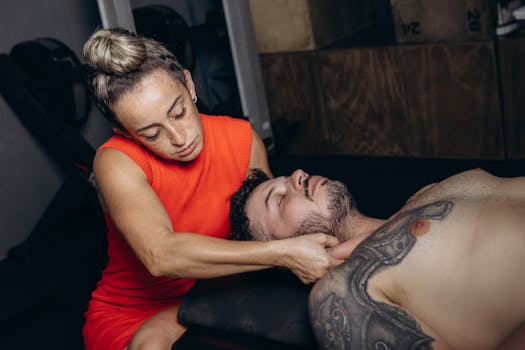
Long hours at a desk create a predictable pattern: the head drifts forward, the upper back rounds, and the hips lose their ability to move through full ranges. This isn’t just a posture issue. When the neck, thoracic spine, and hips stop moving well, daily tasks become harder—turning your head, reaching overhead, getting out of a chair, climbing stairs, or even breathing deeply.
Mobility training for desk workers neck thoracic hip is most effective when it targets the joints and tissues that are actually changing with sitting: the cervical spine and surrounding neck muscles, the thoracic spine (where ribs and shoulder mechanics are tightly linked), and the hip complex (hip flexors, glutes, and deep rotators). The goal is not to “stretch harder,” but to restore controlled range of motion and improve how those ranges are used.
This article outlines an evidence-informed approach: how to assess what’s limiting you, how to choose drills that match your restrictions, and how to build a simple routine that you can integrate into a workday.
How desk posture changes movement in the neck, thoracic spine, and hips
Understanding the mechanics helps you select better exercises and progress safely.
Neck: forward head and reduced cervical extension
When your head sits forward for long periods, the muscles that support the neck—especially the deep neck flexors and the upper back stabilizers—tend to become either underused or strained. Common restrictions include reduced ability to extend the neck (looking up), limited rotation, and tightness through the suboccipital area and upper trapezius.
Mobility is not only “range.” It also includes control: whether you can move without compensating through the shoulders or lumbar spine.
Thoracic spine: stiffness from rounding and limited rib motion
Prolonged sitting often leads to thoracic flexion dominance—your upper back rounds and the ribs move less freely. The thoracic spine is crucial for shoulder mobility and overhead reach. If it doesn’t extend and rotate well, the neck and shoulders often take over, which can increase stiffness and discomfort.
In many people, the limitation isn’t just vertebrae; it’s also rib mechanics and the way the shoulder blade moves on the ribcage.
Hip: flexor shortening and reduced glute activation
When hips stay flexed for hours, hip flexors and anterior tissues can become less tolerant of length. At the same time, gluteal muscles that help extend and stabilize the hip may become less responsive. The result is reduced hip extension (standing up straight feels “blocked”), limited internal rotation, and sometimes reduced ability to hinge at the hips without lumbar compensation.
Hip mobility training should address both range and activation—especially the ability to use the glutes and deep hip rotators during movement.
Quick self-checks to find your main mobility bottlenecks

Before building a routine, identify what’s most restricted. These checks take a few minutes and guide exercise selection.
Neck range and control
- Look left/right slowly and note where the restriction occurs: at the neck, shoulders, or upper back.
- Perform gentle chin tucks: slide the chin backward without bending the head down. If you can’t feel a “lengthening” at the back of the neck, your control may be limited.
- Try gentle extension (look slightly upward). If extension triggers pain, keep your range smaller and prioritize mobility that improves thoracic extension first.
Thoracic extension and rotation
- Seated upper-back extension over a chair back: can you open the chest without forcing the neck?
- Rotation check: rotate your torso in a comfortable range while keeping the pelvis steady. If rotation comes mostly from the lumbar spine, thoracic mobility may be limited.
Hip extension and rotation
- Hip extension stand test: stand tall and try to shift your weight forward slightly while keeping your back neutral. If your hips feel stuck or your lower back takes over, you likely need hip extension and glute activation work.
- 90/90 internal rotation (if comfortable): note whether internal rotation is limited and whether you can keep the pelvis stable.
- Squat depth check: if you can’t reach a comfortable depth without rounding or collapsing, thoracic and hip mobility may both be involved.
If you experience sharp pain, numbness, or symptoms that radiate down the arm or leg, avoid pushing range and consider professional assessment.
Principles for mobility training that actually transfers to daily movement
Mobility improves when the nervous system learns to control new ranges. Use these principles to make your training more effective.
Use “comfortable challenge,” not maximum stretching
Most desk workers benefit from ranges that feel like 6–7 out of 10 effort: you feel a stretch or restriction, but you can breathe and maintain control. If you need to hold your breath or brace aggressively, the stimulus is too intense.
Prioritize movement quality before adding intensity
For the neck and thoracic spine, quality often means moving without shoulder shrugging and without shifting the motion into the lumbar spine. For the hips, quality means maintaining a stable pelvis and avoiding lumbar overextension.
Train mobility with brief holds and controlled reps
Good mobility routines often combine:
- Reps to explore range
- Short holds to let tissues adapt
- Re-integration (moving after stretching) so the new range is usable
Neck mobility drills for desk workers
Neck mobility should emphasize control and reduce reliance on the upper traps. Keep movements small at first, especially if you’re prone to headaches or upper trapezius tightness.
Chin tucks with a slow tempo
How to do it: sit or stand tall. Gently slide your chin straight back, creating a “double chin” without looking downward. Hold for 2–3 seconds, then return.
- Sets/reps: 2–3 sets of 6–10 reps
- Focus: smooth motion; avoid shrugging
Supported neck rotation
How to do it: place one hand on the side of your head lightly to guide the movement. Rotate your head within a comfortable range, then return to neutral slowly.
- Sets/reps: 2 sets of 5–8 reps each direction
- Focus: controlled rotation; keep shoulders relaxed
Thoracic-first neck relief (the “look where you can move” approach)
If extension is limited, improve thoracic extension before forcing cervical extension. A simple rule: if your thoracic spine can extend more, your neck often follows naturally.
After thoracic mobility work, re-test your neck rotation and extension gently to see how much improved control you gain.
Thoracic spine mobility for better shoulder mechanics and posture

The thoracic spine is a central hub for desk-worker mobility. When it moves better, the neck often feels less stressed and the shoulders can reach more comfortably.
Open-book thoracic rotations
How to do it: lie on your side with knees bent. Keep the hips stacked. Rotate your top arm behind you as you open your chest, then return without forcing the lower back.
- Sets/reps: 2–3 sets of 6–10 reps per side
- Focus: rotate from the mid-back; keep ribs controlled
Seated or kneeling thoracic extension over support
How to do it: place your hands behind your head or cross them over your chest. Support your upper back over a stable surface (chair back or foam roller placed behind mid-back). Extend gently, keeping the neck relaxed.
- Sets/reps: 2 sets of 6–8 slow reps
- Focus: extension through the mid-back, not the neck
Rib-focused breathing to restore thoracic mobility
How to do it: sit tall. Place hands on the sides of your ribs. Breathe so the ribs expand laterally and into the back. Then add a gentle thoracic extension as you exhale.
- Sets/reps: 2–3 rounds of 4–6 slow breaths
- Focus: rib expansion; avoid chest-only breathing
Hip mobility training: extension, rotation, and glute control
Hip mobility is not only stretching the front of the hip. It’s also restoring the ability to use the glutes and deep rotators through full hip ranges during standing, walking, and squatting.
Half-kneeling hip flexor stretch with glute engagement
How to do it: kneel on one knee with the other foot in front. Tuck your pelvis slightly (think: gently flatten the low back), then shift forward until you feel a stretch in the front of the hip. Keep ribs stacked.
- Sets/reps: 2 sets of 30–45 seconds per side
- Focus: pelvis control; avoid leaning into the stretch
90/90 hip switches for internal/external rotation
How to do it: sit with hips at 90 degrees, then shift your knees in a controlled pattern to explore rotation. Keep your torso upright and pelvis stable.
- Sets/reps: 2–3 sets of 6–10 switches
- Focus: smooth transitions; avoid twisting through the low back
Glute bridge with a pause to reintroduce hip extension
How to do it: lie on your back, feet planted. Lift into a bridge and pause at the top for 2 seconds. Keep ribs down and avoid arching the low back.
- Sets/reps: 2–3 sets of 6–12 reps
- Focus: feel the glutes doing the work
Hip hinge rehearsal to connect mobility to function
How to do it: practice moving like you’re picking something up from the floor—hips back first, spine neutral, then return. Even without added weight, this teaches your body to use hip motion instead of lumbar motion.
- Sets/reps: 1–2 sets of 6–8 controlled reps
A practical routine you can use at work or after work
Use this as a template. The best routine is the one you can repeat consistently. Aim for 10–15 minutes, 3–5 days per week, plus brief resets during long sitting periods.
Phase 1: Warm-up and nervous system reset (2–3 minutes)
- 2 minutes of easy movement (walk, march in place, or gentle shoulder rolls)
- 2–4 slow breaths focusing on rib expansion
Phase 2: Mobility sequence (7–10 minutes)
- Neck: chin tucks, 2–3 sets of 6–10 reps
- Thoracic: open-book rotations, 2–3 sets of 6–10 per side
- Thoracic extension: supported extension, 2 sets of 6–8 slow reps
- Hip: half-kneeling hip flexor stretch with glute engagement, 2 sets of 30–45 seconds per side
- Hip rotation: 90/90 switches, 2–3 sets of 6–10
Phase 3: Re-integration (1–3 minutes)
- Glute bridge with 2-second pause, 2 sets of 6–12
- Hip hinge rehearsal, 1–2 sets of 6–8
After the session, re-check one thing immediately: can you turn your head a bit farther, extend your upper back more comfortably, or stand up straighter with less low-back effort? That “after” test is how you know the work is transferring.
How to progress mobility safely over time

Progress should be gradual and measurable. Instead of adding intensity immediately, first add control and consistency.
Progression options
- Increase hold time slowly (for example, from 20 seconds to 30–45 seconds on hip flexor work).
- Add reps with the same intensity before stretching deeper.
- Slow the tempo of rotations and extensions so you stay in control.
- Reduce support in exercises as your stability improves (for example, moving from supported thoracic extension to more controlled floor-based versions).
When to scale back
Back off and get guidance if you notice:
- Sharp or radiating pain
- Numbness, tingling, or weakness
- Symptoms that worsen during the session and persist afterward
- Compensation patterns that increase (for example, neck forcing during thoracic extension)
Common mistakes desk workers make with neck, thoracic, and hip mobility
Even good exercises can fail if the technique is off.
Turning mobility into aggressive stretching
Overstretching can irritate tissues and temporarily increase range without improving control. If you feel “looser” but your movement quality worsens later, the stimulus may be too intense.
Using the lumbar spine to create thoracic rotation
If rotation feels free but your low back is doing the work, thoracic mobility may not be improving. Keep the pelvis steady and focus on mid-back rotation.
Neglecting hip activation
Front-of-hip stretching without glute re-engagement can leave you with less discomfort but no functional improvement. Pair hip flexor mobility with glute bridges or hinge rehearsals.
Forcing neck extension when thoracic extension is limited
Many desk workers try to “fix” neck stiffness by looking farther up. Often, improving thoracic extension first reduces the need for the neck to compensate.
Prevention: building mobility into the workday
Mobility training works best with frequent micro-resets. A structured routine plus small changes during the day can reduce stiffness accumulation.
Use a simple sit-break pattern
- Every 30–60 minutes: stand up for 30–60 seconds.
- During the break, do one neck drill (chin tucks) and one thoracic drill (open-book or supported extension).
- If you can, add a hip reset: a brief half-kneeling hip flexor stretch or a few hip hinges.
Set up your environment to support movement
Small ergonomic changes can reduce the load on your neck and thoracic spine. Consider adjusting monitor height so you’re not constantly looking downward, and ensure keyboard/mouse placement doesn’t force rounded shoulders. Even with good ergonomics, mobility work remains important for full range and tissue tolerance.
Track outcomes that matter
Notice changes in practical tasks: turning your head comfortably, reaching overhead without neck tension, standing tall without low-back compensation, and walking or climbing stairs with less hip tightness.
Summary: a targeted approach to neck, thoracic, and hip mobility

Mobility training for desk workers neck thoracic hip works best when it addresses the full chain: the neck needs controlled movement, the thoracic spine needs extension and rotation capacity, and the hips need both range and glute activation. Start with self-checks to identify your main bottleneck, then follow a simple routine that combines neck drills, thoracic mobility, and hip extension/rotation work. Progress by adding control and consistency, not by forcing deeper stretches.
With regular practice and short workday resets, you can reduce stiffness accumulation and improve movement quality in the tasks that matter—sitting, standing, reaching, and walking.
FAQ: Mobility training for desk workers
How often should I do mobility training for my neck, thoracic spine, and hips?
Most desk workers benefit from 3–5 sessions per week, 10–15 minutes each. Add brief mobility resets during long sitting periods (for example, 30–60 seconds every 30–60 minutes).
Should I stretch my neck if I feel tightness?
Gentle mobility is usually appropriate, but prioritize controlled drills like chin tucks and neck rotation with relaxed shoulders. If you experience sharp pain, radiating symptoms, or worsening discomfort, stop and seek professional guidance.
Why does my thoracic mobility affect my neck?
When the thoracic spine can’t extend or rotate well, the neck often compensates to create the movement you want. Improving thoracic extension and rib mobility can reduce the demand placed on the cervical spine.
What’s the best hip mobility exercise for desk workers?
There isn’t one single “best” exercise. A combination works well: half-kneeling hip flexor mobility with pelvic control, 90/90 rotation switches, and glute bridges to restore hip extension function.
How do I know if I’m progressing?
Progress shows up as improved control and easier daily movement: more comfortable head turns, better upper-back extension without neck strain, standing up straighter, and improved hip extension during walking or hinging.
Are there any red flags that mean I should get assessed?
Yes. Seek assessment if you have numbness, tingling, weakness, sharp or radiating pain, or symptoms that worsen during the session and persist afterward.
04.02.2026. 07:24