

Basal Body Temperature vs Ovulation Predictor Kits vs Cervical Mucus

How these three ovulation-tracking methods work (and where they differ)
When you’re trying to time intercourse—or simply understand your cycle—three tools come up again and again: basal body temperature (BBT), ovulation predictor kits (OPKs), and cervical mucus monitoring. They all point toward ovulation, but they do it in fundamentally different ways.
BBT looks at what your body does after ovulation. Your temperature rises due to progesterone and stays elevated for much of the luteal phase. OPKs detect a hormone shift—specifically the surge in luteinizing hormone (LH)—that typically precedes ovulation by about 12–36 hours. Cervical mucus evaluates changes in the fluid your cervix produces; “fertile” mucus tends to become slippery and stretchy, often resembling raw egg whites.
Because these signals occur at different points in time, the “best” method depends on what you need most: predicting the fertile window (OPKs and mucus), confirming ovulation after the fact (BBT), or building a fuller picture with multiple signals.
Quick summary: which option is strongest overall?
If you want the most direct prediction of the fertile window with minimal daily interpretation, ovulation predictor kits are usually the strongest overall starting point. They’re relatively easy to use, they give you a clear “peak” moment, and they tend to align well with when conception is most likely.
That said, the most reliable real-world approach for many people is a hybrid: use OPKs to predict and BBT to confirm. Cervical mucus is also excellent—especially if you’re comfortable tracking it consistently—but it can be more subjective day to day.
Side-by-side comparison: BBT vs OPKs vs cervical mucus
Below is a practical comparison focused on timing, accuracy, effort, and how you interpret results.
| Method | What it measures | When it signals ovulation | How you interpret results | Typical cycle timing accuracy | Effort level | Best for |
|---|---|---|---|---|---|---|
| Basal body temperature (BBT) | Small rise in resting temperature after ovulation | Usually after ovulation (often within 1–2 days) | Look for sustained shift: typically a 0.2–0.5°F (0.1–0.3°C) rise lasting several days | Good for confirming ovulation; not ideal for prediction | Moderate daily consistency (morning temps) | Confirmation, cycle pattern awareness, fertility charting |
| Ovulation predictor kits (OPKs) | Urine LH surge | About 12–36 hours before ovulation | Positive test line (often as dark as or darker than control), then track 1–2 days | Good for predicting the fertile window; varies by PCOS and urine dilution | Higher around testing days (1–2+ tests/day) | Timing intercourse, planning the fertile window |
| Cervical mucus | Texture/appearance changes in cervical fluid | Often during the fertile window; peak mucus may occur near ovulation | Look for slippery, stretchy, clear/whitish mucus (egg-white feel) | Useful but more variable; depends on observation and cycle regularity | Moderate daily observation (and some learning) | Natural fertility awareness, understanding patterns without devices |
Real-world performance differences: what you’ll notice in daily use
In practice, the biggest difference is the lead time you get.
- BBT is like a receipt. It helps you confirm that ovulation likely happened. If your goal is to time intercourse for the next day, BBT alone is often too late.
- OPKs are like an early warning system. When you see a positive test, you usually have a short window to act.
- Cervical mucus is more like live weather. You can sometimes feel changes quickly, and “peak” mucus can guide timing, but it may be less clear if you have irregular cycles or if mucus changes are subtle.
Consider this practical scenario: you’re trying to conceive and your cycle is fairly regular. On cycle day 12, you start testing with OPKs. On day 14, you get two positive OPKs about 18 hours apart. You have intercourse the day of the first positive and the next day. Later, your BBT rises and stays up, confirming ovulation. In this scenario, the methods complement each other: OPKs drive your timing; BBT verifies the outcome.
Now imagine a different scenario: you have PCOS or irregular ovulation. OPKs may produce multiple LH-like surges without true ovulation. In that case, cervical mucus patterns and BBT confirmation become more important for interpreting whether the surge represented a real ovulation event. With PCOS, you’ll often need more careful charting and sometimes clinician guidance.
Basal body temperature (BBT): strengths, limits, and who it fits
Why BBT can be a strong choice
BBT is highly useful for confirmation. If you’re charting for understanding, BBT helps you see whether you actually ovulated—something OPKs can’t guarantee. It’s also helpful for spotting patterns over time, such as consistent luteal phase length.
BBT is also relatively low-cost. If you already have a decent thermometer, you can start charting. Many people use a dedicated basal thermometer that measures to the hundredth of a degree for more consistent detection (you don’t have to spend a fortune, but precision matters).
Where BBT falls short
BBT is not a great predictor because the temperature rise happens after ovulation. If you rely on BBT alone, you may miss the most fertile day. BBT is also sensitive to sleep disruption and measurement consistency.
- You need consistent wake time. Even a few hours of difference can blur the signal.
- Illness, alcohol, travel, or poor sleep can create noisy temps.
- Some people have smaller temperature shifts, making interpretation harder without a charting approach.
BBT pros and cons
- Pros: confirms ovulation; builds long-term cycle pattern insight; doesn’t require daily testing strips; good for retrospective understanding.
- Cons: limited for prediction; requires daily consistency; affected by sleep and illness; doesn’t directly tell you when to have intercourse tomorrow.
Ovulation predictor kits (OPKs): strengths, limits, and who it fits
Why OPKs are often the most practical predictor
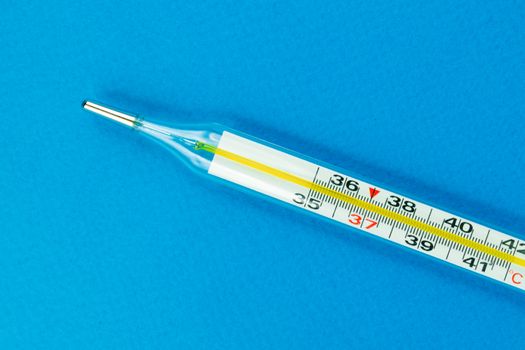
OPKs measure LH in urine. When you get a positive, you’re usually within about 12–36 hours of ovulation. That’s close enough to plan intercourse with less guesswork than mucus observation alone.
OPKs also tend to be easier to standardize. You compare each test line to the control line, rather than interpreting changing textures or subjective “feel.” Many people find this reduces uncertainty during the fertile window.
If you want product-friendly options, look for tests that are widely used and reliable. For example, Clearblue Advanced Digital Ovulation Tests provide a more direct digital reading, which can help if you struggle with interpreting faint lines. Traditional line-style tests can also work well—just consider using a brand with consistent line progression and reliable controls.
Where OPKs can mislead
OPKs detect an LH surge, not the exact moment of ovulation. In some cycles, especially with conditions like PCOS, you can see multiple surges. That means you might get positives without a successful ovulation event.
- False positives: LH surges can occur without ovulation.
- Urine dilution: testing too late in the day, overhydrating, or inconsistent timing can dilute LH and make the surge harder to catch.
- Timing misses: if you test only once per day, you may miss the peak in some cycles.
OPKs pros and cons
- Pros: best lead time for planning; relatively straightforward interpretation; good for timing intercourse; can be scaled (1 test/day or multiple tests/day).
- Cons: LH surges don’t always equal ovulation; can require frequent testing; may be influenced by hydration and timing; doesn’t confirm ovulation afterward.
Cervical mucus: strengths, limits, and who it fits
Why cervical mucus can feel intuitive
Cervical mucus offers a more “biological” look at your fertile window. As estrogen rises, mucus often becomes more watery, slippery, and stretchy—conditions that may help sperm survive and move. Some people notice mucus changes more clearly than subtle temperature shifts.
It’s also a lower-tech option. You don’t need test strips or a thermometer. If you prefer a non-instrument approach, mucus monitoring can be a strong fit—especially once you learn what “egg-white” texture feels like for your body.
Where cervical mucus can be tricky
The main challenge is subjectivity. You’re interpreting texture, appearance, and sometimes sensation. Factors like hydration, medications, recent sex, breastfeeding, and infections can change mucus patterns.
- Some people have mucus that doesn’t become very “egg-white,” even when fertile.
- After intercourse, semen and lubricants can mask natural mucus.
- Vaginal infections or irritation may alter discharge and create confusion.
Cervical mucus pros and cons
- Pros: can indicate fertile days in real time; no consumables; may align well with peak fertility; helps you learn your body’s patterns.
- Cons: more interpretation variability; can be affected by sex, lubricants, infections, and hydration; less definitive than hormone-based signals for some users.
Best use-case recommendations: which method should you choose?
Here’s a buyer-focused way to decide based on what you want most.
- If your goal is to time intercourse for conception with the most lead time: choose OPKs. Consider using line-style tests or a digital option like Clearblue Advanced Digital Ovulation Tests if you want clearer readouts.
- If your goal is to confirm that ovulation actually happened: choose BBT. It’s especially useful once you’ve identified likely ovulation days using OPKs or mucus.
- If you want a hormone-free, low-cost approach and you’re comfortable observing changes: choose cervical mucus. It can be very effective for many people once they learn their personal patterns.
- If you want the most reliable overall picture: use a hybrid approach—OPKs for prediction + BBT for confirmation. Many users find this reduces both “missed fertile day” risk and “false surge” confusion.
- If you have irregular cycles or suspected PCOS: don’t rely on OPKs alone. Pair OPKs with BBT confirmation and consider tracking mucus too. This helps you distinguish true ovulation from LH surges that don’t result in a sustained temperature shift.
Final verdict: which option fits your needs best?

Ovulation predictor kits are the clearest winner if you want prediction with minimal interpretation—especially if timing intercourse is your top priority. Basal body temperature wins for confirmation and long-term cycle understanding, but it’s rarely enough by itself for day-to-day timing. Cervical mucus is a strong natural option that can reveal your fertile window in real time, though it’s more variable and subjective.
If you want the best results overall, the “best of all worlds” is straightforward: use OPKs to pinpoint the fertile window and BBT to confirm ovulation afterward. Cervical mucus can be an excellent add-on if it’s easy for you to observe—especially when OPKs show confusing patterns.
Ultimately, the most effective method is the one you can use consistently. If consistency is your biggest challenge, OPKs (with clear readouts) plus BBT confirmation is often the most sustainable path.
24.04.2026. 02:20