

How Wearables Estimate VO2max Accuracy: Methods, Limits, and Best Practices

Why VO2max estimates from wearables matter
VO2max—your maximal oxygen uptake—is a widely used indicator of cardiorespiratory fitness. In clinical settings, it’s typically measured through graded exercise while measuring oxygen consumption. Wearables can’t directly measure the same physiological variables in everyday conditions, so they estimate VO2max using indirect signals such as heart rate, motion, and sometimes blood oxygen or respiration proxies. That means the numbers can be useful, but accuracy varies depending on device design, your physiology, and how you use the device.
This article explains how wearables estimate VO2max accuracy, what assumptions they make, where errors typically come from, and what you can do to get results that are more stable and interpretable.
What VO2max actually measures (and what wearables cannot)
In a lab, VO2max is determined when oxygen uptake plateaus despite increasing workload. The measurement involves respiratory gas analysis—tracking how much oxygen you inhale and carbon dioxide you exhale during controlled exercise. That process captures the relationship between workload and oxygen consumption under standardized conditions.
Most consumer wearables do not measure inhaled gases. Instead, they infer fitness from signals that correlate with oxygen demand: primarily heart rate response to exercise and the intensity of movement. Some devices incorporate additional signals (for example, blood oxygen saturation or estimates of running power) but still rely on modeling rather than direct gas exchange.
Understanding that distinction helps interpret any VO2max estimate as a model output, not a direct measurement.
Core inputs wearables use to estimate VO2max
Wearables estimate VO2max accuracy by translating physiological and performance signals into an estimated peak oxygen uptake. The most common inputs include:
- Heart rate (optical or chest-strap): Used to infer how hard your body is working.
- Heart rate variability (HRV) and recovery patterns: Sometimes used as context for baseline fitness or autonomic state.
- Movement and activity intensity: Accelerometer and gyroscope data help estimate workload (especially for running or walking).
- Workout type and protocol: Many devices use specific activity patterns (steady-state runs, intervals, or submaximal tests).
- Individual profile data: Age, sex, height, weight, and sometimes biological sex-specific assumptions influence the model.
- Environmental and sensor context: Some models account for temperature, elevation, or signal quality, though not always explicitly.
The quality and relevance of these inputs determine how reliable the estimate tends to be for you.
Heart rate modeling: the most important driver of accuracy
Many wearables estimate VO2max from the relationship between heart rate and exercise intensity. In simplified terms, if your heart rate rises quickly for a given pace or power, the model assumes you are working closer to your maximal oxygen uptake. Conversely, if your heart rate is lower at the same workload, the model infers higher fitness.
However, heart rate is influenced by more than oxygen uptake. Hydration status, sleep, stress, caffeine, illness, heat, altitude, and even how you warm up can shift heart rate without changing VO2max. Wearables attempt to manage this with algorithmic filtering, baseline calibration, and activity-specific normalization, but they cannot fully separate these effects from fitness.
That’s why VO2max estimates can drift during periods of stress, poor sleep, or high training load—even if your true VO2max has not changed.
How motion data helps infer workload
Heart rate alone doesn’t tell the whole story. Two people can have the same heart rate at different workloads because of differences in running economy, technique, stride length, and muscle efficiency. To address this, wearables use motion sensors to estimate how hard you are moving.
For running, accelerometer and gyroscope signals can approximate cadence, stride dynamics, and impact characteristics. For walking, motion features help estimate pace and intensity. Many devices then combine motion-derived workload estimates with heart rate to infer a likely oxygen uptake range.
Where this becomes tricky is when movement doesn’t map cleanly to workload. For example, cycling and rowing often require different biomechanical patterns than running. Some wearables can still estimate VO2max from these sports, but accuracy tends to depend on whether the device has robust sport-specific models and whether the sensor placement captures the relevant motion consistently.
Submaximal estimation versus “test-like” workouts
Wearables generally estimate VO2max from submaximal exercise rather than measuring the maximal plateau. This approach assumes that your submaximal heart rate response scales predictably to maximal oxygen uptake.
Some devices are better at this when you perform activities that resemble their internal test conditions. For instance, a steady run at a consistent effort may produce a heart rate response that the model can interpret reliably. Intervals can also work, but only if the algorithm can correctly identify intensity transitions and filter out noise.
If you mostly do short bursts, irregular movement, or activities with frequent pauses, the wearable may have fewer usable data points. The estimate can still appear, but the underlying confidence may be lower because the model has less consistent information.
The role of HRV and baseline fitness assumptions
Some wearables incorporate HRV-related features to estimate baseline fitness or to interpret how your autonomic system affects heart rate. HRV can correlate with training status and recovery, which indirectly influences heart rate dynamics during exercise.
However, HRV is also sensitive to factors unrelated to VO2max, such as stress, sleep quality, travel, and acute illness. When models use HRV, they may improve stability over time for some users, but they can also introduce additional variability if the HRV signal changes for non-fitness reasons.
In practice, the biggest accuracy gains come from consistent data collection and repeated workouts rather than from any single day’s HRV snapshot.
Sensor technology: why optical heart rate can limit accuracy
Most wrist wearables use optical heart-rate sensors. These can be less accurate than chest-strap or arm-band ECG-based solutions, especially during high-impact running, heavy sweating, cold hands, or poor sensor contact.
Optical heart rate errors can be systematic or random. If the wearable under-reads or over-reads heart rate during certain segments, the VO2max model may interpret that as a change in workload-to-oxygen relationship. Even small heart-rate biases can matter because VO2max estimation relies on the slope and shape of the heart-rate response.
Many devices attempt to mitigate this by using motion context to filter corrupted optical readings. Still, if you consistently see unstable heart-rate traces during runs, the VO2max estimate may be less trustworthy.
Using devices that support chest-strap heart rate (for example, when paired with compatible wearables such as Garmin’s chest strap ecosystems or Polar’s sensor ecosystem) can improve the input quality. The key point is not the brand—it’s the reliability of the heart-rate signal during the specific sport and conditions you perform.
Algorithm design: how manufacturers translate signals into VO2max
Wearables estimate VO2max accuracy using proprietary modeling approaches that typically include:
- Feature extraction: Converting raw heart rate and motion into summary metrics (pace, cadence, heart-rate drift, variability, and segment-level intensity).
- Regression or machine-learning models: Mapping features to VO2max based on training data from larger cohorts.
- Quality checks: Detecting whether sensor data looks reliable enough to trust the estimate.
- Personalization layers: Adjusting outputs using user profile data and historical trends.
Because these models are trained on populations, accuracy varies across groups. People with atypical heart-rate responses—such as those on certain medications, individuals with arrhythmias, or those with unusual running economy—may see less accurate outputs.
Even when the model is statistically strong in aggregate, it can still be biased for individuals. That’s why the most meaningful use of VO2max estimates is often trend monitoring rather than treating a single value as a clinical truth.
Common sources of error that reduce VO2max estimate accuracy
Several factors commonly degrade accuracy:
- Heart-rate drift: During longer sessions, heart rate can rise due to heat, dehydration, or fatigue while pace stays similar. Models may misinterpret drift as lower fitness.
- Incorrect activity classification: If the wearable mislabels an activity type or workout intensity, the model may apply the wrong assumptions.
- Sensor signal quality issues: Loose straps, poor optical contact, or motion artifacts can distort heart-rate inputs.
- Warm-up and cooldown effects: Some workouts include large heart-rate ramps that don’t reflect steady-state physiology. Without proper segmentation, the model can be thrown off.
- Sport mismatch: VO2max is most reliably estimated for the sport the device model was trained on (often running). Cycling or rowing may produce different biomechanics and heart-rate dynamics.
- Environmental stressors: Heat, cold, altitude, and wind can change heart rate independent of oxygen uptake.
- Medication and health conditions: Beta-blockers, some stimulants, and cardiovascular conditions can alter heart-rate response patterns.
These errors don’t mean the wearable is “wrong” so much as that the model’s assumptions don’t match your situation.
Accuracy across sports: running tends to be easiest
VO2max estimation often works best during activities that produce consistent heart-rate and motion relationships and that match the device’s training data. Running is frequently the most straightforward because it produces regular cycles of movement and often has robust heart-rate coupling for many users.
Walking can also work, particularly if the pace is steady and the heart-rate signal is clean. For cycling, the relationship between cadence, muscle recruitment, and heart rate differs from running, and the wearable may rely on different features—or it may simply use less precise proxies.
If your VO2max estimate is derived from mixed sports, your model output may represent an average across different physiology-to-signal mappings. That can still be useful for trend monitoring, but it may reduce agreement with lab-style running-based VO2max tests.
How to improve confidence in your wearable VO2max estimate
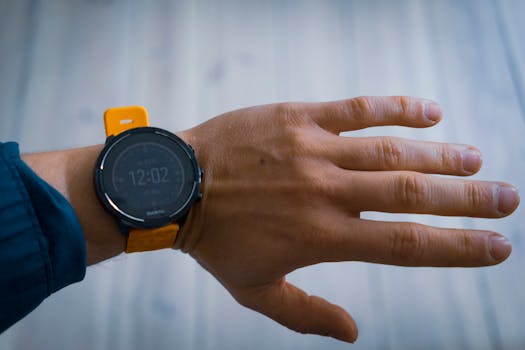
You can’t control the underlying algorithm, but you can improve the inputs and the conditions under which the estimate is generated.
- Prioritize consistent workout patterns: Steady efforts with a clear warm-up and minimal interruptions typically produce more interpretable heart-rate responses.
- Keep sensor quality high: Ensure the watch or band sits snugly on the skin. For optical sensors, warm up your hands and avoid long gaps between contact checks and activity.
- Use a chest-strap heart rate when available: If your wearable ecosystem supports it, strap-based heart rate can reduce optical artifacts and improve model input quality.
- Repeat over time: VO2max is not expected to change dramatically week to week. Look for stable directional changes rather than reacting to single-day fluctuations.
- Be mindful of confounders: If you have a poor night of sleep, high stress, or illness, interpret the estimate with caution.
- Use similar conditions when comparing: Comparing a cool-weather steady run to a hot-weather session can introduce differences in heart-rate drift that the model may attribute to fitness.
These steps don’t guarantee clinical-level accuracy, but they increase the likelihood that the wearable model is seeing a physiology signal that matches its assumptions.
Interpreting changes: trend is usually more reliable than absolute value
Wearables estimate VO2max accuracy by relying on statistical relationships learned from groups. Individual day-to-day biology can shift the heart-rate response without changing true VO2max. As a result, a single VO2max estimate should be treated as a modeled estimate with uncertainty.
More informative is the direction and persistence of change. For example:
- Short-term spikes: Often reflect unusual conditions (stress, heat, sensor error, or an atypical workout).
- Gradual sustained increases: More plausibly reflect training adaptation, especially when workout intensity distribution and training load are consistent.
- Long-term plateaus: Could indicate stabilization in fitness, but also could reflect that the wearable’s data inputs are not changing enough or that workouts are too inconsistent for the model to update confidently.
If a wearable shows a large change in a short time, it’s reasonable to check whether the heart-rate signal looked stable during the sessions that contributed to the estimate and whether those sessions were performed under unusual conditions.
Where “accuracy” expectations should be set
It’s tempting to interpret wearable VO2max numbers as precise. In reality, the estimate is an indirect model output. Even with high-quality sensors and consistent workouts, wearable VO2max typically won’t match a lab gas-analysis test perfectly.
Better expectations include:
- Consistency for the individual: Your wearable may be more accurate at tracking your changes than at matching the lab’s absolute value.
- Sport- and condition-specific reliability: Estimates may be more dependable when you use the sport and conditions that align with the device’s modeling.
- Uncertainty around extremes: Very high or very low fitness levels, atypical heart-rate responses, and unusual physiology can reduce model validity.
Setting these expectations prevents misinterpretation and helps you use VO2max as a training context metric rather than a single-point diagnosis.
Practical prevention: reducing misleading VO2max updates
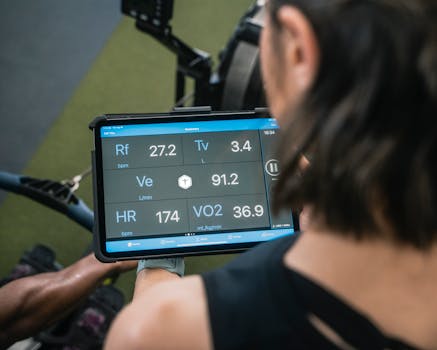
If you want your wearable VO2max estimate to be less misleading, focus on preventing the most common failure modes:
- Avoid relying on one off-session: If the estimate changes after a workout with poor sensor contact or heavy interruptions, treat it as provisional.
- Don’t ignore heart-rate trace quality: If your heart rate looks erratic during a run, the model may have used corrupted inputs.
- Keep training context in mind: Overreaching, dehydration, or illness can shift heart rate response and distort the inference.
- Maintain calibration routines: Some wearables ask for profile updates (age, weight) or use baseline resting heart rate patterns. Keeping profile data accurate supports model assumptions.
- Use comparable sessions for comparisons: If your goal is to compare VO2max across months, compare similar workout types and intensity distributions.
These practices don’t require special tools—just consistent data collection and a realistic interpretation of what the model can and cannot measure.
Summary: how wearables estimate VO2max accuracy in real life
Wearables estimate VO2max accuracy by combining heart-rate response with motion-derived workload and personal profile assumptions. Because they do not measure oxygen consumption directly, their VO2max output depends heavily on the quality of the heart-rate signal, the consistency of workout conditions, and whether your activity matches the modeling assumptions used in the device’s algorithm.
Accuracy tends to be more reliable for trend monitoring than for exact matching to lab measurements. To improve confidence, prioritize stable sensor contact, repeat similar workout patterns, consider using chest-strap heart rate when available to reduce optical artifacts, and interpret changes in context—especially during periods of stress, heat, dehydration, or illness.
With those practices, wearable VO2max can be a practical fitness indicator: not a replacement for clinical testing, but a useful, model-based estimate that becomes more meaningful as you accumulate consistent training data over time.
16.02.2026. 20:33