

Binaural Beats for Sleep Frequency: A Science-Based Guide

How binaural beats for sleep frequency can influence your brain

Binaural beats are an auditory phenomenon created when two tones with slightly different frequencies are presented—one to each ear. Your brain then perceives a third “beat” frequency, which is the difference between the two tones. Because the beat can align with certain brainwave ranges, many people use binaural beats as a tool for relaxation and sleep support.
It helps to be precise about what this means. Binaural beats do not “force” sleep in the way a sedative might. Instead, they may help create a steady, predictable sensory pattern that supports relaxation, reduces perceived mental effort, and makes it easier for your nervous system to downshift. In sleep science, that distinction matters.
In this guide, you’ll learn how to think about sleep-related frequencies, what ranges are commonly used, how to choose a starting point, and how to run a safe, practical experiment at home.
What “sleep frequency” means in binaural beat practice
When people say “sleep frequency,” they usually mean the perceived beat frequency (the difference between the left and right tones). For example, if your left ear receives 200 Hz and your right ear receives 210 Hz, the perceived binaural beat is 10 Hz.
That perceived beat is often discussed alongside brainwave bands:
- Delta (about 0.5–4 Hz): often associated with deep sleep.
- Theta (about 4–8 Hz): commonly linked with drowsiness and light sleep.
- Alpha (about 8–12 Hz): frequently associated with relaxed wakefulness.
- Beta (about 13–30 Hz): often linked with alert thinking.
Important nuance: brainwave activity is not a direct one-to-one match to binaural beat frequency in every person. Your brain’s state, your attention, your hearing profile, and the exact audio design all influence outcomes. Still, the frequency ranges above provide a useful framework for selecting binaural beats for sleep-oriented sessions.
Common binaural beat frequency ranges used for sleep
There isn’t a single universal frequency that works for everyone. However, certain ranges show up repeatedly in sleep-focused binaural beat protocols because they map loosely onto relaxation and sleep-related brainwave patterns.
1–4 Hz: delta-leaning approaches for deeper sleep support
Beat frequencies in the 1–4 Hz range are often chosen with the idea of encouraging a delta-like state. Some users report that lower frequencies feel heavier, more “settling,” and less stimulating. If you’re trying this range, keep your expectations realistic: you may notice changes in how quickly you feel drowsy, not necessarily that you enter deep sleep immediately.
Practical note: very low beats can feel slow or even slightly uncomfortable for some people, especially if the sound is too loud or the audio quality is poor. Start at low volume and give yourself time to acclimate.
4–8 Hz: theta range for drowsiness and pre-sleep relaxation
The 4–8 Hz range is frequently used because it sits between relaxed wakefulness and early sleep. Many people find theta-leaning beats helpful for the “wind-down” period—when your goal is to reduce mental activity and make falling asleep feel less effortful.
If you tend to lie awake thinking through problems, theta-range sessions may be more forgiving than delta-range sessions because they often feel less “dragging” while still signaling a shift toward sleepiness.
8–12 Hz: alpha range for calm, quiet wakefulness
The 8–12 Hz range is commonly used for relaxation rather than deep sleep. Alpha beats are often chosen when you’re not yet sleepy but you want your body to feel calm and your mind to slow down. This can be especially helpful if you fall asleep more easily once you’ve reduced tension, even if you don’t feel drowsy at the start.
In a real-world scenario: imagine it’s 11:00 p.m. and you’re in bed but your mind is still “on.” You try a calm alpha-leaning binaural beat for 20–30 minutes at a low volume. If it works for you, you may notice fewer intrusive thoughts and a smoother transition into sleep. If you don’t, you can adjust the session length or move toward theta.
Why higher frequencies (like 13–30 Hz) are usually less sleep-friendly
Frequencies in the 13–30 Hz range are often associated with alertness. Many people find these beats too activating for bedtime, particularly if they’re already anxious or wired. That doesn’t mean they never help, but if your goal is sleep, you’ll usually get better results starting in alpha, theta, or delta-leaning ranges.
How to choose your starting sleep frequency without guessing blindly
The best approach is to run a short, structured experiment. You’re not trying to find a perfect “magic number.” You’re trying to find a frequency range that your nervous system tolerates comfortably and that helps you downshift.
Step 1: Choose a session goal (fall asleep vs. stay asleep)
Before you pick a frequency, decide what you want to influence:
- Falling asleep: you may prefer theta (4–8 Hz) or alpha (8–12 Hz) depending on your baseline arousal.
- Staying asleep: you may need a gentler approach. Some people do better with lower-intensity sounds and non-intrusive frequency ranges rather than aggressive stimulation.
If you’re waking during the night, consider that your sleep disruption may be driven by factors like noise, temperature, stress, or breathing. Binaural beats can be supportive, but they won’t address all causes.
Step 2: Start with 1 session and a conservative volume
For safety and comfort, keep volume low—enough to hear comfortably, not enough to feel like sound is “filling the room.” Many users underestimate how loud their headphones are. If you can hear the beat clearly at a low volume, you’re probably in a reasonable zone.
Real-world guideline: if you use headphones to play binaural beat tracks, keep the session short at first (for example, 15–30 minutes) so you can learn how your body responds before committing to longer use.
Step 3: Use a simple frequency progression over several nights
Try this kind of progression over 3–7 nights:
- Night 1–2: alpha-leaning (8–12 Hz) for wind-down.
- Night 3–4: theta-leaning (4–8 Hz) if you’re not getting sleepy quickly.
- Night 5–7: delta-leaning (1–4 Hz) only if you tolerate it comfortably and still benefit from the earlier ranges.
Track one or two outcomes: time to feel drowsy, subjective calmness, and whether you wake up more or less often. Avoid changing multiple variables at once (volume, headphones type, bedtime, and lighting) because it becomes hard to interpret what helped.
What the research suggests—and what it doesn’t
Studies on binaural beats and sleep have produced promising but mixed results. Some research indicates that binaural beats can influence aspects of relaxation and subjective sleep quality, and they may alter certain EEG patterns in controlled settings. However, outcomes vary widely due to differences in study design, participant characteristics, and the exact audio parameters used.
What you can reasonably infer:
- Consistency matters: a steady routine and repeated exposure often make results more noticeable than one-off trials.
- Expectation and attention play a role: if you actively monitor the sound or feel anxious about it, effects may diminish.
- Individual differences are real: your hearing sensitivity, tolerance for low-frequency sound, and baseline stress levels can all shift how you respond.
What you should not assume:
- Binaural beats are not a guaranteed sleep medication substitute. If you have chronic insomnia, loud snoring, breathing interruptions, restless leg symptoms, or significant daytime impairment, you’ll need a medical evaluation.
Practical setup: headphones, volume, and session timing
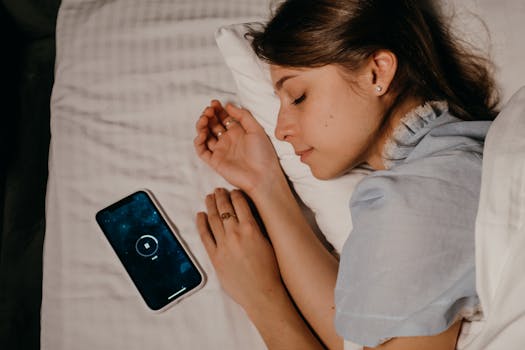
To get binaural beats working as intended, the left and right ears must receive different frequencies. That usually means using headphones or earbuds that clearly separate channels.
Headphones vs. speakers
With speakers, the sound can leak into both ears, reducing the clarity of the beat perception. Headphones typically provide more reliable channel separation. If you try speakers, you may still hear something “beat-like,” but it may be inconsistent.
How long to use binaural beats before sleep
A practical starting point is 20–30 minutes before you expect to fall asleep. If you tend to fall asleep quickly, you might use a shorter window, such as 10–20 minutes. If you tend to need more time to downshift, 30–45 minutes can be reasonable.
Running the sound all night can be uncomfortable for some people, and it can interfere with your ability to re-synchronize sleep cycles if you wake briefly. Many users do better with a “wind-down” session rather than continuous playback.
Volume targets you can use at home
There’s no single numeric volume setting that fits everyone, because headphone sensitivity and listening environments vary. Use this rule: keep volume low enough that you could comfortably speak to someone nearby without raising your voice, and avoid turning it up just because you “can’t tell” the beat. If you can’t hear it, try a better track rather than louder volume.
Also, if a frequency range feels irritating, scratchy, or headachy, stop. Discomfort is a signal that your nervous system is not settling with that stimulus.
Real-world example: dialing in your sleep frequency after stress
Consider a common scenario. You’ve had a stressful week, and you notice that you fall asleep late—often 1–2 a.m.—even when you’re tired. On night one, you try an 8–10 Hz alpha-leaning binaural beat at low volume for 25 minutes. You feel calmer, but you still don’t drift off quickly.
On night two, you keep everything the same—bedtime, lighting, and volume—but switch to a 6 Hz theta-leaning session for 30 minutes. This time, your mind stops racing sooner. You still wake once, but the overall time to drowsiness improves by about 20–30 minutes.
On night three, you test a 3 Hz delta-leaning track for 20 minutes. You feel heavier relaxation, but it’s slightly uncomfortable, so you reduce the session length. Over a week, you settle on theta (around 4–8 Hz) as your default wind-down frequency because it creates the best balance of comfort and sleepiness.
This is the key mindset: you’re not chasing a single number. You’re finding a frequency range that helps your body shift from “threat monitoring” to “rest mode.”
Safety considerations and when to avoid binaural beats
Binaural beats are generally considered low-risk for many healthy adults when used at comfortable volumes. Still, there are situations where you should be cautious or avoid them.
Be careful if you have hearing sensitivity or neurological conditions
If you have a history of seizures, significant neurological disorders, or you notice unusual symptoms (dizziness, headache, agitation), it’s wise to consult a clinician before using binaural beats. Even if the perceived frequency is “low,” the auditory experience can still affect some people differently.
If you have tinnitus or sound sensitivity, start extremely conservatively. If the sound worsens symptoms, stop.
Use low volume and avoid prolonged sessions at first
As with any headphone-based audio, high volume is the most common preventable risk. Begin with 15–30 minute sessions for the first few nights and only extend if it feels comfortable and beneficial.
Don’t use binaural beats as the only solution for persistent insomnia
If you’ve had insomnia for more than a few weeks, or if you’re sleeping too little to function normally, consider evidence-based approaches like cognitive behavioral therapy for insomnia (CBT-I), sleep hygiene changes, and medical evaluation. Binaural beats can be a supplement to a broader plan, not a replacement.
Summary: a frequency-focused plan you can actually run

To use binaural beats for sleep frequency effectively, think in ranges rather than chasing a single exact Hz number. A science-informed starting strategy looks like this:
- 8–12 Hz (alpha) for calming wind-down when your mind is still active.
- 4–8 Hz (theta) for drowsiness when you want a clearer sleep transition.
- 1–4 Hz (delta-leaning) for those who tolerate it comfortably and want deeper, slower relaxation.
Run a short experiment over 3–7 nights, keep volume low, and change one variable at a time. In many cases, the “best” frequency is the one that you can listen to without discomfort and that reliably helps you feel sleepy faster.
Finally, remember that sleep is multi-causal. Temperature, light exposure, stress levels, caffeine timing, and breathing issues all matter. If you address those fundamentals and use binaural beats thoughtfully, you give yourself a better chance of seeing consistent benefits.
FAQ: binaural beats for sleep frequency
What is the best binaural beat frequency for sleep?
There isn’t one best frequency for everyone. Common sleep-oriented ranges are 4–8 Hz (theta) for drowsiness and 8–12 Hz (alpha) for relaxed wind-down. Some people prefer 1–4 Hz (delta-leaning) if they tolerate it comfortably.
How long should you listen to binaural beats before bed?
A practical starting point is 20–30 minutes before you expect to fall asleep. If you’re already very sleepy, you might start with 10–20 minutes. Avoid very long use on the first nights to learn how your body responds.
Do binaural beats work through speakers or only headphones?
Headphones are usually more reliable because they separate the left and right tones clearly. With speakers, sound leakage into both ears can reduce the precision of the perceived beat.
Can binaural beats help you stay asleep all night?
They may help some people maintain a calmer state, but many find continuous overnight playback uncomfortable. A wind-down approach (for example, the first 20–45 minutes) is often easier to tolerate.
Are there any side effects or reasons to stop?
Stop if you experience headaches, dizziness, agitation, or worsening tinnitus/sound sensitivity. If you have a history of seizures, significant neurological conditions, or other medical concerns, talk with a clinician before using binaural beats.
How do you know which sleep frequency is right for you?
Use a simple 3–7 night test. Start with alpha (8–12 Hz), then try theta (4–8 Hz) if you’re not getting sleepy quickly. Only test delta-leaning (1–4 Hz) if it feels comfortable. Track time to drowsiness and overall comfort.
29.04.2026. 06:26