

CGM variability time in range (TIR) explained

Why CGM variability time in range matters

If you use a CGM, you already know that “time in range” (TIR) is more than a single number. TIR tells you how long your glucose stays within a target band, but it doesn’t fully describe what happens inside that band. Two people can have the same TIR and still have very different glucose experiences—one may have steady glucose, while the other has rapid swings that repeatedly approach hypoglycemia or hyperglycemia.
This is where CGM variability time in range becomes important. Variability describes how much your glucose changes over time. When variability is high, your glucose can oscillate—spending time in range while still being unstable. When variability is lower, your time in range is often “cleaner,” with fewer near-misses and fewer swings.
In practical terms, understanding CGM variability time in range helps you and your clinician interpret your CGM report more accurately, identify patterns behind your numbers, and adjust behaviors or therapy with a clearer target than TIR alone.
Time in range (TIR): the baseline metric you already use
Time in range (TIR) generally refers to the percentage of time your CGM readings fall within a defined glucose window. Common clinical targets include:
- 70–180 mg/dL (3.9–10.0 mmol/L) for many adults with diabetes
- >70% time in range is often used as a goal in clinical guidance, though individual targets can vary
- Separate measures may also be tracked for time below range (e.g., <70 mg/dL) and time above range (e.g., >180 mg/dL)
TIR is helpful because it captures day-to-day glucose exposure, not just isolated readings. But TIR has a limitation: it doesn’t reveal whether your glucose was stable while it was in range.
For example, you could spend 80% of the day between 70 and 180 mg/dL. If your glucose repeatedly drops to 72 mg/dL and then rises to 178 mg/dL, you may still have meaningful risk. Conversely, you could spend 80% of the day between 70 and 180 mg/dL with a smooth curve around 120 mg/dL. Same TIR, different lived experience.
What “CGM variability” actually means

CGM variability refers to how much glucose values fluctuate during the measurement period. It’s not the same as average glucose. You can have a normal average and still experience large swings.
Common CGM variability concepts include:
- Standard deviation (SD) of glucose readings (a statistical measure of spread)
- Coefficient of variation (CV), often calculated as SD divided by mean glucose, expressed as a percentage
- Glucose management indicator (GMI), which estimates average glucose from CGM data (not variability, but often reported together)
- Trend and rate of change, describing how quickly glucose rises or falls
Different CGM systems and reports may present variability in slightly different ways. Some provide SD and CV directly. Others emphasize “estimated glucose variability” or similar summary metrics. Regardless of the label, the clinical idea remains consistent: variability reflects how unpredictable or unstable glucose is over time.
So what is “CGM variability time in range”?
The phrase CGM variability time in range explained is best understood as a way of interpreting TIR alongside variability. Instead of asking only, “How much time was I in range?” you also ask, “How stable was my glucose while I was in range?”
In many real-world cases, this is operationalized by looking at:
- TIR (how long glucose stayed in the target band)
- Variability metrics such as SD or CV (how much glucose moved around)
- Patterns (for example, frequent excursions near the edges of the range, repeated rapid rises after meals, or frequent dips followed by rebound highs)
Some clinicians also consider “time in range with low variability” or “range quality,” but even when your report doesn’t explicitly calculate that, you can still interpret variability-in-range by combining the available numbers with the trace.
Think of it like this: TIR tells you where you were. Variability tells you how you got there—whether your glucose path was smooth or jagged.
Why variability can be high even when TIR looks good
High variability with decent TIR is common. Several mechanisms can produce it:
- Meal timing and carbohydrate absorption mismatch relative to insulin action. You may briefly overshoot and undershoot while still spending most of the day within the target band.
- Insulin stacking or delayed insulin effects, especially overnight or after exercise. Glucose can dip, recover, and then drift upward.
- Correction dosing patterns that are too aggressive or too infrequent, leading to oscillations.
- Exercise-related glucose dynamics. For example, a short burst of activity can lower glucose quickly, while later physiological stress hormones can raise it again.
- Sensor lag and signal processing. CGMs measure interstitial glucose, not blood glucose directly. During rapid changes, there can be a time lag that contributes to perceived variability.
The key point: variability can signal risk that TIR alone may not fully capture. Rapid swings increase the chance of crossing below range or above range, even if those events are brief.
Real-world scenario: two weeks, two different glucose “stories”

Let’s use a practical example. Imagine you review two 14-day CGM reports.
Report A shows:
- TIR (70–180 mg/dL): 78%
- SD: 55 mg/dL
- You notice frequent spikes after meals and occasional dips before the next meal.
Report B shows:
- TIR (70–180 mg/dL): 78%
- SD: 35 mg/dL
- You notice glucose staying within range with gentle peaks and fewer near-threshold excursions.
In both cases, your time in range is identical. But in Report A, the pattern suggests greater instability. Even if you didn’t spend much time below 70 mg/dL, those repeated dips and spikes may still be associated with symptoms, reduced confidence in dosing, and a higher likelihood of occasional out-of-range episodes.
In Report B, the same TIR likely reflects more consistent glucose control. Your insulin/carbohydrate matching may be closer to the timing of glucose appearance and insulin action.
This is the essence of CGM variability time in range interpretation: you look beyond the percentage and examine the “quality” of those in-range minutes.
How to interpret variability metrics alongside TIR
Different variability metrics are useful for different decisions. Here’s how to think about them in a way that matches real clinical reasoning.
Standard deviation (SD): spread of glucose values
SD describes the typical spread of your CGM readings around the mean. Higher SD generally means more fluctuation. If your SD is high, you should look for patterns: Are swings mostly post-meal? Are there overnight oscillations? Do you see repeated corrections?
SD is most useful when you also consider:
- Time below range and time above range
- Whether excursions are near the boundaries (e.g., frequent readings in the 60s and 170s)
- Whether the pattern is consistent day to day
Coefficient of variation (CV): variability relative to mean
CV is SD divided by mean glucose, expressed as a percentage. It’s often used because it adjusts variability for the level of glucose.
In many diabetes care settings, a CV below a certain threshold (commonly referenced around 36%) is considered indicative of lower variability, though exact interpretation should be individualized. If your CV is elevated, the practical question becomes: what is driving the swings?
High CV with moderate TIR can suggest that your average may be acceptable, but the day-to-day glucose path is unstable. That often calls for pattern-based adjustments rather than only targeting average glucose.
Trend arrows and rate of change: instability in motion
Some CGM reports emphasize trend direction (rising, falling, flat). Even if your glucose is in range, a consistent “upward” trend after meals can indicate that you are on a trajectory toward hyperglycemia. Similarly, a downward trend after bolusing may hint at a risk for hypoglycemia later.
When you interpret variability time in range, pay attention to the rhythm:
- How long after meals do you start rising?
- Do you fall too quickly after insulin?
- Do you correct and then overshoot?
Where variability shows up: meal times, sleep, and activity windows
Variability isn’t evenly distributed. You can often localize it to specific periods.
Post-meal periods
After eating, glucose absorption and insulin action should align. When they don’t, you can see:
- Early spikes followed by late dips
- Repeated peaks that approach or exceed 180 mg/dL
- High variability even though the glucose returns to range quickly
CGM patterns can help you determine whether the issue is likely carbohydrate content, bolus timing, insulin type, or dosing method.
Overnight and early morning
Overnight variability is particularly important because you may not feel symptoms in real time. Common causes include basal insulin mismatch, hormonal changes, and—if you exercise late—delayed glucose effects.
Look for:
- Midnight to 3 a.m. dips with rebound highs
- Early morning rises that start before breakfast
- Frequent oscillations rather than a single smooth curve
Exercise and recovery
Exercise can lower glucose during activity and shortly afterward, but recovery can sometimes raise glucose due to stress hormones. The result can be a swingy pattern—especially after intense or unplanned activity.
If your TIR is decent but variability is high, examine whether your highest variability days align with:
- Workout timing
- Duration and intensity
- Whether you changed meals or insulin around exercise
How CGM variability time in range relates to safety outcomes

TIR is associated with outcomes like long-term glycemic control. Variability is also clinically relevant because it correlates with the likelihood of crossing into hypoglycemia and hyperglycemia, even when those crossings are brief.
High variability can be associated with:
- More frequent near-threshold events (e.g., readings in the 60–70 mg/dL zone)
- Greater symptom burden for you
- More dosing uncertainty (“I never know how my glucose will respond”)
- Higher risk of severe episodes in some contexts
It’s not that variability alone determines risk. Instead, variability provides a lens through which to understand how stable your glucose control truly is. When variability is high, small changes in dosing or carbohydrate intake can have outsized effects.
Practical guidance: how you can use this information in day-to-day decision-making
You don’t need to become a statistician. You need a consistent process for interpreting your CGM data.
Step 1: Confirm your TIR and out-of-range time
Before focusing on variability, establish your baseline:
- What is your TIR percentage for 70–180 mg/dL (or your clinician’s target band)?
- How much time is spent below range and above range?
If you have low TIR and high time above range, variability analysis may be secondary. If your TIR is acceptable but variability is high, that points to instability within the target band.
Step 2: Identify the “worst windows”
Use your CGM trace to locate times when swings are most pronounced. Common targets are:
- Two to four hours after meals
- The early morning hours (often 3 a.m. to 8 a.m.)
- Late evening when insulin action and food effects overlap
Then ask: are swings driven by rising trends, falling trends, or both?
Step 3: Look for a trigger pattern
Variability often has a cause. Look for links to:
- Specific meals (higher carbohydrate density, higher fat meals, or meals with mixed macros)
- Bolus timing (before vs after meals)
- Correction behavior (how often and how much you correct)
- Activity (planned exercise vs unplanned walking)
- Sleep duration and stress
You don’t have to track everything. Even noticing consistent timing differences—like swings after dinner but not breakfast—can narrow the problem quickly.
Step 4: Adjust one lever at a time
If you change multiple things at once, you won’t know what helped. Consider a structured approach:
- If post-meal variability is high, focus on bolus timing or meal composition first.
- If overnight variability is high, focus on basal patterns and bedtime behaviors.
- If exercise-related swings dominate, focus on how you manage insulin and carbohydrates around activity.
Because CGM variability time in range interpretation is about stability, you’re aiming to smooth the glucose curve, not just shift the average.
CGM variability time in range and common diabetes technology contexts
CGM data is interpreted within your specific diabetes management approach. Here are practical considerations in different contexts.
If you use insulin pump therapy
Pump users often have more flexible dosing. Variability may improve when:
- Insulin-to-carbohydrate ratios are adjusted for meal patterns
- Correction factors reduce oscillations
- Extended bolus or dual-wave strategies better match high-fat or high-protein meals
- Basal rates are tuned to stabilize overnight and between meals
However, pump settings changes should be made with clinical guidance, especially if you’re adjusting basal rates or correction aggressiveness.
If you use multiple daily injections (MDI)
With MDI, variability often reflects timing mismatch between insulin action and meal glucose appearance. Common levers include:
- Bolus timing relative to meals
- Consistency of meal carbohydrate patterns
- Basal insulin timing (if applicable) and dose adjustments
Even small changes in bolus timing—like moving from “right when you start eating” to “10–20 minutes before”—can reduce post-meal swings for some people. The right timing depends on your insulin type, insulin sensitivity, and meal composition.
If you use automated insulin delivery (AID)
AID systems aim to reduce time above range and hypoglycemia, often by responding to CGM trends. When variability remains high, it may reflect situations where the system is “chasing” rapid changes—such as:
- Carbohydrates without appropriate pre-bolus or meal announcements (if your system uses them)
- High variability exercise days
- Sensor lag during rapid glucose rises
In those cases, the system may still keep you in range, but the glucose curve can remain jagged. Interpreting variability alongside TIR helps you decide whether the issue is behavior timing, meal composition, or settings.
How to handle CGM artifacts and sensor limitations
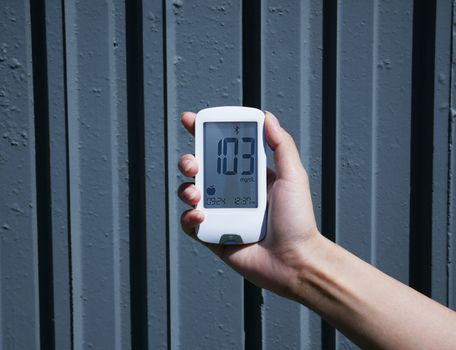
CGM variability is influenced by more than physiology. Sensor performance issues can mimic variability. To interpret CGM variability time in range accurately, consider:
- Calibration or sensor warm-up periods (depending on CGM type)
- Compression lows if you sleep on the sensor
- Signal loss or periods with fewer readings
- Rapid glucose changes where interstitial lag can exaggerate apparent swings
If your variability metric spikes suddenly without a matching pattern in meals, activity, or insulin dosing, check for sensor-related explanations before making major therapy changes.
Relevant tools and data sources you may already have
CGM platforms typically provide both TIR and variability summaries. Many also offer trend views that highlight time above or below range by hour. When you’re learning CGM variability time in range, look for:
- Hourly breakdowns of glucose distribution
- Clear SD/CV or variability summaries
- Event markers (meals, exercise, insulin adjustments) if you log them
Some people also use glucose logbooks or structured apps to capture meal timing and activity. Even a simple record—like noting that dinner was late or that a workout happened—can help you connect variability changes to real-life causes.
In clinical settings, clinicians may also consider structured CGM reports (including time in range and variability). If you have a CGM system that supports downloadable reports, you can bring those to appointments for more precise interpretation.
Common pitfalls when interpreting variability with TIR
It’s easy to misread the data if you rely on one metric only. Here are frequent pitfalls:
- Assuming “high TIR equals stable glucose.” It can be true, but it’s not guaranteed. Variability can still be high.
- Ignoring near-threshold events. If you spend little time below 70 mg/dL but repeatedly hover in the 60–70 zone, variability is still telling you something important.
- Changing too many variables at once. Variability can improve or worsen for multiple reasons. Identify one likely lever first.
- Overreacting to short-term fluctuations. A few days of high variability may reflect illness, travel, or sensor issues. Patterns over 14 days or a month are usually more informative.
- Not accounting for lag and sensor quality. Apparent swings may be partly technical.
Prevention and stabilization strategies that reduce variability

Because variability often reflects mismatch—between insulin action and glucose appearance, or between activity and carbohydrate intake—stabilization strategies aim to improve alignment.
These approaches are educational and general; your clinician should guide any dosing changes:
- Strengthen meal timing consistency. If your meals vary widely in timing, your insulin action may not match. Even stabilizing dinner timing can reduce overnight rebound patterns.
- Match bolus timing to your insulin and meal absorption. Post-meal variability often improves when bolus timing is aligned with how quickly your meal raises glucose.
- Consider meal composition effects. High-fat or high-protein meals can delay glucose rise. If you repeatedly see late post-meal spikes, your bolus strategy may need to reflect that delay.
- Use structured correction behavior. Frequent corrections can produce oscillations. If you correct repeatedly, you may overshoot and then correct again, increasing variability.
- Plan for exercise. If you know you’ll be active, consider how you manage insulin and carbohydrate intake before, during, and after activity. Avoid “surprise” swings by planning for the recovery phase too.
- Review overnight patterns. If early morning glucose rises correlate with bedtime habits, sleep duration, or basal timing, address those first.
Prevention isn’t about chasing a perfect curve. It’s about reducing avoidable swings so your time in range becomes more reliable and safer.
When to involve your clinician
CGM variability time in range interpretation is useful, but therapy changes should be individualized. You should involve your clinician if:
- You have frequent time below range, especially if it includes symptomatic lows or lows at night
- Your variability remains high despite consistent routines and stable sensor performance
- You’re seeing repeated large excursions after meals that suggest a mismatch in dosing strategy
- You’re considering major changes to insulin type, basal patterns, or correction factors
Bring your CGM report and highlight the time windows where variability is most pronounced. Clinicians can use those patterns to make targeted adjustments rather than broad changes.
Summary: using variability to improve the meaning of TIR
CGM variability time in range explained in one sentence: it’s how you interpret time in range by also evaluating how stable your glucose was while it was in range.
TIR tells you the “amount of time” in the target band. Variability tells you the “shape” of your glucose experience—how smooth or jagged your glucose curve was. When TIR is high but variability is also high, you may still be at risk for near-threshold events, symptoms, and future out-of-range episodes.
If you want to use this insight effectively, you can:
- Check TIR alongside time below and above range
- Review SD/CV (or your CGM’s variability metric) and look at the trace
- Identify the worst windows (post-meal, overnight, exercise-related)
- Look for triggers and adjust one lever at a time
Over time, that approach helps you move from “I hit my range percentage” to “my glucose control is stable enough to be predictable.” That’s the practical value of understanding CGM variability time in range.
23.02.2026. 07:10