

Rest-Pause vs Traditional Sets for Hypertrophy: What Really Works

Rest-pause and traditional sets: two different ways to drive muscle growth
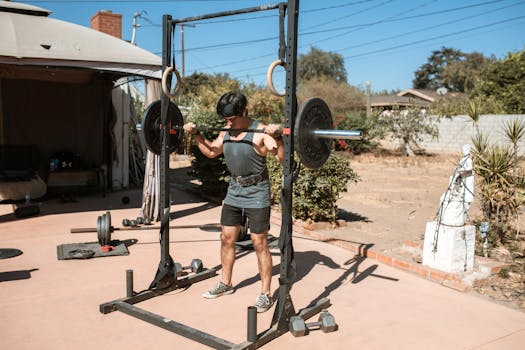
Both rest-pause training and traditional sets aim to create the stimulus that leads to hypertrophy. The main difference is how they manage fatigue and time under effort. Traditional sets typically follow a steady pattern: one set performed to near-failure, a rest interval, then the next set. Rest-pause training breaks a “single set” into multiple mini-sets with very short rests, allowing you to squeeze out additional reps and total work while keeping the load relatively heavy.
In practice, rest-pause often looks like this: you perform reps close to failure, rest briefly (commonly 10–30 seconds), then continue for more reps, sometimes repeating once or twice more. Traditional sets might use 2–4 sets of 6–15 reps with 2–3 minutes of rest, depending on the exercise and program goal.
Because hypertrophy depends on multiple factors—mechanical tension, metabolic stress, fiber recruitment, and effective volume—how a method distributes fatigue can meaningfully change your results. The question isn’t which method is “best” in general; it’s which one produces the most effective stimulus for your body, exercise selection, and weekly programming.
Quick summary: which approach tends to win overall?
For most lifters pursuing steady hypertrophy over time, traditional sets usually provide the most consistent balance of performance, manageability, and recovery. Rest-pause sets can be highly effective for adding high-quality reps in a shorter time window and for pushing a muscle group harder when progress stalls—especially on exercises that tolerate density well.
If you want a clear default: traditional sets are typically the strongest overall option for building muscle with predictable progression. Rest-pause is often the stronger targeted tool when you need extra stimulus without dramatically increasing total session time.
Rest-pause vs traditional sets hypertrophy: side-by-side differences

| Feature | Rest-pause sets | Traditional sets |
|---|---|---|
| Set structure | One set broken into mini-sets with short rests (e.g., 3 mini-sets) | One continuous set per effort, followed by full rest before the next set |
| Rest interval within the effort | Typically 10–30 seconds between mini-sets | No intra-set mini-rests; rest occurs between sets (often 2–3+ minutes) |
| How reps are distributed | Reps often “extend” beyond the point where you’d stop in a traditional set | Reps usually stop near failure for the set, then you recover before starting the next set |
| Fatigue profile | Higher local fatigue density; you accumulate reps while partially recovering between mini-sets | Fatigue accumulates more gradually across sets; recovery is more complete between sets |
| Mechanical tension | Often uses a load you can still move, but rep quality can drop across mini-sets | Better chance to maintain rep quality and load across sets |
| Metabolic stress | Commonly higher due to short rests and rep accumulation | Can be moderate to high depending on rep range and rest length |
| Time efficiency | Can increase total reps/work in a shorter window for a given exercise | May take longer to accumulate similar total reps because rests are longer |
| Recovery demands | Local muscular fatigue is high; systemic fatigue can be manageable if programmed carefully | Generally easier to recover from per unit performance, assuming volume is matched |
| Progression style | Progress often via adding reps within the same load, or slightly increasing load while keeping mini-set reps | Progress via adding reps, then load, then reps again (classic linear/double progression) |
Real-world performance differences: where each method shines
In the gym, rest-pause and traditional sets feel different because they target different performance constraints. Traditional sets often preserve your ability to repeat high-quality reps across multiple sets. This matters for compound lifts where technique and stable force production are key.
Rest-pause tends to shine when your limiting factor is “I can’t get more reps,” rather than “my form is collapsing.” The short rest can partially restore phosphocreatine and reduce acute fatigue enough to continue pulling or pressing additional reps. That creates a density effect: more total reps at a similar load than you could typically achieve with a single long set.
However, rest-pause can also amplify technique breakdown on movements where stability is hard to maintain under fatigue. For example, heavy barbell squats or strict overhead pressing may degrade form quickly. You may still get a hypertrophy stimulus, but the risk-to-reward can shift depending on your experience level and how aggressively you push mini-sets.
Exercise type also matters. Machines and cables often tolerate rest-pause better because they stabilize the movement path. Many lifters use cable fly variations, leg extensions, seated rows, and machine presses for this reason. Free-weight isolation work can work well too, but the margin for error is smaller.
Pros and cons breakdown
Rest-pause sets
- Pros
- Higher rep accumulation at a given load: Short rests allow you to extend the set and increase total work, which can be useful when you’re trying to raise effective volume without adding many extra sets.
- Can improve “stuck point” performance: If a muscle group stalls because you can’t generate enough reps near failure, rest-pause can help you reach a higher rep density.
- Time-efficient intensity: You may get a strong stimulus in less total session time, especially on isolation exercises.
- Useful for targeted hypertrophy: When programmed carefully, it can concentrate stress on specific muscles (e.g., quads via leg extensions or delts via lateral raises).
- Cons
- Technique and joint stress can degrade: As fatigue rises across mini-sets, form can break, especially with unstable or highly technical lifts.
- Harder to manage fatigue: Local muscular fatigue can be intense. If you overuse rest-pause, you can compromise weekly recovery and progress.
- Rep quality may drop: Additional mini-set reps can be slower or less controlled. Hypertrophy still responds to load and effort, but “sloppy reps” may reduce the effective stimulus.
- Progression can plateau: If you always push extreme mini-set failure, you may stop improving because recovery can’t keep up.
Traditional sets
- Pros
- More consistent performance across sets: Longer rests generally let you maintain load and rep quality, especially on compounds.
- Easier to program and recover from: Traditional structures are predictable, which helps when building a weekly plan with multiple muscle groups.
- Good for progressive overload: It’s straightforward to track reps and load across sets and adjust gradually.
- Better compatibility with heavy training: For squats, presses, and pulls, traditional sets often preserve technique and force production.
- Cons
- May require more total time to reach high work density: If you want extremely high rep density, long rests can limit how many reps you accumulate per session.
- Can under-stimulate when you stop too early: If you frequently stop sets before reaching sufficient near-failure effort, you may not generate the stimulus you think you’re getting.
- Not automatically “better” at failure: Some lifters use long rests and then stop far from failure due to perceived recovery advantage.
Best use-case recommendations for different buyers

The best choice depends less on ideology and more on what you’re trying to accomplish with your training week: add volume, maintain performance, manage recovery, or break through a specific plateau.
If you’re a beginner building a base
Traditional sets usually fit best. You’ll get a clearer learning signal, more stable technique, and less need to manage extreme intra-set fatigue. A straightforward approach—moderate loads, consistent rep ranges, and sets taken close to failure—tends to produce reliable hypertrophy progress while keeping recovery manageable.
If you’re intermediate and chasing a plateau
Rest-pause can be a strong tool when a muscle group stops responding to your current set/rep scheme. The method can increase effective work without requiring a large jump in number of sets. Many lifters use rest-pause as an occasional intensity technique on a targeted exercise, such as a machine press or cable row, rather than applying it everywhere.
For example, if your chest growth has slowed on a pressing movement, you might use rest-pause on a machine press or dumbbell press variation to add more reps while keeping load relatively stable. The key is to ensure the added reps are still controlled and aligned with good technique.
If you train for hypertrophy but need recovery control
Traditional sets often provide the better recovery-to-stimulus ratio because they’re easier to match across the week. If you’re already managing high training volume, multiple sessions per week, or a demanding schedule, rest-pause can push local fatigue beyond what your joints and connective tissues prefer—especially on heavy free-weight compounds.
In this scenario, you can still incorporate rest-pause selectively, but traditional sets should remain the backbone.
If you’re time-limited and want density
Rest-pause is often attractive when you can’t spend long in the gym. You can accumulate more total reps in fewer minutes by using short intra-set rests. This can be especially useful for isolation work where you can safely maintain a consistent movement pattern.
Machines and cables are typically the most practical “rest-pause-friendly” equipment because they reduce stabilization demands. For instance, lateral raises, leg extensions, seated rows, and machine chest presses often tolerate density training better than high-skill barbell movements.
If you’re advanced and already disciplined about effort
Advanced lifters can use either approach effectively, but rest-pause requires especially careful programming. At high training levels, recovery is often the limiting factor, so the question becomes: does rest-pause add meaningful stimulus beyond what you’re already getting from your weekly volume?
Many advanced programs use rest-pause as a periodic intensification method—paired with adequate deloading or volume reduction—rather than a constant default for every exercise.
Final verdict: which method fits different needs
For most lifters, traditional sets hypertrophy tends to be the most reliable foundation because it supports consistent technique, manageable recovery, and straightforward progression across weeks. It’s especially well-suited to compounds and to lifters who want steady growth without constantly pushing local fatigue to extreme levels.
Rest-pause vs traditional sets hypertrophy often comes down to a specific goal: if you want to increase work density, extend sets beyond typical rep limits, and add volume-like stimulus without adding many extra sets, rest-pause can be a powerful targeted method. Its biggest advantages appear on exercises that tolerate fatigue well—frequently machines, cables, and controlled isolation movements.
Clear winners by scenario:
- Choose traditional sets if you’re building a base, training multiple muscle groups weekly, or prioritizing consistent rep quality on compounds.
- Choose rest-pause if you’re time-limited, need a stimulus bump for a specific muscle, or want to break through a plateau with higher rep density on a suitable exercise.
Used thoughtfully, both methods can contribute to hypertrophy. The most effective plan is the one that matches your recovery capacity, exercise selection, and ability to maintain high-quality reps while progressing over time.
07.03.2026. 21:58