

HRV guided calorie adjustment for fat loss

Use HRV to fine-tune your calorie deficit for fat loss
Your goal is simple: lose fat while keeping training performance and recovery solid. The challenge is that “one-size-fits-all” calorie targets often ignore how your body is actually responding day to day.
HRV guided calorie adjustment for fat loss is a structured way to use your heart rate variability (HRV) trends as feedback. Instead of guessing whether you’re under-recovering or doing fine, you adjust calories in small, deliberate steps based on whether your recovery markers look strong or suppressed.
Done well, this approach helps you stay in a deficit without constantly overshooting into fatigue. It’s not magic. It’s a feedback loop that makes your nutrition plan more responsive.
Get set up: what you need before adjusting calories
Before you change anything, set up the tracking so HRV is reliable enough to act on. Your body responds to training load, sleep, stress, illness, travel, and even alcohol. If your data is messy, your adjustments will be messy too.
1) Choose a consistent HRV measurement method
Use a wearable or app that measures HRV consistently (often RMSSD or similar). Pick one device and one routine for collection. If you switch devices or measurement conditions, trends become harder to interpret.
Common setup: HRV measured upon waking or nightly, ideally after you’ve been asleep for a similar duration each day.
2) Track calories and weigh-ins for at least 10–14 days
You need baseline body weight patterns and calorie intake accuracy. Aim for:
- Weighing 3–7 mornings per week (same conditions if possible)
- Using an average, not a single day
- Logging calories daily for the first 10–14 days
Use a food scale for accuracy during the adjustment phase. If you don’t want to weigh everything forever, at least weigh key calorie drivers (oils, grains, dairy, meat) for the first two weeks.
3) Decide your starting deficit and time horizon
Start with a moderate deficit so HRV has room to “show you” what’s happening. A practical starting point for many people is:
- ~10–20% below maintenance calories
- Or a loss rate of ~0.25–0.75% of body weight per week
Example: If you maintain at 2600 kcal/day, a 15% deficit is ~2210 kcal/day.
4) Keep training and sleep as stable as you can
You’re using HRV as a recovery signal. If your training schedule and sleep schedule swing wildly, HRV will swing too—making it harder to attribute the cause.
Target consistency for at least the first 2–3 weeks: similar workout times, similar sleep window, and similar daily steps when possible.
Step-by-step: HRV guided calorie adjustment process for fat loss
Follow these steps as a repeatable cycle. You’re looking for trends, not single-day noise.
Step 1: Collect baseline HRV and weight data
For 10–14 days, keep calories steady. Your goal is to establish two things:
- Your typical HRV range under your current routine
- Your weekly weight trend at a known calorie level
Write down:
- Average daily calories
- Average HRV (or the app’s trend score if that’s what you have)
- Average body weight (weekly average is best)
Practical example: You run 2200 kcal/day and your HRV average is “normal.” Your weekly weight drops by ~0.5%—good. Now you can adjust based on HRV instead of guessing.
Step 2: Define your HRV “recovery pattern” rule
You need a rule that tells you when to cut calories and when to add them. Here’s a clear, action-oriented approach using HRV trends:
- Recovery is strong: HRV is at or above your personal baseline trend for 3+ days in a row, and you feel reasonably good.
- Recovery is suppressed: HRV is below your baseline trend for 3+ days in a row, and you also notice training performance drop, higher soreness, worse sleep quality, or higher perceived stress.
- Mixed/unclear: HRV fluctuates without a clear pattern, or your sleep was disrupted in a way you can clearly identify.
Keep the rule simple. Overcomplicating leads to indecision.
Step 3: Start with a small calorie change size
Adjust calories in controlled increments so you can observe effects. A practical step size is:
- Change by 100–150 kcal/day when HRV indicates a clear pattern
For some people, especially smaller individuals, 50–100 kcal may be more appropriate. For larger individuals or very active days, 150–200 kcal can be reasonable. Start small; you can always adjust again next cycle.
Step 4: Use the HRV rule to decide the next 7 days
Now apply the decision-making logic. For a 7-day “calorie block,” do one of the following:
- If recovery is strong for 3+ days: reduce calories by 100–150 kcal/day for the next 7 days (slightly bigger deficit).
- If recovery is suppressed for 3+ days: increase calories by 100–150 kcal/day for the next 7 days (reduce deficit or move toward maintenance).
- If mixed/unclear: keep calories the same for 7 days and focus on sleep, stress management, and training quality.
This is the core of the method: you’re using HRV to match the deficit to your recovery capacity.
Step 5: Measure outcomes at the right time
Don’t judge the effect of calorie changes by a single morning weight. Use a timeframe that matches how the body responds to energy balance.
For most people, a good evaluation window is 7–14 days:
- Look at the weekly average weight
- Check whether HRV returns toward baseline after your calorie adjustment
- Note training performance and overall fatigue
Practical example: You cut 150 kcal/day for 7 days because HRV was strong. Your weekly average weight drops another 0.4%. HRV stays stable or improves. Great—continue cautiously with either small additional reductions or hold calories steady depending on your goal pace.
Step 6: Lock in a fat loss pace target
HRV helps you recover better, but you still need a fat loss rate that’s realistic. A common target range is:
- 0.25–0.75% body weight loss per week
If you’re losing faster than that and HRV is trending down, you may be pushing too hard. If you’re losing slower than that and HRV is strong, you may be leaving too much energy on the table.
Adjust calories again using the same HRV rule, but keep the pace target in mind.
Step 7: Repeat the cycle, not random edits
After each 7-day block, reassess:
- Was HRV strong or suppressed?
- Did your weekly average weight move in the expected direction?
- Did training feel sustainable?
Then run the next 7-day calorie block. Consistency is what turns HRV from “interesting data” into a useful control system.
Common mistakes that derail HRV calorie adjustment
This method works best when you avoid predictable errors. Here are the most common ones.
1) Overreacting to one bad HRV day
HRV can dip from alcohol, late meals, poor sleep, dehydration, a stressful workday, or even a heavy leg session. If you change calories based on one day, you’ll chase noise.
Use your 3+ days pattern rule. Let trends earn your action.
2) Ignoring measurement context
If your HRV is measured after a night of broken sleep, it may not reflect your “true” recovery capacity. Track sleep quality and note major disruptions. When you see an obvious disruption, treat HRV as less actionable for that day.
3) Changing training, sleep, and calories at the same time
If you add a new training block and cut calories on the same week, HRV won’t tell you which lever caused what. Keep variables stable when possible. If you must change training, do it first, then use HRV to adjust calories after the training adaptation period.
4) Making big calorie jumps
Large swings can create instability: you feel drained, HRV drops, performance suffers, and then you add calories too late. Stick to 100–150 kcal/day increments (or smaller if you’re sensitive) to keep the feedback loop clean.
5) Using body weight as the only success metric
Weight can stall due to water retention from higher sodium intake, higher carbs, training stress, or menstrual cycle changes. HRV plus training feedback plus weekly average weight gives you a more complete picture.
Additional practical tips to optimize HRV-guided fat loss
Once you’ve got the steps down, these refinements make the process smoother and more effective.
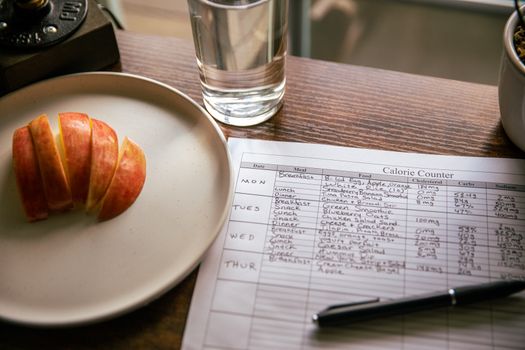
Use a simple daily log to support your HRV decisions
Don’t overcomplicate. Track:
- Calories for the day
- HRV value or trend score
- Sleep quality rating (0–10)
- Training: easy / normal / hard (or RPE)
When HRV looks suppressed, your notes help you decide whether it’s “deficit-related” or “life-related.”
Plan for “refeeds” only if you truly need them
If HRV is suppressed and weight is stalled, a short calorie increase can help. Instead of random refeed days, use the method: increase calories by 100–150 kcal/day for 7 days when HRV indicates suppressed recovery. That’s a controlled, HRV-informed refeed rather than a chaotic one.
Keep protein consistent while calories change
When you adjust calories up or down, try to do it by shifting carbs and fats rather than protein. Many people do well with a protein target of:
- ~1.6–2.2 g protein per kg of body weight per day
Keeping protein steady helps preserve lean mass and makes your deficit more tolerable.
Adjust fiber and meal timing to support compliance
As you cut calories, fiber helps fullness. Aim for a steady fiber intake (for example, 25–40 g/day depending on your tolerance). If you notice GI stress or poor sleep after late heavy meals, shift your largest meal earlier in the day.
These changes won’t replace HRV, but they reduce the number of “non-fatigue” reasons HRV might change.
Real-world scenario: busy week, HRV dips, and you adjust
Let’s say you’re 170 lb (77 kg) and eating 2200 kcal/day to lose fat. You train 4 days per week. Your HRV baseline looks normal for about 10 days. Then work gets intense and you sleep less for a few nights.
After 3 days of suppressed HRV and you feel unusually heavy in the gym, you follow the process:
- You increase calories by 100–150 kcal/day for the next 7 days.
- You keep protein consistent.
- You avoid adding extra training volume during that week.
Within a few days, HRV begins to recover toward baseline. Your weekly average weight may not drop as fast, but your training quality improves. Two weeks later, you can resume a slightly larger deficit if HRV again shows strong recovery.
This scenario is common: the goal isn’t to “win” every week on the scale. It’s to keep the deficit sustainable long enough for fat loss to happen without burning out.
Optional: use wearable-friendly products for smoother tracking
If you’re currently using a phone-only approach or inconsistent tracking, a wearable that provides HRV upon waking can make the routine easier. Examples include devices in the Garmin, Oura, Whoop, or Apple Watch ecosystems (availability and exact HRV metrics vary by model and settings). The best choice is the one you can wear consistently and interpret without constantly changing settings.
Whatever you choose, prioritize consistent measurement time and a routine you can maintain for months.
Optimize the environment that drives recovery
HRV responds to more than calories. If you want the feedback loop to be useful, improve the inputs:
- Sleep window consistency: aim for the same bedtime/wake time within ~1 hour
- Hydration: keep fluids consistent; dehydration can affect HRV
- Daily steps: maintain or gradually increase rather than cutting activity abruptly
- Stress management: even 5–10 minutes of breathing or a walk can help
When your recovery environment is stable, HRV changes are more likely to reflect the deficit rather than random chaos.
Bring it all together with a repeatable weekly routine
Here’s a practical way to run the method without overthinking it.
- Days 1–7: follow your current calorie target. Track HRV trend and how training feels.
- Day 3–4 check: if HRV is clearly suppressed or clearly strong, prepare to adjust—but don’t do it mid-week.
- Day 8–14: start the next 7-day calorie block based on the 3+ day HRV pattern rule.
- End of week: review weekly average weight and training performance. Decide whether to continue, hold, or adjust again.
Over time, this turns calorie adjustment into a controlled process. You’re not constantly changing macros because you “feel hungry.” You’re responding to recovery signals and keeping your fat loss pace within a sustainable range.
If you stick to the increments (100–150 kcal/day), evaluate over 7–14 days, and use HRV trends rather than single days, HRV guided calorie adjustment for fat loss becomes a practical system you can maintain.
14.01.2026. 00:38